
Rules for main forums
- Be nice
- No advertisement
- No events
- No fundraisers
- No topics asking for votes
- Only posts related to Brazilian Jiu Jitsu
Logic for Back Mount
5 year(s) ago • 602 views • 7 replies
 AK
AKPurple beltVerified
5 year(s) ago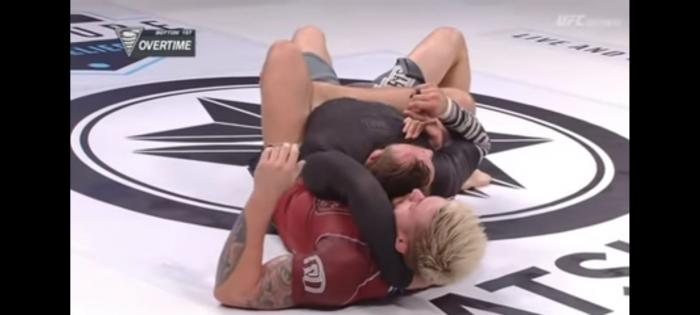
I find back mount the position with the least broadly-agreed-upon logic.
I've had exact opposite advice from good level people about which side it is more advantageous to fall to, EBI overtime is a nightmare because there's a 'bad escape' that leaves you mounted, but counts as an escape in EBI rules. Then you have Craig Jones doing whatever the heck this was against Gordon Ryan that seems to break all the rules I thought I knew. About the only consistent principle I've found is that the attacker wants to keep their hips square to the defenders.
Is this a real phenomenon or am I just imagining it?
I've had exact opposite advice from good level people about which side it is more advantageous to fall to, EBI overtime is a nightmare because there's a 'bad escape' that leaves you mounted, but counts as an escape in EBI rules. Then you have Craig Jones doing whatever the heck this was against Gordon Ryan that seems to break all the rules I thought I knew. About the only consistent principle I've found is that the attacker wants to keep their hips square to the defenders.
Is this a real phenomenon or am I just imagining it?
 JC
JCBlack belt 1st degreeVerified

5 year(s) ago
I understand the confusion. People will commonly refer to the different sides as strong side and weak side. If you look at it from the best escape route, it's safer to drive to the weak side (underhook side to the floor) to avoid head and arm choke. So in the sense of preventing that escape if I put you on the strong side, it's easier to keep you in back control and threaten attacks.
One of the positive things about going to the weak side is that it's easier to trap arms with your legs. I love using the straight jacket method or hand control to trap the top arm and then attack chokes. I started using the weak side more after watching this video series from Biernacki: https://youtu.be/ifx3fKFAWRY. I've gotten a lot of use out of using the kimura from the back to maintain the position and attack the armbar.
In Gordon Ryan's back attack instructional he gives good reasons to practice both sides.
One of the positive things about going to the weak side is that it's easier to trap arms with your legs. I love using the straight jacket method or hand control to trap the top arm and then attack chokes. I started using the weak side more after watching this video series from Biernacki: https://youtu.be/ifx3fKFAWRY. I've gotten a lot of use out of using the kimura from the back to maintain the position and attack the armbar.
In Gordon Ryan's back attack instructional he gives good reasons to practice both sides.
AKPurple beltVerified
5 year(s) ago
I understand the confusion. People will commonly refer to the different sides as strong side and weak side. If you look at it from the best escape route, it's safer to drive to the weak side (underhook side to the floor) to avoid head and arm choke. So in the sense of preventing that escape if I put you on the strong side, it's easier to keep you in back control and threaten attacks. One of the positive things about going to the weak side is that it's easier to trap arms with your legs. I love using the straight jacket method or hand control to trap the top arm and then attack chokes. I started using the weak side more after watching this video series from Biernacki: https://youtu.be/ifx3fKFAWRY. I've gotten a lot of use out of using the kimura from the back to maintain the position and attack the armbar. In Gordon Ryan's back attack instructional he gives good reasons to practice both sides.
Thanks for the reply, i watched the opening part of the link. I like Biernacki as I learnt a lot about leg locks from their app on it. I liked his explanation at the start that he would teach strong side attacks to beginners as weak side attacks are generally more complex and suited to body types that I don't have. I don't feel I have any realistic prospect of trapping an arm with my legs anytime soon!
I'm at a difficult stage to test things because the guys who tap me from the back are guys that are primarily brown and black belts who would tap me regardless of which side we went. White and blue belts where I train, I could defend either side effectively. So i'm finding it hard to establish rules of thumb that i'm likely to remember in a match.
I'm at a difficult stage to test things because the guys who tap me from the back are guys that are primarily brown and black belts who would tap me regardless of which side we went. White and blue belts where I train, I could defend either side effectively. So i'm finding it hard to establish rules of thumb that i'm likely to remember in a match.
JCBlack belt 1st degreeVerified
5 year(s) ago
Thanks for the reply, i watched the opening part of the link. I like Biernacki as I learnt a lot about leg locks from their app on it. I liked his explanation at the start that he would teach strong side attacks to beginners as weak side attacks are generally more complex and suited to body types that I don't have. I don't feel I have any realistic prospect of trapping an arm with my legs anytime soon! I'm at a difficult stage to test things because the guys who tap me from the back are guys that are primarily brown and black belts who would tap me regardless of which side we went. White and blue belts where I train, I could defend either side effectively. So i'm finding it hard to establish rules of thumb that i'm likely to remember in a match.
Oh you're more concerned with defense rather than attacking?
In that case I have a few suggestions.
As your opponent is transitioning into the back position is the best time to start your bridge escape trying to pin their leg and get your back and shoulders to the floor.
Fighting for head position is one of the most important parts of the position for offense and defense. Use your head to assist in your escape.
Always defend your neck if you think they're stronger than you, pin their wrist to your chest rather than try to pull against their strength. Keep your collars from getting snagged up.
I've had people use a similar escape to Jones above. I've heard it called the Gazoni: https://youtu.be/zsGW4LpXNqc
In that case I have a few suggestions.
As your opponent is transitioning into the back position is the best time to start your bridge escape trying to pin their leg and get your back and shoulders to the floor.
Fighting for head position is one of the most important parts of the position for offense and defense. Use your head to assist in your escape.
Always defend your neck if you think they're stronger than you, pin their wrist to your chest rather than try to pull against their strength. Keep your collars from getting snagged up.
I've had people use a similar escape to Jones above. I've heard it called the Gazoni: https://youtu.be/zsGW4LpXNqc
AKPurple beltVerified
5 year(s) ago
Oh you're more concerned with defense rather than attacking? In that case I have a few suggestions. As your opponent is transitioning into the back position is the best time to start your bridge escape trying to pin their leg and get your back and shoulders to the floor. Fighting for head position is one of the most important parts of the position for offense and defense. Use your head to assist in your escape. Always defend your neck if you think they're stronger than you, pin their wrist to your chest rather than try to pull against their strength. Keep your collars from getting snagged up. I've had people use a similar escape to Jones above. I've heard it called the Gazoni: https://youtu.be/zsGW4LpXNqc
Well i really started thinking about it because of doing some EBI overtimes. I decided I didn't know enough to attack the back because there's a particular escape that leaves you mounted, but counts as an escape in EBI rules. I've done a weekend camp on spiderweb so I thought i'd just attack from there, but I can't stop my opponent choosing to attack the back so yes I was primarily concerned with having a game plan for defence assuming were starting seatbelt.
I know that it's easier for me to escape if I fall to the weak side because we all know and drill what Kesting does at 3:23 in that video, we call it "safe haven". But then I knew that my opponent knew this was a go-to escape and he'd be aggressively using his head to try and block this from the start. So then I wondered if it would be better to just initiate going to the strong side because I could probably get my hips out of alignment with his if i'm the first to move and then work on getting one of his hooks out.
I know that it's easier for me to escape if I fall to the weak side because we all know and drill what Kesting does at 3:23 in that video, we call it "safe haven". But then I knew that my opponent knew this was a go-to escape and he'd be aggressively using his head to try and block this from the start. So then I wondered if it would be better to just initiate going to the strong side because I could probably get my hips out of alignment with his if i'm the first to move and then work on getting one of his hooks out.
 JM
JMBlack belt 2nd degreeVerified
5 year(s) ago
There's 4 directions to combine where escaping the back mount not 2.
You can escape from an inferior position against someone decent only via timing different moves so you can overcome the mechanical advantage.
Bridging up (and grabbing the head) is one of 4 completely viable directions.
You can escape from an inferior position against someone decent only via timing different moves so you can overcome the mechanical advantage.
Bridging up (and grabbing the head) is one of 4 completely viable directions.
 DB
DBBlack belt 3rd degreeVerified
5 year(s) ago
Left, right, upwards towards the head a la Craig, downwards like Saulo's scoop. And I'd also like to add standing up like Preacher Pritt, and going forwards & sideways combined (granby / inversion), which appears to be a viable way to escape the body triangle.
For reference https://youtu.be/Zzvvvsdm2Tc
For reference https://youtu.be/Zzvvvsdm2Tc
Edited 5 year(s) ago
 R
RBlack belt 1st degreeVerified
5 year(s) ago
Defensively, I like to go two-to-one grab on the attacking arm and pop it over to the opposite side of my head, then shimmy to get my head and shoulder to the mat. You've got to be quick with your hips to ensure you can escape and turn into them to get top position, otherwise it's not uncommon to end up on the bottom of mount or half-guard, but that's still an improvement from having someone on your back.



