
Rules for main forums
- Be nice
- No advertisement
- No events
- No fundraisers
- No topics asking for votes
- Only posts related to Brazilian Jiu Jitsu
Short route of the brain
5 year(s) ago • 881 views • 23 replies
 KO
KOBlack belt 2nd degreeVerified

5 year(s) ago
Good morning fellow beltcheckers,
When designing and implementing training scenarios, technique drills etc., do you discuss the brain and its processes under stress? I often hear students say "well, in real life I would do this...." I take this as a cue to introduce the process our brains take under duress, and introduce the fact that our sensory cortex may not be available to reason and process the attack. This lends itself to reinforce training that is simple in nature so you reinforce the neural pathways (muscle memory). I think it is irresponsible to allow students to think they would react differently than they would train.
I am not attempting to discount other views, or any other type of training. Anyone may train anything they like. I am simply wondering if identifying the process of how we operate under stress is identified an discussed. Fight or flight, etc.
Thanks everyone
When designing and implementing training scenarios, technique drills etc., do you discuss the brain and its processes under stress? I often hear students say "well, in real life I would do this...." I take this as a cue to introduce the process our brains take under duress, and introduce the fact that our sensory cortex may not be available to reason and process the attack. This lends itself to reinforce training that is simple in nature so you reinforce the neural pathways (muscle memory). I think it is irresponsible to allow students to think they would react differently than they would train.
I am not attempting to discount other views, or any other type of training. Anyone may train anything they like. I am simply wondering if identifying the process of how we operate under stress is identified an discussed. Fight or flight, etc.
Thanks everyone
 JM
JMBlack belt 2nd degreeVerified
5 year(s) ago
Well, neuroscience is super complex. Even for neuroscientists :) So I try to strive clear of that.
 BB
BBBlack belt 2nd degreeVerified
5 year(s) ago
Even if you train for “real” situations it’s not exact. Awareness is one of the biggest factors. Be aware of what is happening around you.
 JA
JABlack beltVerified
5 year(s) ago
Also, fine motor control goes out the window, so in the past, for self-defense training, I would get very tired/exhausted then work techniques/self-defense. Fancy and detail-oriented things are gone, but big motor control is there.
This was in Kenpo and Judo, but the theory is still the same for BJJ.
This was in Kenpo and Judo, but the theory is still the same for BJJ.
 J
JBlack belt 4th degreeVerified
5 year(s) ago
In our BJJ/Judo/Muay Thai/MMA classes we address the fight or flight response with regard to competition and how competing more often helps steer the brain towards a "fight" response. And then we get into "fight without emotion" response which is also important.
 JV
JVBlack belt 3rd degreeVerified
5 year(s) ago
Good morning fellow beltcheckers, When designing and implementing training scenarios, technique drills etc., do you discuss the brain and its processes under stress? I often hear students say 'well, in real life I would do this....' I take this as a cue to introduce the process our brains take under duress, and introduce the fact that our sensory cortex may not be available to reason and process the attack. This lends itself to reinforce training that is simple in nature so you reinforce the neural pathways (muscle memory). I think it is irresponsible to allow students to think they would react differently than they would train. I am not attempting to discount other views, or any other type of training. Anyone may train anything they like. I am simply wondering if identifying the process of how we operate under stress is identified an discussed. Fight or flight, etc. Thanks everyone
I don’t get into the neuroscience aspect of it, as that’s way outside of my area of expertise, but I do try to learn about that part of it for my own information. I try to make my students aware that stress, panic, fear and surprise all can have strong influences on their performance and I give them my own anecdotal experiences as well as other accounts of what I know other people have experienced. I usually refer them out to look at my buddy Torin Hill’s work on Panic and it’s relationship with violence. He used to do some amazing courses on this via his Toris program.
https://youtu.be/E2nlhQnktBs
https://youtu.be/gn5GfIfP1WE
I also like some of what Steve Morris has to say on this stuff, though his work is harder to find publicly.
I’ve experienced it in mild and varied forms in competition, with adrenaline dumps, altered sense of time, etc...and some in mild conflicts in real life in the form of tunnel vision, altered sense of time/speed disorientation or extreme clarity of thought. It almost always had a noticeable effect on the performance of my trained skills.
This topic got me interested in thinking more about breakfalling, how deep you can bake that training in to your reflexes and what it’s limits are. How does that training hold up to surprise, panic, etc...?
https://youtu.be/E2nlhQnktBs
https://youtu.be/gn5GfIfP1WE
I also like some of what Steve Morris has to say on this stuff, though his work is harder to find publicly.
I’ve experienced it in mild and varied forms in competition, with adrenaline dumps, altered sense of time, etc...and some in mild conflicts in real life in the form of tunnel vision, altered sense of time/speed disorientation or extreme clarity of thought. It almost always had a noticeable effect on the performance of my trained skills.
This topic got me interested in thinking more about breakfalling, how deep you can bake that training in to your reflexes and what it’s limits are. How does that training hold up to surprise, panic, etc...?
JVBlack belt 3rd degreeVerified
5 year(s) ago
Good morning fellow beltcheckers, When designing and implementing training scenarios, technique drills etc., do you discuss the brain and its processes under stress? I often hear students say 'well, in real life I would do this....' I take this as a cue to introduce the process our brains take under duress, and introduce the fact that our sensory cortex may not be available to reason and process the attack. This lends itself to reinforce training that is simple in nature so you reinforce the neural pathways (muscle memory). I think it is irresponsible to allow students to think they would react differently than they would train. I am not attempting to discount other views, or any other type of training. Anyone may train anything they like. I am simply wondering if identifying the process of how we operate under stress is identified an discussed. Fight or flight, etc. Thanks everyone
As to your point about introducing training that is simple in nature, this topic is part of why I think a beginners program in Bjj should focus on creating a little more educated versions of stuff humans naturally and reflexively do when they fight (when possible), rather than focusing on abstracted techniques which require a lot of training to ingrain.
The thought is that stuff like body lock clinching, front headlocks, mount position, distance making open guard would be easier to learn, remember and do under some kind of pressure because people generally do some of that stuff or visually recognize some of that stuff in fighting/conflict whereas triangles and Omo platas from closed guard might be one step too abstracted and better left for a basics 2.0 program rather than intro level classes.
I could be way off on this though, these are just some ideas I’ve been playing with for a long time haha
The thought is that stuff like body lock clinching, front headlocks, mount position, distance making open guard would be easier to learn, remember and do under some kind of pressure because people generally do some of that stuff or visually recognize some of that stuff in fighting/conflict whereas triangles and Omo platas from closed guard might be one step too abstracted and better left for a basics 2.0 program rather than intro level classes.
I could be way off on this though, these are just some ideas I’ve been playing with for a long time haha
JBlack belt 4th degreeVerified
5 year(s) ago
This topic got me interested in thinking more about breakfalling, how deep you can bake that training in to your reflexes and what it’s limits are. How does that training hold up to surprise, panic, etc...?
I love the conversations centered around break falls. Especially from a Judoka. Because the reality of Judo competitively is that if you break fall when being thrown, it will guarantee Ippon. As a result, a good Judoka does NOT break fall in competition. How you train and how you compete are not the same thing in Judo.
There's also this notion that a break fall is magic and will prevent all injuries. Which isn't true. Moving fast then stopping abruptly is hard on the brain. Period. With the break fall or without it. Yes, learning to not post and trying to keep your chin tucked helps with specifics (not breaking your arm, not hitting your head) but being thrown all the time is hard on your brain either way.
There's also this notion that a break fall is magic and will prevent all injuries. Which isn't true. Moving fast then stopping abruptly is hard on the brain. Period. With the break fall or without it. Yes, learning to not post and trying to keep your chin tucked helps with specifics (not breaking your arm, not hitting your head) but being thrown all the time is hard on your brain either way.
JVBlack belt 3rd degreeVerified
5 year(s) ago
I love the conversations centered around break falls. Especially from a Judoka. Because the reality of Judo competitively is that if you break fall when being thrown, it will guarantee Ippon. As a result, a good Judoka does NOT break fall in competition. How you train and how you compete are not the same thing in Judo. There's also this notion that a break fall is magic and will prevent all injuries. Which isn't true. Moving fast then stopping abruptly is hard on the brain. Period. With the break fall or without it. Yes, learning to not post and trying to keep your chin tucked helps with specifics (not breaking your arm, not hitting your head) but being thrown all the time is hard on your brain either way.
Same, I love this stuff. Agreed too on questioning exactly how well breakfalling actually protects. I’m particularly interested in the surprise part of it as it seems like falling when there is the expectation of falling can be totally different than what happens as a reflex when you are caught by surprise. I’ve felt it a few times getting unexpectedly footswept going from the feet, but more often when I skateboard. When I expect to fall, or see it coming I can usually do something that looks trained, but when it’s unexpected, that old reflex of posting my hand out inevitably is my response.
An interesting experiment my buddy suggested is to have someone with extensive breakfalling and throwing/being thrown experience sit in a chair or a stool, and then surprise them by tilting them and the chair backwards when they aren’t paying attention. I’m guessing their reflex would still be to reach back with their hand rather than bracing to breakfall, but I don’t have the heart to do that to my friends so the experiment remains undone haha
It’s an interesting question though, if training is strong enough to override that reflex. Or how surprised do you have to be for the training to fail (whatever level of training) and reflex take over?
An interesting experiment my buddy suggested is to have someone with extensive breakfalling and throwing/being thrown experience sit in a chair or a stool, and then surprise them by tilting them and the chair backwards when they aren’t paying attention. I’m guessing their reflex would still be to reach back with their hand rather than bracing to breakfall, but I don’t have the heart to do that to my friends so the experiment remains undone haha
It’s an interesting question though, if training is strong enough to override that reflex. Or how surprised do you have to be for the training to fail (whatever level of training) and reflex take over?
Edited 5 year(s) ago
 DB
DBBlack belt 3rd degreeVerified
5 year(s) ago
Love this topic.
Small thing to add, regarding breakfalls.
There is a huge difference in doing a breakfall that STOPS the momentum on impact, say a side breakfall where you land on your side and slap the mat. And a breakfall where you ROLL TROUGH and slowly decrease momentum, say a front or back roll.
The first is still likely to cause injury on hard surfaces. The second has literally saved my life on a few occasions (getting nipped on my bike in traffic and doing a full forward flip, horrible crashes while snowboading). I just rolled through and walked away unscathed.
So, I'd say breakfalls should focus on the rolling through aspect more than actually 'breaking' / abruptly stopping a fall.
Oddly enough, as much as i like to laugh at Russian systema, that system seems to 'get it' when it comes to ground engagement on hard surfaces. (but that might also be a residue of sambo research)
Small thing to add, regarding breakfalls.
There is a huge difference in doing a breakfall that STOPS the momentum on impact, say a side breakfall where you land on your side and slap the mat. And a breakfall where you ROLL TROUGH and slowly decrease momentum, say a front or back roll.
The first is still likely to cause injury on hard surfaces. The second has literally saved my life on a few occasions (getting nipped on my bike in traffic and doing a full forward flip, horrible crashes while snowboading). I just rolled through and walked away unscathed.
So, I'd say breakfalls should focus on the rolling through aspect more than actually 'breaking' / abruptly stopping a fall.
Oddly enough, as much as i like to laugh at Russian systema, that system seems to 'get it' when it comes to ground engagement on hard surfaces. (but that might also be a residue of sambo research)
![Slideyfoot [jun]](userimg/5e25cf311adfd.jpg) SJ
SJBlack belt 1st degreeVerified
5 year(s) ago
I often hear students say "well, in real life I would do this...."
Fortunately I don't often hear that in my classes, as I make it pretty clear I don't care about self defence. If a student does say it, I'd normally respond something like "cool, but this isn't real life, it's a bunch of people in pyjamas cuddling eachother while listening to fabulous disco music." ;)
JVBlack belt 3rd degreeVerified
5 year(s) ago
Love this topic. Small thing to add, regarding breakfalls. There is a huge difference in doing a breakfall that STOPS the momentum on impact, say a side breakfall where you land on your side and slap the mat. And a breakfall where you ROLL TROUGH and slowly decrease momentum, say a front or back roll. The first is still likely to cause injury on hard surfaces. The second has literally saved my life on a few occasions (getting nipped on my bike in traffic and doing a full forward flip, horrible crashes while snowboading). I just rolled through and walked away unscathed. So, I'd say breakfalls should focus on the rolling through aspect more than actually 'breaking' / abruptly stopping a fall. Oddly enough, as much as i like to laugh at Russian systema, that system seems to 'get it' when it comes to ground engagement on hard surfaces. (but that might also be a residue of sambo research)
For sure, I hadn’t thought to make that distinction but it makes a lot of sense and that seems to hold true during semi unexpected falls too as I’ve heard (and seen/experienced on my skateboard) many anecdotes from friends of people successfully rolling out of bicycle accidents and crediting their grappling training with remaining safe. I have heard and seen fewer examples of side or backwards breakfalling being used (and seen plenty of people smacking the backs of their heads on the ground as well as hurting their arms) when someone is surprised by an unexpected fall.
Some Parkour athletes I follow have done some interesting work on falling practice. In some cases, it looks like they are working backwards from what actually happens when they fall, rather than trying to find the most logical technique and then trying to fit that into the fall, which I like. Working backwards from the reflex. I can’t remember where I read it, but there is an interesting drill where they put a tshirt on the edge of a ledge they are trying to jump on and climb so they can practice having their hands slip off the ledge as they jump to pull themselves up onto it. I’ve seen them do interesting stuff with how they use their arms to lower impact in doing forward rolls from various angles (rather than just practicing from standing to a 45 degree angle down, practicing falling from a height straight down, for example) too, which I like. Interesting stuff
I guess what we are kind of veering off into is talking about the transfer of martial arts breakfalling and rolling skill to non martial arts activities, but even in grappling your point seems to hold true too, that rolling seems more often done successfully and safely than side or backwards breakfalling.
Some Parkour athletes I follow have done some interesting work on falling practice. In some cases, it looks like they are working backwards from what actually happens when they fall, rather than trying to find the most logical technique and then trying to fit that into the fall, which I like. Working backwards from the reflex. I can’t remember where I read it, but there is an interesting drill where they put a tshirt on the edge of a ledge they are trying to jump on and climb so they can practice having their hands slip off the ledge as they jump to pull themselves up onto it. I’ve seen them do interesting stuff with how they use their arms to lower impact in doing forward rolls from various angles (rather than just practicing from standing to a 45 degree angle down, practicing falling from a height straight down, for example) too, which I like. Interesting stuff
I guess what we are kind of veering off into is talking about the transfer of martial arts breakfalling and rolling skill to non martial arts activities, but even in grappling your point seems to hold true too, that rolling seems more often done successfully and safely than side or backwards breakfalling.
Edited 5 year(s) ago
DBBlack belt 3rd degreeVerified
5 year(s) ago
Funny you mention parkour. They have some super interesting ways of landing after spectacular, frightening jumps.
Again, they seem to allow the force of the impact to travel through the body, and allowing the body to move with it, slowing down the momentum, instead of bracing oneself and absorbing the impact head on.
Again, they seem to allow the force of the impact to travel through the body, and allowing the body to move with it, slowing down the momentum, instead of bracing oneself and absorbing the impact head on.
JVBlack belt 3rd degreeVerified
5 year(s) ago
Funny you mention parkour. They have some super interesting ways of landing after spectacular, frightening jumps. Again, they seem to allow the force of the impact to travel through the body, and allowing the body to move with it, slowing down the momentum, instead of bracing oneself and absorbing the impact head on.
Yeah, it really highlights your point because there really is no other realistic way for them to fall from height with the speed and momentum they are working with
 C
CBlack belt 1st degreeVerified
5 year(s) ago
I've encountered the lizard brain in my previous profession. Grappling experience helped me avoid it for sure.
I'd say that you need to be training pretty intensively for years and years to be able to manage your adrenaline (and emotions) in a real life scenario where hand to hand combat is required. You know, like getting used to the knee on belly. At some point it just isn't that bad any more and you learn to embrace the discomfort and work your way out of it.
I'd say that you need to be training pretty intensively for years and years to be able to manage your adrenaline (and emotions) in a real life scenario where hand to hand combat is required. You know, like getting used to the knee on belly. At some point it just isn't that bad any more and you learn to embrace the discomfort and work your way out of it.
DBBlack belt 3rd degreeVerified
5 year(s) ago
This systema guy explains is rather well. Seems like a more intuitive way to roll through the motion, instead of bracing yourself for impact.
https://www.youtube.com/w[...]zmuneuhnXE
https://www.youtube.com/w[...]zmuneuhnXE
DBBlack belt 3rd degreeVerified
5 year(s) ago
This systema guy explains it rather well. Seems like a more intuitive way to roll through the motion, instead of bracing yourself for impact.
https://www.youtube.com/w[...]zmuneuhnXE
https://www.youtube.com/w[...]zmuneuhnXE
Edited 5 year(s) ago
 RM
RMBrown beltVerified
5 year(s) ago
This systema guy explains is rather well.
I'm gonna pick my moment and then quote you entirely out of context on this.
RMBrown beltVerified
5 year(s) ago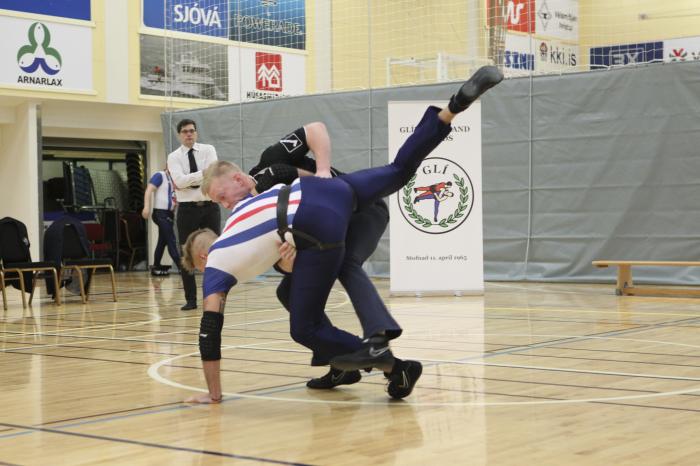
Incidentally, in Icelandic Glíma they don't put much of an emphasis on traditional breakfalling at all. You're allowed to touch the ground with anything up to the elbow, so you frequently see people extending their arms to base and keep their balance. I figured something like that would leave a legion of broken shoulders/elbows/wrists in its wake (especially since those mad fuckers wrestle on wooden floors), but by all accounts there's no higher than usual rates of injury there at all.
DBBlack belt 3rd degreeVerified
5 year(s) ago
Incidentally, in Icelandic Glíma they don't put much of an emphasis on traditional breakfalling at all. You're allowed to touch the ground with anything up to the elbow, so you frequently see people extending their arms to base and keep their balance. I figured something like that would leave a legion of broken shoulders/elbows/wrists in its wake (especially since those mad fuckers wrestle on wooden floors), but by all accounts there's no higher than usual rates of injury there at all.
My guess is that's because it's considered illegal / unsportsmanlike to follow through on a throw in glima. Am I right? You're not allowed to powerbomb the opponent into valhalla. But you have to give him / her a change to land gracefully.
RMBrown beltVerified
5 year(s) ago
Yeah, in order for a throw to count, you have to remain standing afterwards. If you land on your opponent it's called a "brother fall" and the ref stands you both back up and tells you to start again.
So there will be less momentum involved than, say, someone trying to harai makikomi you down to the Earth's core.
I talked to a 3rd-dan judo black belt who tried out some Glima, and he says there are also some subtle technical things they do to make it safer to brace on an outstretched arm. Like rotate your hand so that the fingers are pointed more in towards your body - that way if the elbow has to bend it should at least be encouraged to bend in the right direction. I would not fancy doing it on a regular basis though.
So there will be less momentum involved than, say, someone trying to harai makikomi you down to the Earth's core.
I talked to a 3rd-dan judo black belt who tried out some Glima, and he says there are also some subtle technical things they do to make it safer to brace on an outstretched arm. Like rotate your hand so that the fingers are pointed more in towards your body - that way if the elbow has to bend it should at least be encouraged to bend in the right direction. I would not fancy doing it on a regular basis though.
DBBlack belt 3rd degreeVerified
5 year(s) ago
Whenever I hear, "landing on an outstretched arm", I think of Yoshida at the Barcelona Olympics sacrificing his own arm to prevent ippon. And winning the match. Mad lad.
JVBlack belt 3rd degreeVerified
5 year(s) ago
This systema guy explains is rather well. Seems like a more intuitive way to roll through the motion, instead of bracing yourself for impact. https://www.youtube.com/w[...]zmuneuhnXE
Interesting, thanks!
JVBlack belt 3rd degreeVerified
5 year(s) ago
Yeah, in order for a throw to count, you have to remain standing afterwards. If you land on your opponent it's called a 'brother fall' and the ref stands you both back up and tells you to start again. So there will be less momentum involved than, say, someone trying to harai makikomi you down to the Earth's core. I talked to a 3rd-dan judo black belt who tried out some Glima, and he says there are also some subtle technical things they do to make it safer to brace on an outstretched arm. Like rotate your hand so that the fingers are pointed more in towards your body - that way if the elbow has to bend it should at least be encouraged to bend in the right direction. I would not fancy doing it on a regular basis though.
That’s how I’ve seen some Parkour people modify their falling technique when they reach with an outstretched arm. Fingertips toward the body so the arm folds safely



