
Rules for main forums
- Be nice
- No advertisement
- No events
- No fundraisers
- No topics asking for votes
- Only posts related to Brazilian Jiu Jitsu
Law Enforcement (Defensive Tactics)
3 year(s) ago • 25785 views • 60 replies
 B
BBrown beltVerified
3 year(s) ago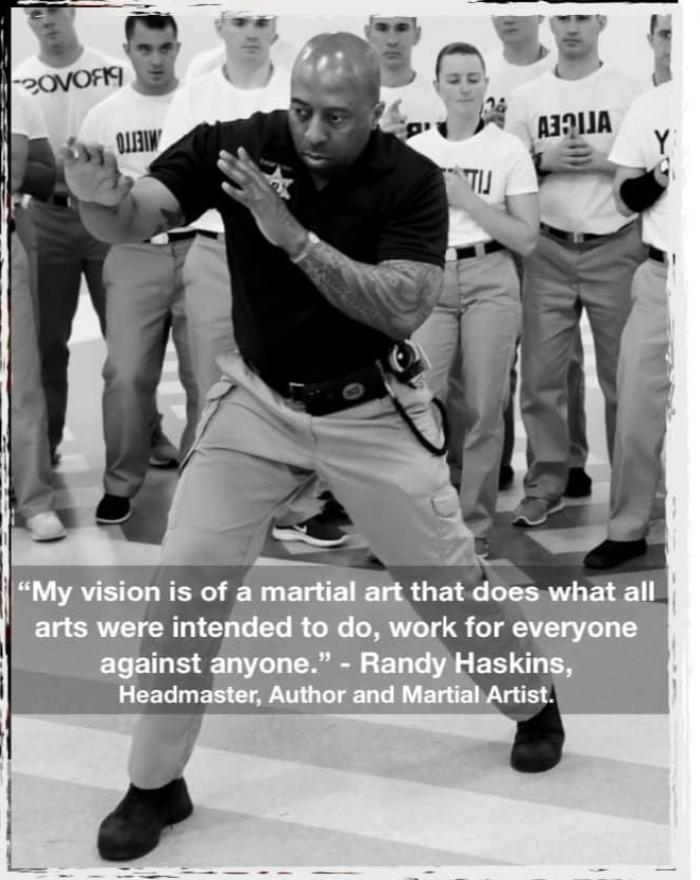
I have been reflecting on this for quite some time now and have finally decided to write something about it.
I have to admit; the Gracie’s have done a phenomenal job at convincing the world that Gracie Jiu Jitsu or BJJ is what’s needed in law enforcement circles and all other systems are inferior, but nothing can be further from the truth.
Let me throw out this disclaimer before expanding on the subject:
•I’m not speaking out against BJJ out of jealousy like many will speculate and/or assume, I’m speaking from experience as a 22 year law enforcement veteran and a 46 year student of the martial sciences.
YOU SEE:
I’m a retired law enforcement professional (LEO), and life long student of the martial sciences with a background in Karate Jutsu, Kudo Kai Aiki Jutsu, Taka Judo and 10th Planet Jiu Jitsu, who wrote two defensive tactics (DT) blocks of instruction which were adopted by the Mass Sheriff’s Association. For 22 years I traveled the state of Massachusetts teaching and certifying DT instructors as well as overseeing the instruction of defensive tactics in police and correction academies.
Now that you have a brief overview of my background I will now share my thoughts about DT as whole, the Gracie’s, and whether or not other systems are also valid options.
Defensive Tactics curricula across this country pretty much mirror one another, and they are all very effective systems developed specifically for the law enforcement officer to be able to efficiently and effectively affect an arrest. The problem isn’t the program itself, the problem is the lack of experience and understanding demonstrated by the majority of individuals who are chosen to attend the 12 day instructor certification course.
Yes, that’s right, someone is chosen (usually politically appointed) and sent to a 12 day course, graduates, and then begins to teach officers how to survive life and death encounters without actually knowing how the program actually is designed to be used. When I’ve taught next to these people it was pointed out that the quality of information and instruction was night and day.
The techniques presented within most DT programs are sufficient for the job, the problem is most instructors haven’t the slightest clue of how they are designed to truly be used, or how they connect in order to provide the advantage to the officer. There is truly no need to look outside of the system that was designed for the LEO, only a need to empower qualified instructors.
Is BJJ the best option? ABSOLUTELY NOT! It is an option, but NOT the best option. BJJ was simply marketed well, that’s all. It puts every altercation on the ground which in many cases isn’t a good idea.
Karate is primarily taught in a “kick, punch, block” fashion that makes it a bad option to be used by an LEO. When one truly explores the full compliment that the system of karate has to offer, like I do, he will be in a better position to utilize his art successfully in a law enforcement capacity. The true system of karate offers an officer the option of remaining on his feet, or on the ground while he utilizes his pain compliance techniques.
Karate’s original curriculum consists of:
•Punching, thrusting, kicking and striking.
•Loading, tripping, reaping and sweeping.
•Tegumi (Okinawan Grappling/Wrestling).
•Kobudo (Ancient Arts).
•Joint manipulation, muscle and tendon distribution, vital point attacks and vital area attacks.
AND:
A civilian should NEVER be allowed to teach an LEO because a civilian does not truly know much-less understand what the needs of an LEO are.
~Randy B. Haskins~
Badge #2712 (Retired)
I have to admit; the Gracie’s have done a phenomenal job at convincing the world that Gracie Jiu Jitsu or BJJ is what’s needed in law enforcement circles and all other systems are inferior, but nothing can be further from the truth.
Let me throw out this disclaimer before expanding on the subject:
•I’m not speaking out against BJJ out of jealousy like many will speculate and/or assume, I’m speaking from experience as a 22 year law enforcement veteran and a 46 year student of the martial sciences.
YOU SEE:
I’m a retired law enforcement professional (LEO), and life long student of the martial sciences with a background in Karate Jutsu, Kudo Kai Aiki Jutsu, Taka Judo and 10th Planet Jiu Jitsu, who wrote two defensive tactics (DT) blocks of instruction which were adopted by the Mass Sheriff’s Association. For 22 years I traveled the state of Massachusetts teaching and certifying DT instructors as well as overseeing the instruction of defensive tactics in police and correction academies.
Now that you have a brief overview of my background I will now share my thoughts about DT as whole, the Gracie’s, and whether or not other systems are also valid options.
Defensive Tactics curricula across this country pretty much mirror one another, and they are all very effective systems developed specifically for the law enforcement officer to be able to efficiently and effectively affect an arrest. The problem isn’t the program itself, the problem is the lack of experience and understanding demonstrated by the majority of individuals who are chosen to attend the 12 day instructor certification course.
Yes, that’s right, someone is chosen (usually politically appointed) and sent to a 12 day course, graduates, and then begins to teach officers how to survive life and death encounters without actually knowing how the program actually is designed to be used. When I’ve taught next to these people it was pointed out that the quality of information and instruction was night and day.
The techniques presented within most DT programs are sufficient for the job, the problem is most instructors haven’t the slightest clue of how they are designed to truly be used, or how they connect in order to provide the advantage to the officer. There is truly no need to look outside of the system that was designed for the LEO, only a need to empower qualified instructors.
Is BJJ the best option? ABSOLUTELY NOT! It is an option, but NOT the best option. BJJ was simply marketed well, that’s all. It puts every altercation on the ground which in many cases isn’t a good idea.
Karate is primarily taught in a “kick, punch, block” fashion that makes it a bad option to be used by an LEO. When one truly explores the full compliment that the system of karate has to offer, like I do, he will be in a better position to utilize his art successfully in a law enforcement capacity. The true system of karate offers an officer the option of remaining on his feet, or on the ground while he utilizes his pain compliance techniques.
Karate’s original curriculum consists of:
•Punching, thrusting, kicking and striking.
•Loading, tripping, reaping and sweeping.
•Tegumi (Okinawan Grappling/Wrestling).
•Kobudo (Ancient Arts).
•Joint manipulation, muscle and tendon distribution, vital point attacks and vital area attacks.
AND:
A civilian should NEVER be allowed to teach an LEO because a civilian does not truly know much-less understand what the needs of an LEO are.
~Randy B. Haskins~
Badge #2712 (Retired)
 MG
MGPurple beltVerified

3 year(s) ago
I just finished GST yesterday and while it did expose some of Jiu jitsu’s limitations (shrimping with duty gear) I thought it was light years ahead of what my department is currently teaching. The GST course was taught by a black belt that had retired after 25-yrs of law enforcement. The assistant instructor also had 25-yrs of law enforcement.
Pain compliance only works on passively resisting suspects. Suspects that are actively resisting typically fight harder when pain is introduced. GST focuses on control, energy preservation, and weapon retention. I will never use those stupid little wrist locks or pressure points that you find in traditional DT classes.
Pain compliance only works on passively resisting suspects. Suspects that are actively resisting typically fight harder when pain is introduced. GST focuses on control, energy preservation, and weapon retention. I will never use those stupid little wrist locks or pressure points that you find in traditional DT classes.
BBizOP
Brown beltVerified
3 year(s) ago
Most DT instructors have no clue of how things truly work, whether it be “pain compliance techniques,” joint manipulation or whatever so I understand your apprehension, but if you were exposed to the right information I GUARANTEE you’d change your mind.
The problem is the instructors of the courses you took, not the program. The Gracie’s were able to capitalize off of others lack of understanding of the already established programs that they were supposed to be teaching.
The problem is the instructors of the courses you took, not the program. The Gracie’s were able to capitalize off of others lack of understanding of the already established programs that they were supposed to be teaching.
MGPurple beltVerified
3 year(s) ago
The problem is the instructors of the courses you took, not the program. The Gracie’s were able to capitalize off of others lack of understanding of the already established programs that they were supposed to be teaching.
The instructors that had a combined 50-yrs of law enforcement and 40-yrs of martial arts?
BBizOP
Brown beltVerified
3 year(s) ago
Having “martial arts” experience doesn’t necessarily qualify someone. When I was in Japan there were many “martial artists” who had many years of experience but had no clue…
Also, law enforcement experience doesn’t mean that they are qualified to teach the program that they probably don’t understand.
Also, law enforcement experience doesn’t mean that they are qualified to teach the program that they probably don’t understand.
MGPurple beltVerified
3 year(s) ago
Before you go online to rag on a program, you should probably attend it first. The teaching methodologies were by far the best part of the course. I have never had techniques explained so well and in so much detail. Not only did they demonstrate an expertise in the techniques, they clearly had a high level of mastery in the teaching methodology. Furthermore, they were always open to the “what ifs” and took feedback for implementation for future courses as it is a “living” curriculum.
Edited 3 year(s) ago
BBizOP
Brown beltVerified
3 year(s) ago
Not “ragging” on a program, just speaking on what I’ve witnessed in my 22 years teaching DT, and fellowshipping with, training with and information exchanges with countless DT. instructors that many had believed to be knowledgeable…
 R
RBlack belt 3rd degreeVerified
3 year(s) ago
In Missouri I tried to get POST to require CEU training for Defense Tactics instructors……it was a resounding NO.
I’ve been in public safety for well over 30 years. At this point, I don’t think there’s enough officers that care to learn anything other than the ABC programs taught in the academy. Sad but true.
I’ve been in public safety for well over 30 years. At this point, I don’t think there’s enough officers that care to learn anything other than the ABC programs taught in the academy. Sad but true.
MGPurple beltVerified
3 year(s) ago
In Missouri I tried to get POST to require CEU training for Defense Tactics instructors……it was a resounding NO.
And then they wonder why so many videos of use of force incidents go viral and cost tax payers millions of dollars.
BBizOP
Brown beltVerified
3 year(s) ago
INDEED… Mechanics drive the worst cars and LEO’s have no desire to study something that will aid them in their career…
I would start every session that I taught by saying: “If you have no desire to be here leave now. Don’t waste my time or your time” and I’d wait about 10 minutes before actually beginning my class to allow whomever time to leave.
I would start every session that I taught by saying: “If you have no desire to be here leave now. Don’t waste my time or your time” and I’d wait about 10 minutes before actually beginning my class to allow whomever time to leave.
RBlack belt 3rd degreeVerified
3 year(s) ago
My program is titled “Response to Resistance”
Rarely are we in a defensive posture, 99% of the time we are the aggressors in an encounter. Let’s start by calling it what it is.
Rarely are we in a defensive posture, 99% of the time we are the aggressors in an encounter. Let’s start by calling it what it is.
BBizOP
Brown beltVerified
 R
RBlack belt 1st degreeVerified
3 year(s) ago
Modern day defensive tactics programs are - mostly - ineffective. They are far from being sufficient to equip today's law enforcement with the tools they need to safely apprehend violent or resisting subjects. Not even close. Arm bar come-alongs and gooseneck escorts and the like that are taught are a joke against a determined subject. This has been proven in NUMEROUS cases, and can be seen by simply reviewing body camera footage from the agency of your choice. I have plenty locally to highlight same. Sure, against a passively resisting subject, a pressure point or small joint pain manipulation technique might do the trick to convince them to go with the program. Maybe. But if they are determined enough to escape or fight, you will need to transition to better options.
I agree that Brazilian jiu-jitsu (and the Gracie family included) doesn't have a monopoly on knowledge, and it's not the ONLY way to teach cops how to defend and control. BUT, it is a drastic improvement upon the foundation from which defensive tactics stems currently. The Gracies are businessmen, that much is apparent. They have crafted a program and have benefitted by working their way into POST and other certifying bodies. Some of their techniques are a bit out there, and beyond the scope of what MOST police officers can replicate due to ability, training frequency, case law, policy, etc. etc. The fundamental concepts are sound though. I always encourage trainers to seek out opportunities to learn and diversify their knowledge and then go through a vetting process to select and adopt what works for their respective agencies.
Cops need a mixed bag of strikes, strike defense, grappling concepts (surviving and escaping bad positions, controlling good ones) weapon retention, etc. Cops are very poorly limited in training time - and that needs to change big-time. Look into the Yerkes-Dodson Curve as it relates to stress vs. performance and gross vs. fine motor skills and you'll see very quickly why cops shouldn't have to learn a butt load of fine motor skill small joint manipulation or PPCT material when compared to the amount of time they spend in the training halls.
At the end of the day, I appreciate anyone with a growth mindset for this profession. We're all on the same team trying to make things better in a noble career struggling right now. I think perception improves with performance, and that requires training and preparation.
I agree that Brazilian jiu-jitsu (and the Gracie family included) doesn't have a monopoly on knowledge, and it's not the ONLY way to teach cops how to defend and control. BUT, it is a drastic improvement upon the foundation from which defensive tactics stems currently. The Gracies are businessmen, that much is apparent. They have crafted a program and have benefitted by working their way into POST and other certifying bodies. Some of their techniques are a bit out there, and beyond the scope of what MOST police officers can replicate due to ability, training frequency, case law, policy, etc. etc. The fundamental concepts are sound though. I always encourage trainers to seek out opportunities to learn and diversify their knowledge and then go through a vetting process to select and adopt what works for their respective agencies.
Cops need a mixed bag of strikes, strike defense, grappling concepts (surviving and escaping bad positions, controlling good ones) weapon retention, etc. Cops are very poorly limited in training time - and that needs to change big-time. Look into the Yerkes-Dodson Curve as it relates to stress vs. performance and gross vs. fine motor skills and you'll see very quickly why cops shouldn't have to learn a butt load of fine motor skill small joint manipulation or PPCT material when compared to the amount of time they spend in the training halls.
At the end of the day, I appreciate anyone with a growth mindset for this profession. We're all on the same team trying to make things better in a noble career struggling right now. I think perception improves with performance, and that requires training and preparation.
MGPurple beltVerified
3 year(s) ago
To be fair, some of the officer inabilities stem from a lack of physical fitness standards. However, this is an even bigger rabbit hole than DT.
BBizOP
Brown beltVerified
3 year(s) ago
What I’ve found is that many of the DT instructors with no real experience teach from the “book” and don’t understand that the physical examples presented within the book are just that; “examples.”
The book is simply a guide to be used by someone who understands the system of DT. It shouldn’t be used as a bible.
I can’t tell you how many times I’ve heard “You can’t teach an armbar that way because the book shows it this way.” Clearly demonstrating that the person questioning my presentation doesn’t quite understand that the example given in the book was just a demonstration of how to leverage the elbow, and that the important part of the lesson was the leveraging of the elbow, not the specific way it was done.
I understand the feelings and apprehension towards my expressed position in reference to the more commonplace DT programs, but please understand that in my travels I’ve made believers out of nonbelievers through sound instruction of the material, as opposed to what many have been accustomed to.
The book is simply a guide to be used by someone who understands the system of DT. It shouldn’t be used as a bible.
I can’t tell you how many times I’ve heard “You can’t teach an armbar that way because the book shows it this way.” Clearly demonstrating that the person questioning my presentation doesn’t quite understand that the example given in the book was just a demonstration of how to leverage the elbow, and that the important part of the lesson was the leveraging of the elbow, not the specific way it was done.
I understand the feelings and apprehension towards my expressed position in reference to the more commonplace DT programs, but please understand that in my travels I’ve made believers out of nonbelievers through sound instruction of the material, as opposed to what many have been accustomed to.
BBizOP
Brown beltVerified
3 year(s) ago
What I’ve found is that many of the DT instructors with no real experience teach from the “book” and don’t understand that the physical examples presented within the book are just that; “examples.”
The book is simply a guide to be used by someone who understands the system of DT. It shouldn’t be used as a bible.
I can’t tell you how many times I’ve heard “You can’t teach an armbar that way because the book shows it this way.” Clearly demonstrating that the person questioning my presentation doesn’t quite understand that the example given in the book was just a demonstration of how to leverage the elbow, and that the important part of the lesson was the leveraging of the elbow, not the specific way it was done.
I understand the feelings and apprehension towards my expressed position in reference to the more commonplace DT programs, but please understand that in my travels I’ve made believers out of nonbelievers through sound instruction of the material, as opposed to what many have been accustomed to.
The book is simply a guide to be used by someone who understands the system of DT. It shouldn’t be used as a bible.
I can’t tell you how many times I’ve heard “You can’t teach an armbar that way because the book shows it this way.” Clearly demonstrating that the person questioning my presentation doesn’t quite understand that the example given in the book was just a demonstration of how to leverage the elbow, and that the important part of the lesson was the leveraging of the elbow, not the specific way it was done.
I understand the feelings and apprehension towards my expressed position in reference to the more commonplace DT programs, but please understand that in my travels I’ve made believers out of nonbelievers through sound instruction of the material, as opposed to what many have been accustomed to.
 J
JPurple beltVerified
3 year(s) ago
I'm not a cop, but I think that many in law enforcement would benefit from training BJJ or Judo recreationally without the expressed goal of learning to subdue suspects. Learning how to manipulate another person's body through sport can only help anyone who needs to subdue another person and may help to reduce the number of fat cops. The key is to incentivize officers to take up the sport with the support of their department. I imagine the idea of a possible injury while rolling at the BJJ gym keeps many away, but if the department considered this type of training to be somehow tied to their job, they could get benefits in the case of an injury. In any case, any individual would have to recognize that BJJ has serious holes in it's practicality in the streets, but the few times I've had to use it after an altercation escalated I was in complete control and able to stop the other guy without harming him. This being stated, I don't think grappling with a handgun is a smart option and would think that this type of fighting is best reserved for unarmed law enforcement like prison guards and the like. In a pinch though, a cop who's been training BJJ for a couple of years with a critical eye towards the techniques will be more capable if the shit hits the fan or just removing homeless people from the metro without hurting them.
 TH
THBlack beltVerified
3 year(s) ago
I did Law enforcement during my time in the USCG. At the time I did not train. I would be way better off doing the same job now after 8 1/2 years of Bjj. There is no perfect system for dealing with a resisting criminal. They feel like they have nothing to lose and because of that they act in unexpected ways.. Years of training gives you the ability tho react with a calm mind in unpredictable situations. Having an understanding of how to control a person is only going to help our officers. All of the current LEOs that I train with or have trained with say that Jiu Jitsu is an invaluable part of their training and preparation to complete the duty in the safest way possible.
 J
JBlack belt 4th degreeVerified
3 year(s) ago
Funny. I have MULTIPLE LEO personnel at my Academy, both local (County, City and State and DC) as well as Federal (FBI, DEA, Capitol Police, Secret Service, etc) and they ALL think BJJ is the first tool to learn. Of course, I think we can all agree that being well rounded is truly in everyone's best interest, especially LEO, but I hear consistently that the LEO world love what BJJ/Submission Grappling has to offer.
Edited 3 year(s) ago
RBlack belt 1st degreeVerified
3 year(s) ago
Funny. I have MULTIPLE LEO personnel at my Academy, both local (County, City and State and DC) as well as Federal (FBI, DEA, Capitol Police, Secret Service, etc) and they ALL think BJJ is the first tool to learn. Of course, I think we can all agree that being well rounded is truly in everyone's best interest, especially LEO, but I head consistently that the LEO world love what BJJ/Submission Grappling has to offer.
Yep, 100%. I'm sorry, but the standard police academy defensive tactics systems today are extremely flawed and lacking in effective applicability. Jiu-jitsu and grappling-based arts are much more effective because a huge aspect of police work is the ability to take subjects into custody which requires CONTROL. Arm bar come-along escort techniques don't work against truly resistive and determined attackers. Pressure point control tactics are even more useless and ineffective in that context. Passive resistance is more easily overcome and sometimes allows for lesser control techniques to appear effective.
Yerkes-Dodson Curve shows the correlation between stress and performance, particularly comparing gross motor vs. fine motor demands. Just another justification for the lack of effectiveness and replicability of small joint manipulation and pressure point control tactics against combative subjects for law enforcement. Cops don't get to train enough to "master" the fine motor skills necessary to pull off those techniques. Broadly, grappling based systems like jiu-jitsu, wrestling, sambo, judo, etc. incorporate less fine motor, more gross motor when you look at the control-based elements. Think side-mount, full mount, body lock takedowns, knee on belly, etc. Also, the concepts of applying pressure to the hips, shoulders, etc. to mitigate mobility on behalf of the suspect/subject detained, versus the lack of control to essential control points when using the "police armbar" to "pin" a suspect to the ground and try to work to subsequent handcuffing. It's a joke, really.
Anyone who has actually had to truly fight a violent opposer will tell you what works and what doesn't. Overcoming passive resistance isn't a fight. Concepts and techniques in jiu-jitsu and solid grappling based systems work both ways, whereas the BS police academy DT wrist-lock come-alongs only work one way. Which would you rather have your officers invest their VERY LIMITED training time in?
Yerkes-Dodson Curve shows the correlation between stress and performance, particularly comparing gross motor vs. fine motor demands. Just another justification for the lack of effectiveness and replicability of small joint manipulation and pressure point control tactics against combative subjects for law enforcement. Cops don't get to train enough to "master" the fine motor skills necessary to pull off those techniques. Broadly, grappling based systems like jiu-jitsu, wrestling, sambo, judo, etc. incorporate less fine motor, more gross motor when you look at the control-based elements. Think side-mount, full mount, body lock takedowns, knee on belly, etc. Also, the concepts of applying pressure to the hips, shoulders, etc. to mitigate mobility on behalf of the suspect/subject detained, versus the lack of control to essential control points when using the "police armbar" to "pin" a suspect to the ground and try to work to subsequent handcuffing. It's a joke, really.
Anyone who has actually had to truly fight a violent opposer will tell you what works and what doesn't. Overcoming passive resistance isn't a fight. Concepts and techniques in jiu-jitsu and solid grappling based systems work both ways, whereas the BS police academy DT wrist-lock come-alongs only work one way. Which would you rather have your officers invest their VERY LIMITED training time in?
 M
MBrown beltVerified
3 year(s) ago
My Jiu Jitsu Coach always points out Jiu Jitsu is the art of control and not submission and in my opinion and experience (21 years LE officer- still active duty, 15 years licensed DT instructor)every well rounded grappling based system (stand up, clinch and ground) which is alive and works against a resisting opponent is great to be included in a DT concept especially suited for the specific target audience (look at Chad Lyman‘s c4c/police Jiu Jitsu, Jay Wadsworth- EFC, ISR Matrix , and other Jiu Jitsu based concepts which use BJJ and wrestling as the main delivery system…just to name a few).
There are some great studies out there within the Law Enforcement community and of course in public, which evaluates and proofs, that Brazilian Jiu Jitsu has a huge positive impact on the officers (police, corrections, etc...) on duty and of course overall.
Two of the studies are from Pasco Police Department and Evol Octopuss BJJ and the Marietta Police Department, GA.
I link the studies here , but in short just to show that Brazilian Jiu Jitsu for LE Officers (or members of other agencies, who need to use force and physical management/ Arrest and control tactics) is one of the best options:
Pasco Police study:
"This program lead to an 80% increase in Officer confidence and a 57% decrease in reportable use-of-force incidents for Officers involved., It also improved Officer physical and mental health, created a more positive community perception, and enhanced department morale".
https://evoloctopusjiu-ji[...]w7Wg_0RHt0
Marietta Police:
"MPD officers participating in Brazilian Jiu Jitsu (BJJ) training, as compared to their coworkers electing to NOT participate, had the following statistics for 2020".
48% reduction of injuries to officers using force
53% reduction of injuries to the person being arrested when force was required
23% reduction of use of Taser
https://www.mariettaga.go[...]WgcYMufcms
I can confirm that first hand out of my own experience and the experience of fellow police and prison officers:
Police and Correction Officers, who train with me often give me feedback about how BJJ helps them immensely on duty and how it boosts their confidence and physical ability to handle dangerous and violent situations on the one hand, and on the other hand builds up mental resilience and helps shaking the stress off after hard day on duty, too.
There are some great studies out there within the Law Enforcement community and of course in public, which evaluates and proofs, that Brazilian Jiu Jitsu has a huge positive impact on the officers (police, corrections, etc...) on duty and of course overall.
Two of the studies are from Pasco Police Department and Evol Octopuss BJJ and the Marietta Police Department, GA.
I link the studies here , but in short just to show that Brazilian Jiu Jitsu for LE Officers (or members of other agencies, who need to use force and physical management/ Arrest and control tactics) is one of the best options:
Pasco Police study:
"This program lead to an 80% increase in Officer confidence and a 57% decrease in reportable use-of-force incidents for Officers involved., It also improved Officer physical and mental health, created a more positive community perception, and enhanced department morale".
https://evoloctopusjiu-ji[...]w7Wg_0RHt0
Marietta Police:
"MPD officers participating in Brazilian Jiu Jitsu (BJJ) training, as compared to their coworkers electing to NOT participate, had the following statistics for 2020".
48% reduction of injuries to officers using force
53% reduction of injuries to the person being arrested when force was required
23% reduction of use of Taser
https://www.mariettaga.go[...]WgcYMufcms
I can confirm that first hand out of my own experience and the experience of fellow police and prison officers:
Police and Correction Officers, who train with me often give me feedback about how BJJ helps them immensely on duty and how it boosts their confidence and physical ability to handle dangerous and violent situations on the one hand, and on the other hand builds up mental resilience and helps shaking the stress off after hard day on duty, too.
MGPurple beltVerified
3 year(s) ago
Reflections from yesterday’s DT:
1. Open closed guard by digging your elbows into the thighs (the instructor who doesn’t train identified this as his favorite way to open the guard).
2. After opening the guard, stand up and simply walk away.
At the end of class I got dirty looks when asked to give one positive feedback on the training and I told them to come back to me later and I’ll try to make something up.
1. Open closed guard by digging your elbows into the thighs (the instructor who doesn’t train identified this as his favorite way to open the guard).
2. After opening the guard, stand up and simply walk away.
At the end of class I got dirty looks when asked to give one positive feedback on the training and I told them to come back to me later and I’ll try to make something up.
RBlack belt 1st degreeVerified
3 year(s) ago
Reflections from yesterday’s DT: 1. Open closed guard by digging your elbows into the thighs (the instructor who doesn’t train identified this as his favorite way to open the guard). 2. After opening the guard, stand up and simply walk away. At the end of class I got dirty looks when asked to give one positive feedback on the training and I told them to come back to me later and I’ll try to make something up.
We've got a Dean of our local Community College where most in-service training is done at who still swears by armbar come-alongs, goosenecks, etc. and has injured countless Academy trainees because he'll call them up as a demo partner and then crank the shit out of whatever technique he's teaching on the unsuspecting, cooperative volunteer.
It irritates me to no end the bull shit they push out in modern police academies, particularly in the defensive tactics realm. Thankfully, North Carolina is revamping their DT program.
It irritates me to no end the bull shit they push out in modern police academies, particularly in the defensive tactics realm. Thankfully, North Carolina is revamping their DT program.
 RF
RFBlack beltVerified
3 year(s) ago
Not a cop but I do have the opportunity to coach many LEO's at my school and they're all great. They've said the best reward they get out of BJJ is the conditioning and confidence to engage/deal with threats methodically. If they are less likely to act emotionally and go lethal the better.
IMHO, LEO are supposed to be our heroes and it all starts with their self-confidence. I always offer them my extra time to remind them that they are appreciated for going and doing what many of us will never do.
IMHO, LEO are supposed to be our heroes and it all starts with their self-confidence. I always offer them my extra time to remind them that they are appreciated for going and doing what many of us will never do.
 JT
JTBlack belt 3rd degreeVerified
3 year(s) ago
Biz,
I Think you are right. I'm not a Police Officer, but I have been in the military for over 20 years and I am certified Combative instructor. I have also been brought on as a contractor to work with the ARMY, Marines, and Air Force to help with their hand to hand combat courses. You and Matt Guyer hit the nail on the head when you guys said, "send people to take a course." The military has the same thing. They send people through different level courses and they go back to their units to teach what they have learned. A white belt teaching other white belts. Is BJJ good for LEO's? Absolutely it is, but they have to train as much as possible with certified instructors that are at least blue belts and above. It is the exact same thing when women take a self defense course. I normally teach one once a year and I tell all of them that come in. I'm going to show you a few techniques but for these tools to become useful you have to train a few times a week. Good topic Biz,
V/r
Jay
I Think you are right. I'm not a Police Officer, but I have been in the military for over 20 years and I am certified Combative instructor. I have also been brought on as a contractor to work with the ARMY, Marines, and Air Force to help with their hand to hand combat courses. You and Matt Guyer hit the nail on the head when you guys said, "send people to take a course." The military has the same thing. They send people through different level courses and they go back to their units to teach what they have learned. A white belt teaching other white belts. Is BJJ good for LEO's? Absolutely it is, but they have to train as much as possible with certified instructors that are at least blue belts and above. It is the exact same thing when women take a self defense course. I normally teach one once a year and I tell all of them that come in. I'm going to show you a few techniques but for these tools to become useful you have to train a few times a week. Good topic Biz,
V/r
Jay
RBlack belt 1st degreeVerified
3 year(s) ago
Good evening, Current patrol/swat cop and DT instructor (EFC, GST, FBI and Krav Maga). I recently attended the Effective Fitness Combatives course with Jay Wadsworth (BJJ black belt, veteran LEO) and that course needs to and hopefully will spread like wildfire. We had 27 students in the class, 20 of them were active BJJ practitioners and 10 of those 20 were black belts. Anyway - it's jiu-jitsu rooted but also tied to wrestling and MMA and I believe did not have holes in the curriculum at all. I am also a GST instructor and a fan of that program as well but I really believe in EFC and what they're doing. Principal based and practical. Since attending the training, I run sessions called 'EFC drills' with our cops and many of them have no interest in the gi...promoting...or anything formal but love the drills. It's basically training MMA grappling with barriers and alot of control positions rooted in jiu-jitsu and our group is really taking to it.
I've heard nothing but great things about EFC and am looking to attend one of their classes myself. I've also attended several other grappling-based systems (GST Level 2, SOCP, Royce's program G.R.A.C.I.E., Carlson Gracie Jr.,'s Basic and Advanced Ground Defense, etc.) I've also trained with a group in our area called Resolute, which offers free jiu-jitsu-based training to local law enforcement twice a month, and have led a few sessions affiliated with them as well. One of the instructors attended an EFC class and came back with some knowledge to share and it all seemed very legit.
 KR
KRBlack beltVerified
3 year(s) ago
I have been reflecting on this for quite some time now and have finally decided to write something about it. I have to admit; the Gracie’s have done a phenomenal job at convincing the world that Gracie Jiu Jitsu or BJJ is what’s needed in law enforcement circles and all other systems are inferior, but nothing can be further from the truth. Let me throw out this disclaimer before expanding on the subject: •I’m not speaking out against BJJ out of jealousy like many will speculate and/or assume, I’m speaking from experience as a 22 year law enforcement veteran and a 46 year student of the martial sciences. YOU SEE: I’m a retired law enforcement professional (LEO), and life long student of the martial sciences with a background in Karate Jutsu, Kudo Kai Aiki Jutsu, Taka Judo and 10th Planet Jiu Jitsu, who wrote two defensive tactics (DT) blocks of instruction which were adopted by the Mass Sheriff’s Association. For 22 years I traveled the state of Massachusetts teaching and certifying DT instructors as well as overseeing the instruction of defensive tactics in police and correction academies. Now that you have a brief overview of my background I will now share my thoughts about DT as whole, the Gracie’s, and whether or not other systems are also valid options. Defensive Tactics curricula across this country pretty much mirror one another, and they are all very effective systems developed specifically for the law enforcement officer to be able to efficiently and effectively affect an arrest. The problem isn’t the program itself, the problem is the lack of experience and understanding demonstrated by the majority of individuals who are chosen to attend the 12 day instructor certification course. Yes, that’s right, someone is chosen (usually politically appointed) and sent to a 12 day course, graduates, and then begins to teach officers how to survive life and death encounters without actually knowing how the program actually is designed to be used. When I’ve taught next to these people it was pointed out that the quality of information and instruction was night and day. The techniques presented within most DT programs are sufficient for the job, the problem is most instructors haven’t the slightest clue of how they are designed to truly be used, or how they connect in order to provide the advantage to the officer. There is truly no need to look outside of the system that was designed for the LEO, only a need to empower qualified instructors. Is BJJ the best option? ABSOLUTELY NOT! It is an option, but NOT the best option. BJJ was simply marketed well, that’s all. It puts every altercation on the ground which in many cases isn’t a good idea. Karate is primarily taught in a “kick, punch, block” fashion that makes it a bad option to be used by an LEO. When one truly explores the full compliment that the system of karate has to offer, like I do, he will be in a better position to utilize his art successfully in a law enforcement capacity. The true system of karate offers an officer the option of remaining on his feet, or on the ground while he utilizes his pain compliance techniques. Karate’s original curriculum consists of: •Punching, thrusting, kicking and striking. •Loading, tripping, reaping and sweeping. •Tegumi (Okinawan Grappling/Wrestling). •Kobudo (Ancient Arts). •Joint manipulation, muscle and tendon distribution, vital point attacks and vital area attacks. AND: A civilian should NEVER be allowed to teach an LEO because a civilian does not truly know much-less understand what the needs of an LEO are. ~Randy B. Haskins~ Badge #2712 (Retired)
I have to admit, being a retired cop, I’m sick and tired of hating on civilians stating they should never be allowed to teach cops because they do not understand the limitations that street cops have to deal with. If you pulled someone out of a regular training facility to teach cops then I would agree, but ( since you mentioned GST type training we can go with that ), Renee Gracie does a significant amount of training specifically with law enforcement all over the world.
Several times I’ve heard instructors trying to mitigate the amount of knowledge which some of these civilians have by automatically stating the instructor was not law enforcement so should not be allowed to teach. Some of these civilians have put in the time to understand, have spent years learning from and with members of the military and law enforcement officers from around the world and some of these civilian instructors have a better understanding of the limitations of the law enforcement officers than the officers themselves.
There are limitations on officers for shooting a weapon and civilians teach cops that, we have limitations for K9 use and civilians teach that, we have all kinds of civilians teach cops and law enforcement special skills. Why would we limit decades of specialized training and learning just because someone wasn’t law enforcement? I’ve been to two of Renee Gracie trainings and I have to admit that he is constantly modifying techniques based on the feedback he is given from the military and cops who are bringing him real life cop scenarios.
Just for the record, I trained in GoJu Ryu Karate and got my second degree black belt before I went into Jiu Jitsu, I have my BB in jiu jitsu and I’ve started and taught ground fighting at two police departments. The ground fighting classes most officers get trained in are not teaching them to be ground fighter, but to give them some experience to keep from being taken down, how to possibly get back up, and if they cannot get back up how to mitigate injury and how to bide your time until you can get back up.
I don’t know if you fit the profile, but it seems to me that some DT instructors use the Law Enforcement title as a shield to protect themselves from being compared to civilians who may have more knowledge and or experience in a specific skill.
Several times I’ve heard instructors trying to mitigate the amount of knowledge which some of these civilians have by automatically stating the instructor was not law enforcement so should not be allowed to teach. Some of these civilians have put in the time to understand, have spent years learning from and with members of the military and law enforcement officers from around the world and some of these civilian instructors have a better understanding of the limitations of the law enforcement officers than the officers themselves.
There are limitations on officers for shooting a weapon and civilians teach cops that, we have limitations for K9 use and civilians teach that, we have all kinds of civilians teach cops and law enforcement special skills. Why would we limit decades of specialized training and learning just because someone wasn’t law enforcement? I’ve been to two of Renee Gracie trainings and I have to admit that he is constantly modifying techniques based on the feedback he is given from the military and cops who are bringing him real life cop scenarios.
Just for the record, I trained in GoJu Ryu Karate and got my second degree black belt before I went into Jiu Jitsu, I have my BB in jiu jitsu and I’ve started and taught ground fighting at two police departments. The ground fighting classes most officers get trained in are not teaching them to be ground fighter, but to give them some experience to keep from being taken down, how to possibly get back up, and if they cannot get back up how to mitigate injury and how to bide your time until you can get back up.
I don’t know if you fit the profile, but it seems to me that some DT instructors use the Law Enforcement title as a shield to protect themselves from being compared to civilians who may have more knowledge and or experience in a specific skill.
MGPurple beltVerified
3 year(s) ago
Say what you want about Rener, Ryron, and GST, they have hundreds of years of combined law enforcement experience helping develop their programs. I will take that over some dork that got “certified” by an academy course after spending a few hours swinging a baton while yelling get back.
MGPurple beltVerified
3 year(s) ago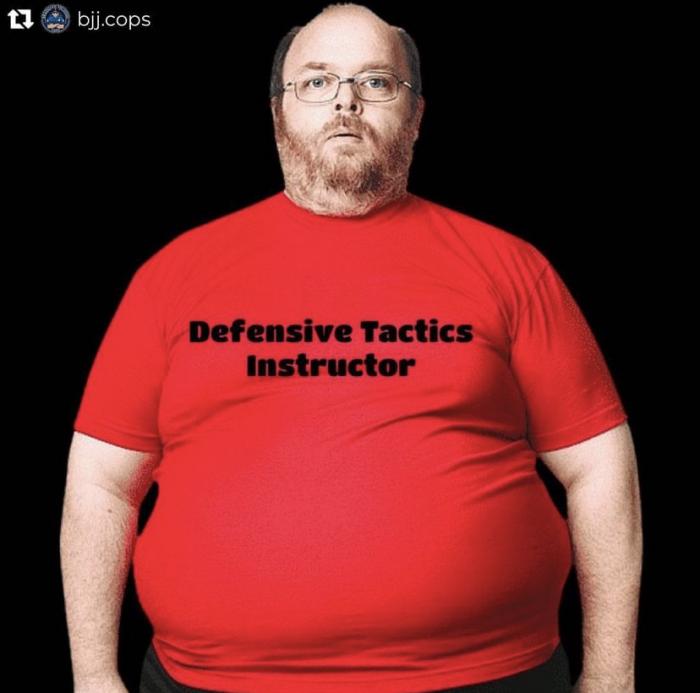
It’s that time of the year again. I get to go learn “defensive tactics” from an “instructor” whose only training has been the two week instructor certification course.
 MR
MRBlack beltVerified
3 year(s) ago
I still dont understand why being at least a blue belt isnt required for law enforcement



