
Rules for main forums
- Be nice
- No advertisement
- No events
- No fundraisers
- No topics asking for votes
- Only posts related to Brazilian Jiu Jitsu
Training smart (for musicians)
3 year(s) ago • 785 views • 21 replies
 AN
ANBlue beltVerified

3 year(s) ago
Hello all!
I’ve been training for a year and a half, and I’m looking to get tips from those more experienced than I in regards to training smart or certain techniques I can focus on to train intelligently to avoid forearm/hand/finger injuries as a jiu jitsu practitioner. I play the piano and pipe organ.
I’ve been able to avoid anything major thus far and I’d like to keep it that way; but I am able to train 3-4 times a week now, so I know if I’m not training intelligently, something can happen. I’m instinctively protective of my arms and hands, but is there anything else or any other musician jiu jitsu practitioners I can follow or get advice from to avoid any bad habits or training habits that could lead to ruin?
I know some things may happen by accident, as it is a combat sport, but I’m looking to find advice to create good habits to protect my arms and hands, or good and healthy habits that have worked for other more experienced musician jiu jitsu practitioners.
Thanks!
I’ve been training for a year and a half, and I’m looking to get tips from those more experienced than I in regards to training smart or certain techniques I can focus on to train intelligently to avoid forearm/hand/finger injuries as a jiu jitsu practitioner. I play the piano and pipe organ.
I’ve been able to avoid anything major thus far and I’d like to keep it that way; but I am able to train 3-4 times a week now, so I know if I’m not training intelligently, something can happen. I’m instinctively protective of my arms and hands, but is there anything else or any other musician jiu jitsu practitioners I can follow or get advice from to avoid any bad habits or training habits that could lead to ruin?
I know some things may happen by accident, as it is a combat sport, but I’m looking to find advice to create good habits to protect my arms and hands, or good and healthy habits that have worked for other more experienced musician jiu jitsu practitioners.
Thanks!
 RZ
RZBlack beltVerified
3 year(s) ago
I had major maxillofacial surgery in 2020. My surgeon was a judo blackbelt who had to quit training judo because he was afraid of damaging his fingers (the tools of his trade) in the gi. He said he was comfortable training no gi since he did not have to worry about getting his fingers trapped/twisted like can happen in the gi.
I found that an interesting perspective.
I found that an interesting perspective.
 J
JBlack belt 2nd degreeVerified
3 year(s) ago
I play guitar and bass, and I have had arthritis problems in the past as a result of Jiu-Jitsu training. Here are the things that have worked for me to keep my hands safe:
(1) Grip the gi lightly. Hold the fabric with very little pressure until you need to throw, choke, or sweep. If you death-grip the fabric all the time, your joints will suffer a lot of wear and tear.
(2) Tape your fingers for gi class. In this video, Rob uses a much thicker strip of tape and much more tape than I prefer, but the technique is the same X-pattern that I use: https://www.youtube.com/w[...]pT1wljDi5Y.
(3) Take anti-inflammatory medications before training. I typically use naproxen sodium or ibuprofen before class, so that I can make a preemptive strike against the inevitable Inflammation.
(4) Do at least half of your training no gi. Virtually all of the techniques will transfer perfectly to a gi environment, and you can spare your hands some trauma.
(5) Avoid techniques that rely on heavy gripping, like spider guard.
(1) Grip the gi lightly. Hold the fabric with very little pressure until you need to throw, choke, or sweep. If you death-grip the fabric all the time, your joints will suffer a lot of wear and tear.
(2) Tape your fingers for gi class. In this video, Rob uses a much thicker strip of tape and much more tape than I prefer, but the technique is the same X-pattern that I use: https://www.youtube.com/w[...]pT1wljDi5Y.
(3) Take anti-inflammatory medications before training. I typically use naproxen sodium or ibuprofen before class, so that I can make a preemptive strike against the inevitable Inflammation.
(4) Do at least half of your training no gi. Virtually all of the techniques will transfer perfectly to a gi environment, and you can spare your hands some trauma.
(5) Avoid techniques that rely on heavy gripping, like spider guard.
ANBlue beltVerified
3 year(s) ago
I play guitar and bass, and I have had arthritis problems in the past as a result of Jiu-Jitsu training. Here are the things that have worked for me to keep my hands safe: (1) Grip the gi lightly. Hold the fabric with very little pressure until you need to throw, choke, or sweep. If you death-grip the fabric all the time, your joints will suffer a lot of wear and tear. (2) Tape your fingers for gi class. In this video, Rob uses a much thicker strip of tape and much more tape than I prefer, but the technique is the same X-pattern that I use: https://www.youtube.com/w[...]pT1wljDi5Y. (3) Take anti-inflammatory medications before training. I typically use naproxen sodium or ibuprofen before class, so that I can make a preemptive strike against the inevitable Inflammation. (4) Do at least half of your training no gi. Virtually all of the techniques will transfer perfectly to a gi environment, and you can spare your hands some trauma. (5) Avoid techniques that rely on heavy gripping, like spider guard.
Oh this is so helpful!! Thank you for the thoughtful response!!
I’ll start the taping this upcoming week for training. I had considered it before, but I wasn’t sure which type of taping would be most effective.
The advice on spider guard makes sense - I do whatever I can to not be caught in it and also felt it did stress my forearms and grips too much. It’s just too easy for accidents to happen. I had another guitarist recommend to incorporate more no gi grips even when working with the gi to preserve my fingers.
Thank you again!
I’ll start the taping this upcoming week for training. I had considered it before, but I wasn’t sure which type of taping would be most effective.
The advice on spider guard makes sense - I do whatever I can to not be caught in it and also felt it did stress my forearms and grips too much. It’s just too easy for accidents to happen. I had another guitarist recommend to incorporate more no gi grips even when working with the gi to preserve my fingers.
Thank you again!
Edited 3 year(s) ago
 PZ
PZBlack beltVerified
3 year(s) ago
Zoltan from Five Finger Death Punch talked about finger protection in his recent interview. He competes in IBJJF master devision on a pretty high level and on the top of that makes a living as a musician so I guess he knows what he's talking about. The whole conversation is quite interesting but if you want to skip to the part about hand/finger preservation it starts at about 48minutes 37seconds mark.
https://www.youtube.com/w[...]mp;t=3972s
https://www.youtube.com/w[...]mp;t=3972s
PZBlack beltVerified
3 year(s) ago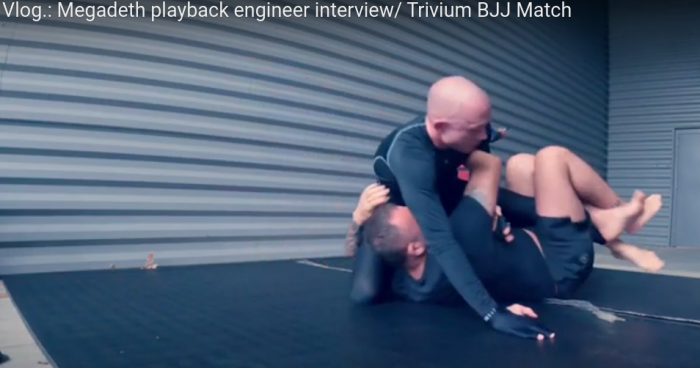
I've also seen bjj black belt Matt Heafy from Trivium using these weird grappling gloves which keep 2 fingers together making them stronger.
JBlack belt 2nd degreeVerified
3 year(s) ago
I've also seen bjj black belt Matt Heafy from Trivium using these weird grappling gloves which keep 2 fingers together making them stronger.
My son used Grappz compression gloves for a while after he had finger surgery. They work really well and save a lot of time taping your hands before training. Of course, you can use tape and the gloves together for maximum support.
 TP
TPBlack beltVerified
3 year(s) ago
Grip the gi lightly. Hold the fabric with very little pressure until you need to throw, choke, or sweep. If you death-grip the fabric all the time, your joints will suffer a lot of wear and tear.
Solid advice, especially this.
I fucked up my fingers playing a lot of gi in the beginning and basically gripping everything with the idea that "if I let go, my mother falls off a cliff and dies". It's not so much the gripping itself, but partners and opponents addressing the grips.
This was until I trained a lot with a skillful judoka, who would basically just let go any time I was in a position to break his grip, and then instantly re-grip. I never got to "snap" his fingers off my kimono. Thus: every time you feel your grip is compromised or about to get stripped (two-on-one etc.), simply let go before it's broken with force, and re-grip. Brilliant concept and really saves your finger joints.
I fucked up my fingers playing a lot of gi in the beginning and basically gripping everything with the idea that "if I let go, my mother falls off a cliff and dies". It's not so much the gripping itself, but partners and opponents addressing the grips.
This was until I trained a lot with a skillful judoka, who would basically just let go any time I was in a position to break his grip, and then instantly re-grip. I never got to "snap" his fingers off my kimono. Thus: every time you feel your grip is compromised or about to get stripped (two-on-one etc.), simply let go before it's broken with force, and re-grip. Brilliant concept and really saves your finger joints.
Edited 3 year(s) ago
 C
CBlack belt 1st degreeVerified
3 year(s) ago
Completely agree!
My fingers are double my age, thanks to my wild blue belt years as a spider guard player. Later learned grips by a black belt judoka. This one also happens to be a doctor and BJJ blue belt. Haven't had any real issues my fingers since 2014. Plus these days I mainly focus on nogi grips anyway.
Basically, keep all your fingers together as much as possible, don't over commit, don't over reach.
My fingers are double my age, thanks to my wild blue belt years as a spider guard player. Later learned grips by a black belt judoka. This one also happens to be a doctor and BJJ blue belt. Haven't had any real issues my fingers since 2014. Plus these days I mainly focus on nogi grips anyway.
Basically, keep all your fingers together as much as possible, don't over commit, don't over reach.
ANBlue beltVerified
3 year(s) ago
You all are awesome! Thank you so much! This is so helpful, because some other jiu jitsu practitioners that I work with are in the "no pain, no gain" camp. Look, I get that, but when you've been a pianist for 24 years and playing the pipe organ for 6 years, and when you're paying the bills with your digits, you have to figure out how to avoid injuries. I knew there had to be a way I could train intelligently and keep on progressing. This definitely makes me feel better.
ANBlue beltVerified
3 year(s) ago
Basically, keep all your fingers together as much as possible, don't over commit, don't over reach.
Oh, this is so good to hear. I've gotten a few noses up or scoffs at me bailing on a position that I know I don't have securely, that could have resulted in an injury if I tried to death grip and muscle through. Your advice confirms I'm on the right track. I refuse to over commit to positions that my technique isn't developed enough to support me on but I've received a few eye rolls due to this or some "oh, you don't try hard enough" comments here and there. I try to explain I'm not willing to risk injury muscling through something just to "win" if my technique isn't there yet, because my day job depends on my arms and fingers being functional.
JBlack belt 2nd degreeVerified
3 year(s) ago
Annette, rest assured that the people who are scoffing and eye-rolling now probably won’t be there ten years from now when you get your black belt… because they quit due to injury. :)
 MG
MGBlack belt 3rd degreeVerified
3 year(s) ago
As Jim says, the key is to use a very light grip. I talk about and demonstrate gripping technique for the first 5 minutes of this video. I'm a professional musician, I'm 69 years old, and I've never had a serious finger injury, and almost never had to wear any tape on my fingers. https://youtu.be/STot7E8Q1IM
 JV
JVBlack belt 1st degreeVerified
3 year(s) ago
14 years in the professional music business here:
1. Avoid spider guard
2. Light grips on lapels and cuffs. You can grab the skirt or gi corners full grip no issues
3. Take days off if your joints get sore. Most people who stop/quit training is due to injury. You can avoid them if you’re careful.
4. Tap early if you get caught, don’t rip out of submissions.
1. Avoid spider guard
2. Light grips on lapels and cuffs. You can grab the skirt or gi corners full grip no issues
3. Take days off if your joints get sore. Most people who stop/quit training is due to injury. You can avoid them if you’re careful.
4. Tap early if you get caught, don’t rip out of submissions.
Edited 3 year(s) ago
ANBlue beltVerified
3 year(s) ago
Annette, rest assured that the people who are scoffing and eye-rolling now probably won’t be there ten years from now when you get your black belt… because they quit due to injury. :)
Aww thanks! Sometimes it doesn't feel that way for me since I'm small, cautious and bailing a lot at this point hahah. It's hard to imagine 10 years down the road Annette who knows what she's doing.
ANBlue beltVerified
3 year(s) ago
14 years in the professional music business here: 1. Avoid spider guard 2. Light grips on lapels and cuffs. You can grab the skirt or gi corners full grip no issues 3. Take days off if your joints get sore. Most people stop training due to injuries of any sort. You can avoid them if you’re careful. 4. Tap early if you get caught, don’t rip out of submissions.
Haha that's two avoid spider guard advices - I will take this one to heart. I tried the light gripping yesterday and I'm not feeling the usual tension and rigidity in my forearms that I usually do. I also tapped on two shoulder locks and arm bars at the slightest sign of tension. Thank you for this advice!
Edited 3 year(s) ago
ANBlue beltVerified
3 year(s) ago
As Jim says, the key is to use a very light grip. I talk about and demonstrate gripping technique for the first 5 minutes of this video. I'm a professional musician, I'm 69 years old, and I've never had a serious finger injury, and almost never had to wear any tape on my fingers. https://youtu.be/STot7E8Q1IM
Wow that's so encouraging to hear!! I'm even shocked I made it a year and a half without a major finger bang up, I wondered if I was running on borrowed time but now you made me feel better haha.
ANBlue beltVerified
3 year(s) ago
Bring tennis balls to spar. Instead of relying on grips use the ball in hand to learn how to post and anchor when you frame and adjust. You could also use a gua sha tool for fascia release after. The biggest thing is to take things slow. If you have a cut or are not 100%, just show up and watch, most people make the biggest improvements by sitting and familiarizing themselves with the dynamics and progression the same way you would study a piece of music.
I don’t understand the tennis ball thing? Can you explain further? Like, hold them while rolling?
Either way, this might not work for me, I have mildly child sized hands. 😂
Either way, this might not work for me, I have mildly child sized hands. 😂
ANBlue beltVerified
3 year(s) ago
Yes, hold on to the ball while rolling. But explain the method to your instructor first if he isn't familiar. A stress ball would be a good alternative too. Jean-Jaques Machado would be a great person to study in-depth for grip alternatives too.
Ok! Thanks for the name, I’ll check him out. Stress balls would be a better alternative, holding tennis balls may do more damage to my hands. I don’t have big hands so it may actually cause more strain.
I’ve never really been able to lean on heavy gripping too much, thankfully, because I’m small and muscling through trying to rely on upper body strength/arm strength to force moves to work has never been an option for my size. Well, it could be, but then I’m just burnt out and exhausted, and unable to play piano and pipe organ as well afterwards due to my forearms being strained.
I’ve never really been able to lean on heavy gripping too much, thankfully, because I’m small and muscling through trying to rely on upper body strength/arm strength to force moves to work has never been an option for my size. Well, it could be, but then I’m just burnt out and exhausted, and unable to play piano and pipe organ as well afterwards due to my forearms being strained.
 JJ
JJBlack beltVerified
3 year(s) ago
Don't hold onto sleeves with 1 hand unless a pistol grip.
Collar grips are fine but if you grab onto someone's sleeve with just 1 hand and decide not to let go you will hurt your fingers eventually.
Collar grips are fine but if you grab onto someone's sleeve with just 1 hand and decide not to let go you will hurt your fingers eventually.



