
Rules for main forums
- Be nice
- No advertisement
- No events
- No fundraisers
- No topics asking for votes
- Only posts related to Brazilian Jiu Jitsu
Competing After an Injury
2 year(s) ago • 737 views • 16 replies
 AP
APBlack beltVerified
2 year(s) ago
I received arthroscopic knee surgery to repair my medial meniscus on 10/12/23. Many sources online, as well as my surgeon, are saying to wait until at least the 12 month post op mark to fully return to competitve sports. Although I'm not planning to compete until Q4 2024 or early 2025, I wanted to start getting tips for returning to comp training after a serious injury. How did you get past the headspace of constantly worrying about being reinjured?
 MG
MGBlack belt 3rd degreeVerified

2 year(s) ago
You can train fairly actively well before 12 months. I had meniscus surgery in both knees, and by 4 months I was able to train with no problems. However, it takes a good 12 months though to regain full strength. I found aquarobics extremely helpful. But competition puts on a lot of extra pressure, and competition training is considerably more stressful than regular training, so from my perspective, I would think that you should wait a year before beginning that kind of intense training. Therefore competing in 2024 or even early 2025 might be overly ambitious.
APBlack beltVerified
2 year(s) ago
You can train fairly actively well before 12 months. I had meniscus surgery in both knees, and by 4 months I was able to train with no problems. However, it takes a good 12 months though to regain full strength. I found aquarobics extremely helpful. But competition puts on a lot of extra pressure, and competition training is considerably more stressful than regular training, so from my perspective, I would think that you should wait a year before beginning that kind of intense training. Therefore competing in 2024 or even early 2025 might be overly ambitious.
I've been training, for sure. I started flow rolling as soon as 2 months out. I'm just concerned about not being able to ever feel 100%
MGBlack belt 3rd degreeVerified
2 year(s) ago
It can take a long time, but you'll certainly get back to feeling 100% with your knees. Two years after surgery I was back to doing deep knee squats, folk dancing and active standing judo randori.
 AR
ARBlack beltVerified
2 year(s) ago
It can take a long time, but you'll certainly get back to feeling 100% with your knees. Two years after surgery I was back to doing deep knee squats, folk dancing and active standing judo randori.
Folk dancing? Videos or it didn't happen.
I'm a pretty reliable source of info when it comes to knee surgery. I've had 8. 2 complete rebuilds and 6 to remove damage meniscus that couldn't be repaired. What I have learned is you don't want to rush getting back to hard training. It can be really frustrating, but it's very important to let the repair completely heal. Meniscus notoriously heals slowly. Make sure to do all your range of motion exercises. For sure roll, but if you aren't 100% sure about someone, let them know that you're recovering.
I'm a pretty reliable source of info when it comes to knee surgery. I've had 8. 2 complete rebuilds and 6 to remove damage meniscus that couldn't be repaired. What I have learned is you don't want to rush getting back to hard training. It can be really frustrating, but it's very important to let the repair completely heal. Meniscus notoriously heals slowly. Make sure to do all your range of motion exercises. For sure roll, but if you aren't 100% sure about someone, let them know that you're recovering.
APBlack beltVerified
2 year(s) ago
Folk dancing? Videos or it didn't happen. I'm a pretty reliable source of info when it comes to knee surgery. I've had 8. 2 complete rebuilds and 6 to remove damage meniscus that couldn't be repaired. What I have learned is you don't want to rush getting back to hard training. It can be really frustrating, but it's very important to let the repair completely heal. Meniscus notoriously heals slowly. Make sure to do all your range of motion exercises. For sure roll, but if you aren't 100% sure about someone, let them know that you're recovering.
I'm definitely aware of the healing timeline. I'm more or less interested in the mindset after it's healed, and I've been given the green light to go 100% again. How difficult, if at all, was it to full trust your knee(s) once you've recovered and gone back to competitive training. Keep in mind, I'm interested in training for competition again. I'm already back to casual training.
 MG
MGBlack beltVerified
2 year(s) ago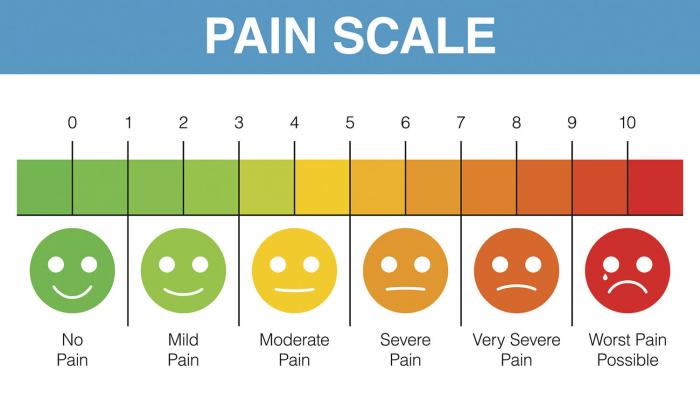
Presently coming back from a central spinal cord injury that left me paralyzed for about a bit. Not my first injury / surgery either. Make your return to competition training progressive. Any performance based training should be done in a way to that avoids overtraining. You don’t need an exercise physiologist, like myself, to track training load and test you weekly. Use a journal or Beltchecker to track your activity (i.e., duration, number of rolls, pain scale 1 to 10, type of training, etc.).
It will take time, so be patient with yourself. Remaining positive and telling yourself you are getting better makes more of a difference than you might think. Happy rolls.
It will take time, so be patient with yourself. Remaining positive and telling yourself you are getting better makes more of a difference than you might think. Happy rolls.
Edited 2 year(s) ago
 JJ
JJBlack beltVerified
2 year(s) ago
I received arthroscopic knee surgery to repair my medial meniscus on 10/12/23. Many sources online, as well as my surgeon, are saying to wait until at least the 12 month post op mark to fully return to competitve sports. Although I'm not planning to compete until Q4 2024 or early 2025, I wanted to start getting tips for returning to comp training after a serious injury. How did you get past the headspace of constantly worrying about being reinjured?
Don't even worry about winning. I compete injured all the time and already know the more severe the injury the less likely I have any chance on winning. But it does force you to work on other stuff which makes you better.
Just make sure you don't make your injuries any worse and that you have stuff to work on in the likely scenario your injured body parts are not functioning the way you would like and have a backup game plan based around that fact.
Just make sure you don't make your injuries any worse and that you have stuff to work on in the likely scenario your injured body parts are not functioning the way you would like and have a backup game plan based around that fact.
Edited 2 year(s) ago
 AK
AKPurple beltVerified
2 year(s) ago
October 22nd 2022 I broke my shoulder ACJ, full separation of ligaments.
Had surgery within the magical 1 month window.
Competed March 19th 2023. No major problems or reinjury, just shoulders that look like they belong to different people.
Had a Grade 2 LCL tear that didn't require surgery but kept me out longer. There's more jiu jitsu you can do without a shoulder, than a knee.
Regarding 100%, you might never actually be 100% again. I still get a dull aching pain in my knee that means "don't push me", my shoulder still isn't as strong as it was. But you might be pleasantly surprised what you can achieve whilst at ~90%.
I remember Christian saying his injuries won't let him do Japanese neckties anymore. The point is that he doesn't need Japanese neckties to beat the vast majority of jiu jitsu practitioners. Likewise there's stuff I don't do anymore because it irritates my shoulder. Mainly a lot of brain dead warm up shit that was pointless anyway.
Had surgery within the magical 1 month window.
Competed March 19th 2023. No major problems or reinjury, just shoulders that look like they belong to different people.
Had a Grade 2 LCL tear that didn't require surgery but kept me out longer. There's more jiu jitsu you can do without a shoulder, than a knee.
Regarding 100%, you might never actually be 100% again. I still get a dull aching pain in my knee that means "don't push me", my shoulder still isn't as strong as it was. But you might be pleasantly surprised what you can achieve whilst at ~90%.
I remember Christian saying his injuries won't let him do Japanese neckties anymore. The point is that he doesn't need Japanese neckties to beat the vast majority of jiu jitsu practitioners. Likewise there's stuff I don't do anymore because it irritates my shoulder. Mainly a lot of brain dead warm up shit that was pointless anyway.
APBlack beltVerified
2 year(s) ago
October 22nd 2022 I broke my shoulder ACJ, full separation of ligaments. Had surgery within the magical 1 month window. Competed March 19th 2023. No major problems or reinjury, just shoulders that look like they belong to different people. Had a Grade 2 LCL tear that didn't require surgery but kept me out longer. There's more jiu jitsu you can do without a shoulder, than a knee. Regarding 100%, you might never actually be 100% again. I still get a dull aching pain in my knee that means 'don't push me', my shoulder still isn't as strong as it was. But you might be pleasantly surprised what you can achieve whilst at ~90%. I remember Christian saying his injuries won't let him do Japanese neckties anymore. The point is that he doesn't need Japanese neckties to beat the vast majority of jiu jitsu practitioners. Likewise there's stuff I don't do anymore because it irritates my shoulder. Mainly a lot of brain dead warm up shit that was pointless anyway.
Surprisingly, I've gotten better since my surgery. I learned to slow my jiu jitsu down and be as technical as possible. Ive also learned to pass guard in ways I normally would never pass. On the ground, I can do pretty much everything I would like to. I'm just waiting for full healing to get back into the wrestling and judo. But thanks, to everyone, for your perspectives!
MGBlack belt 3rd degreeVerified
2 year(s) ago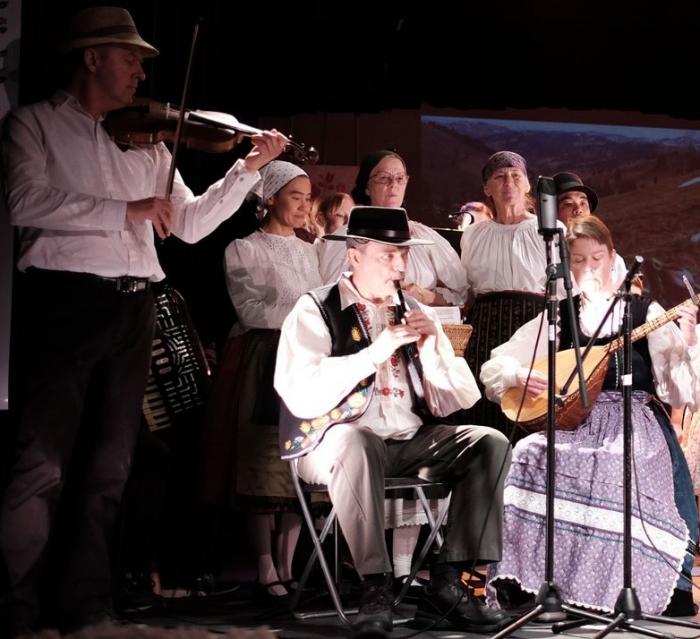
Folk dancing? Videos or it didn't happen.
Sorry, no videos of me dancing, but here's a still of me playing for dancers in a Hungarian dance and song concert:
 C
CBlack belt 1st degreeVerified
2 year(s) ago
I had meniscus surgery on December 19th. Started rolling again about 2 weeks ago. Still avoiding certain positions and playing everything very safe. If I was to compete again in the future, I'd still wait another 4 months at least before competition. Training for competition should be ok 4 monhts post op.
APBlack beltVerified
2 year(s) ago
I had meniscus surgery on December 19th. Started rolling again about 2 weeks ago. Still avoiding certain positions and playing everything very safe. If I was to compete again in the future, I'd still wait another 4 months at least before competition. Training for competition should be ok 4 monhts post op.
4 months post op seems quick after a repair. I had a pretty severe bucket handle tear. I'll wait until probably September to go hard again. Nicky Ryan re-tore his meniscus 9 months after repair. I'm gonna learn from his mistake lol.
AKPurple beltVerified
2 year(s) ago
I can't speak for America, but the Doctors here are generally awful at giving advice on return timescales, so bad that i honestly wouldn't advise listening to them. Probably because:
1. Most of them don't do any sport
2. Their only incentive is to give a conservative answer
3. Most the people they treat also don't do any sport
4. Any data they'd reference is based on an unrepresentative sample for people who actually do sport
I quit my (free) physio after 2 sessions because I honestly felt she was wasting my time. After she spoke at me for about 30 minutes, I asked her "all I really need to know is whether I can tense my shoulder in an underhook position without damaging it and if I am damaging it, will it hurt or just break?" I didn't really expect her to know what an underhook is so I unpacked it a bit for her. But her answers were still evasive. Eventually I asked her "have you actually worked with someone who does sport before?" She had not. Just a career or helping pensioners get back to gardening after rotator cuff injuries.
My shoulder and LCL were 'scary' in the sense that they both happened suddenly with no warning pain. I know now that knees don't really give warning pain (e.g. like elbows do). I still never got straight answer about shoulders but I'd assume they are more like elbows than knees in that respect.
1. Most of them don't do any sport
2. Their only incentive is to give a conservative answer
3. Most the people they treat also don't do any sport
4. Any data they'd reference is based on an unrepresentative sample for people who actually do sport
I quit my (free) physio after 2 sessions because I honestly felt she was wasting my time. After she spoke at me for about 30 minutes, I asked her "all I really need to know is whether I can tense my shoulder in an underhook position without damaging it and if I am damaging it, will it hurt or just break?" I didn't really expect her to know what an underhook is so I unpacked it a bit for her. But her answers were still evasive. Eventually I asked her "have you actually worked with someone who does sport before?" She had not. Just a career or helping pensioners get back to gardening after rotator cuff injuries.
My shoulder and LCL were 'scary' in the sense that they both happened suddenly with no warning pain. I know now that knees don't really give warning pain (e.g. like elbows do). I still never got straight answer about shoulders but I'd assume they are more like elbows than knees in that respect.
 RT
RTBlack belt 3rd degreeVerified
2 year(s) ago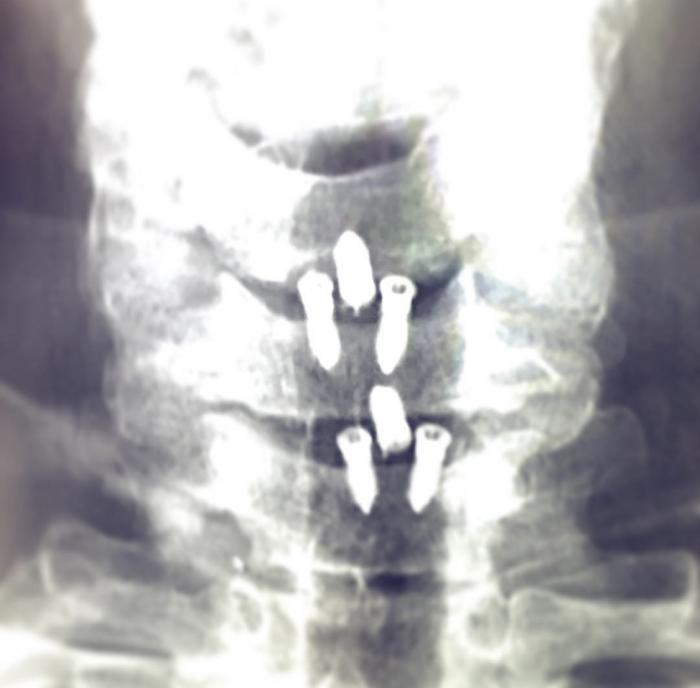
Only you can truly know what stops you from training. I have been severely injured while training, and definitely have had to switch it up a bit to stay on the mats. Be honest with yourself. You may have to change your style of training or maybe stop clashing horns with the giant blue belt savages in the gym, but you can do something. Anything is better than time off the mat. Drillers make killers. Jits-Life✌🏻🦍
APBlack beltVerified
2 year(s) ago
Only you can truly know what stops you from training. I have been severely injured while training, and definitely have had to switch it up a bit to stay on the mats. Be honest with yourself. You may have to change your style of training or maybe stop clashing horns with the giant blue belt savages in the gym, but you can do something. Anything is better than time off the mat. Drillers make killers. Jits-Life✌🏻🦍
Gnarly. Yeah, I'm not worried about training again or any physical obstacles. Physically, I feel amazing. Maybe I didn't get this across initially. I've just been asking how to get to a headspace where you start trusting that part of your body (for me, my knee) to hold up during competition style training. Looking for some mental coaching, I guess. I've a top notch physical therapist to talk to me about the physical part.
CBlack belt 1st degreeVerified
2 year(s) ago
4 months post op seems quick after a repair. I had a pretty severe bucket handle tear. I'll wait until probably September to go hard again. Nicky Ryan re-tore his meniscus 9 months after repair. I'm gonna learn from his mistake lol.
I had a bucket handle injury too. During operation I talked with the doc and we decided to not try to reattach it, as it would most likely break again even after successful rehab. This has become the norm for injuries like this on active people with demanding sports. There's still "plenty of meniscus remaining", so this should not be a problem.
I had a good 9 weeks of physical therapy and my physio had me do all kinds of balancing, strengthening, impact and coordination exercises, which were really helpful. Got the strength and stability back very quick. I can already squat 1.5 x my body weight without much effort, just need to get the mobility where it was.
I had the post op check up 3 months after surgery and the doctor took a quick look at my knee and basically told me I might as well quit my day job and become an athlete again, knee is going to be just fine within a few months.
In a situation like this resuming training for competition should be fine. But training for competition can mean many things. I'm not rolling hard or competing any time soon and I'm focusing more on getting my physical attributes back, and even improved. Once I can do full-range pistol squats again the leg is at "100 %". And that's when I will start rolling hard. Until then, instead of clashing horns with my training partners, I'm honing my technique, tactics and decision making, all of which are more important than how hard you can go.
I had a good 9 weeks of physical therapy and my physio had me do all kinds of balancing, strengthening, impact and coordination exercises, which were really helpful. Got the strength and stability back very quick. I can already squat 1.5 x my body weight without much effort, just need to get the mobility where it was.
I had the post op check up 3 months after surgery and the doctor took a quick look at my knee and basically told me I might as well quit my day job and become an athlete again, knee is going to be just fine within a few months.
In a situation like this resuming training for competition should be fine. But training for competition can mean many things. I'm not rolling hard or competing any time soon and I'm focusing more on getting my physical attributes back, and even improved. Once I can do full-range pistol squats again the leg is at "100 %". And that's when I will start rolling hard. Until then, instead of clashing horns with my training partners, I'm honing my technique, tactics and decision making, all of which are more important than how hard you can go.



