
Rules for main forums
- Be nice
- No advertisement
- No events
- No fundraisers
- No topics asking for votes
- Only posts related to Brazilian Jiu Jitsu
Jiu-Jitsu Training for Law Enforcement (LE): How Are You Recruiting LE Students?
2 year(s) ago • 1354 views • 11 replies
 BB
BBBlack belt 1st degreeVerified

2 year(s) ago
Based on multiple studies (summarized in the linked article below), the empirical and anecdotal evidence is clear so what strategies are effective to inspire more law enforcement instructors to train? Perhaps more importantly, how do we inspire law enforcement physical tactics instructors to train? Have you been successful in recruiting law enforcement students and, if so, how?
https://www.facebook.com/[...]NDtHGutpAl
https://www.facebook.com/[...]NDtHGutpAl
 JC
JCPurple beltVerified
2 year(s) ago
Our gym offers them free training through their blue belt and it's still hard to get them through the door. We have a lot of LEOs, but most of them seem to be upper belts.
 R
RBlack belt 1st degreeVerified
2 year(s) ago
In my humble opinion - training needs a revamp from the very beginning and then reinforced through the agency. Culture needs to be built from the ground up, with new recruits, so that the importance and discipline for training is inherent. Students who lack the desire to learn can't be taught. Some of the ownership needs to be taken on behalf of the trainer, but we all know those stubborn vets that refuse to learn anything new or change their ways.
We struggle with administrations that are comprised of those individuals just mentioned. But, we offer optional - paid - training days with instructors. We also encourage officers seek out additional on their own, be it Judo, BJJ, wrestling, muay Thai, boxing, etc. And will provide referrals when asked.
Also, officers in our jurisdiction benefit from a dollar amount reimbursed from our insurance for anything health related, including martial arts memberships and fitness memberships.
Even with all of that, only a few take advantage. It's a systemic issue within this profession that needs to be phased out.
We struggle with administrations that are comprised of those individuals just mentioned. But, we offer optional - paid - training days with instructors. We also encourage officers seek out additional on their own, be it Judo, BJJ, wrestling, muay Thai, boxing, etc. And will provide referrals when asked.
Also, officers in our jurisdiction benefit from a dollar amount reimbursed from our insurance for anything health related, including martial arts memberships and fitness memberships.
Even with all of that, only a few take advantage. It's a systemic issue within this profession that needs to be phased out.
JCPurple beltVerified
2 year(s) ago
In my humble opinion - training needs a revamp from the very beginning and then reinforced through the agency. Culture needs to be built from the ground up, with new recruits, so that the importance and discipline for training is inherent. Students who lack the desire to learn can't be taught. Some of the ownership needs to be taken on behalf of the trainer, but we all know those stubborn vets that refuse to learn anything new or change their ways. We struggle with administrations that are comprised of those individuals just mentioned. But, we offer optional - paid - training days with instructors. We also encourage officers seek out additional on their own, be it Judo, BJJ, wrestling, muay Thai, boxing, etc. And will provide referrals when asked. Also, officers in our jurisdiction benefit from a dollar amount reimbursed from our insurance for anything health related, including martial arts memberships and fitness memberships. Even with all of that, only a few take advantage. It's a systemic issue within this profession that needs to be phased out.
100%. The reasons/excuses I have heard for not training have been all over the place. Their department won't allow training outside the department. Their family time is important. Classes don't align well with their shift. Getting their ass kicked daily destroys their confidence i their ability to do their job. And on and on. And I said reasons/excuses because there are a few legitimate reasons not to. The rest are just excuses. We've got too many officers that train through the issues that stop others from doing so to say that the obstacles can't be overcome. We usually have a few in most classes that have arranged with their department to train around their shift. That might mean starting a little later, stopping a little sooner, or taking an extended meal break in the middle, but the department works with them. Granted it is a lot easier to do that when you've got 250 officers on shift at a time than it is when you've got 10, but they've made it work. If your family is worried about missing a few hours a week with you, how do they feel about missing you forever because you couldn't deliver when it mattered most? Does training hurt your confidence or your ego? Even if it is legit your confidence, isn't a few months of damaged confidence better than a lifetime of inability? Getting beat in the gym doesn't change your abilities on the street, so it's a psychological issue that should correct itself quickly.
This is generational issue and the solution will be generational. If the vets don't want to do it, you have to start with the rookies. It may take 10 years to see the positive effects, but that's better than never.
This is generational issue and the solution will be generational. If the vets don't want to do it, you have to start with the rookies. It may take 10 years to see the positive effects, but that's better than never.
JCPurple beltVerified
1 year(s) ago
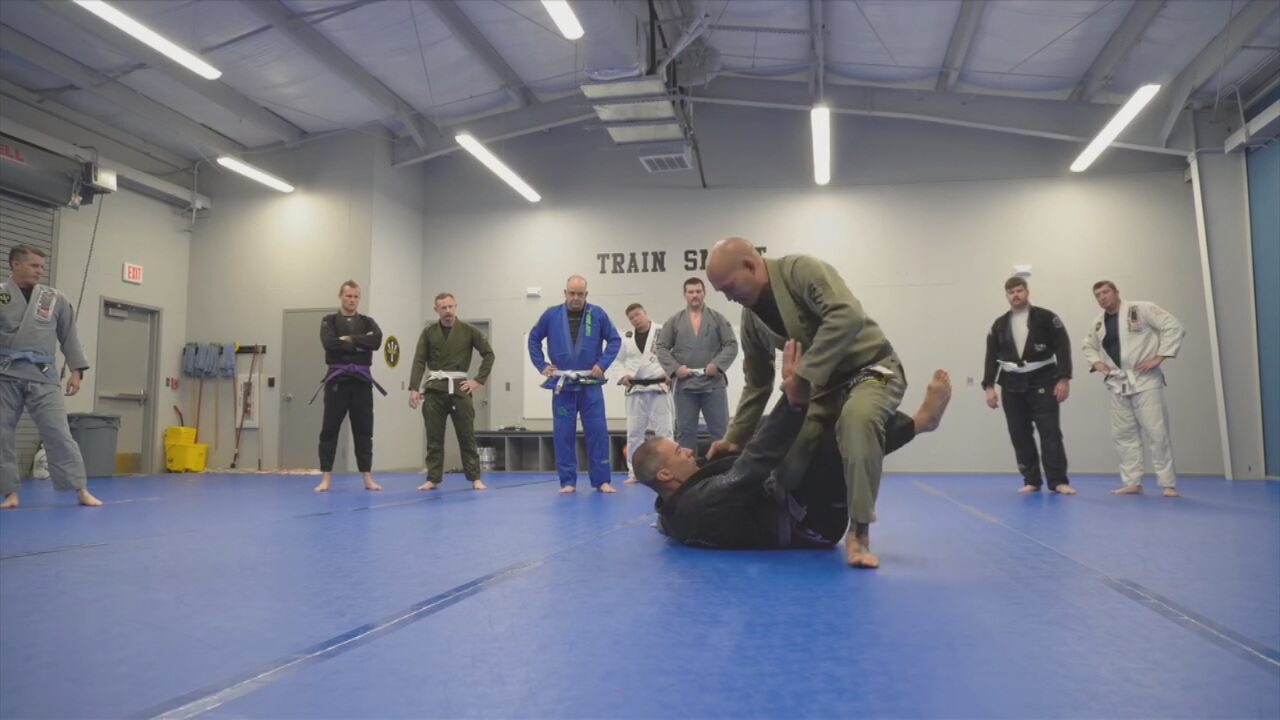
I had forgotten all about this thread, but got a notification about it this morning. Here is an update on what our gym is doing with the local PD these days: https://www.news9.com/sto[...]o-officers
 M
MBrown beltVerified
1 year(s) ago
Out of my own experience and the experience of fellow prison- and police officers, who train with me and often give me feedback about how BJJ/Grappling helps them immensely on duty, how it boosts their confidence and physical ability to handle violent situations on the one hand, and on the other hand it builds up mental resilience and helps shaking the stress off after hard day on duty, too.
I think training BJJ/Grappling for LEOs is very rewarding and a win/win for all....
On duty we have a combatives/ DT room with mats and we can roll after DT/Control tactics sessions...as the DT Instructor of my unit i support my fellow officers, who like to roll in addition to mandatory/specific Control tactics/DT content.
Some of them see the benefit in the training and also join me for training after duty (or other teams, depending on where they live)
I am not getting tired to go to bat for BJJ/grappling, but i don't try to convince everybody... each his own
As i said, out of personal experiences and of data/statitics, it is a win/win to train in Grappling for LEOs
I think training BJJ/Grappling for LEOs is very rewarding and a win/win for all....
On duty we have a combatives/ DT room with mats and we can roll after DT/Control tactics sessions...as the DT Instructor of my unit i support my fellow officers, who like to roll in addition to mandatory/specific Control tactics/DT content.
Some of them see the benefit in the training and also join me for training after duty (or other teams, depending on where they live)
I am not getting tired to go to bat for BJJ/grappling, but i don't try to convince everybody... each his own
As i said, out of personal experiences and of data/statitics, it is a win/win to train in Grappling for LEOs
 EH
EHBlack beltVerified
1 year(s) ago
We have been trying get more guys with in law enforcement to join up and we spread the new word of mouth but there always so busy they only ever end up taking a couple classes here and there and only few guys over the years even give it a try
 J
JBlack belt 4th degreeVerified
1 year(s) ago
Based on where we are located (just outside of Washington DC very close to Quantico Marine Corp base and Ft. Belvoir Army base) it's possible that MOST of our adult students are law enforcement. If they are also tactical instructors, especially firearms, then we offer them free memberships if they can help with our concealed carry and defensive tactics classes. One of my brown belts is the BJJ instructor for the FBI Academy and he trains for free but he brings a ton of other students here that sign up. Trade for trade.
 DK
DKBlack beltVerified
11 month(s) ago
The biggest issue I have seen within my own agency and those abroad is the they feel they do not need to train as nothing they have encountered in the field warrants such skills. People get their quarterly use of force in and feel they are squared away. The others have already had a solid martial arts background prior to joining and the rest of them look at us as we part of a cult.
MBrown beltVerified
11 month(s) ago
The biggest issue I have seen within my own agency and those abroad is the they feel they do not need to train as nothing they have encountered in the field warrants such skills. People get their quarterly use of force in and feel they are squared away. The others have already had a solid martial arts background prior to joining and the rest of them look at us as we part of a cult.
Training can’t be enough if you work in an environment that might you get killed…
In our agency mandatory DT/ control tactics training is 12 times a year (once’s month) but my team and myself as the lead DT instructor, teach 2 sessions a week on duty , which in total sums up to approximately 100 DT/ control tactics session a year. All backed up by the administration! They see and understood that use of force is more professional, less injured officers, more confident staff, if you have quality and quantity of training.
After duty I teach basic BJJ 3 sessions a weak on top of that. Some fellow officers also joined and train after duty cause they see the benefits of it, physically and mentally!
Only relying on gear in my opinion gives the officers a false confidence.
Basic hand to hand/ grappling skills though really help to boost confidence, especially if you are able to pull it off against a resistant individual.
In our agency mandatory DT/ control tactics training is 12 times a year (once’s month) but my team and myself as the lead DT instructor, teach 2 sessions a week on duty , which in total sums up to approximately 100 DT/ control tactics session a year. All backed up by the administration! They see and understood that use of force is more professional, less injured officers, more confident staff, if you have quality and quantity of training.
After duty I teach basic BJJ 3 sessions a weak on top of that. Some fellow officers also joined and train after duty cause they see the benefits of it, physically and mentally!
Only relying on gear in my opinion gives the officers a false confidence.
Basic hand to hand/ grappling skills though really help to boost confidence, especially if you are able to pull it off against a resistant individual.
DKBlack beltVerified
11 month(s) ago
Training can’t be enough if you work in an environment that might you get killed… In our agency mandatory DT/ control tactics training is 12 times a year (once’s month) but my team and myself as the lead DT instructor, teach 2 sessions a week on duty , which in total sums up to approximately 100 DT/ control tactics session a year. All backed up by the administration! They see and understood that use of force is more professional, less injured officers, more confident staff, if you have quality and quantity of training. After duty I teach basic BJJ 3 sessions a weak on top of that. Some fellow officers also joined and train after duty cause they see the benefits of it, physically and mentally! Only relying on gear in my opinion gives the officers a false confidence. Basic hand to hand/ grappling skills though really help to boost confidence, especially if you are able to pull it off against a resistant individual.
Yeah, I have had these discussions with them and if you carry a badge and gun then you owe it the public, yourself, and your partners to be squared in the realm of combatives. However, these knuckleheads have the opinion that what has not happened to them will not happen to them.
A lot of these dudes have a false sense of security, for sure, and are not forward thinkers. They rather rely on their batman belt then go hands on. I believe these make the most incompetent and dangerous Leo's on the street.
A lot of these dudes have a false sense of security, for sure, and are not forward thinkers. They rather rely on their batman belt then go hands on. I believe these make the most incompetent and dangerous Leo's on the street.
 WM
WMBlack belt 5th degreeVerified
11 month(s) ago
For the past few decades,
I have declined to charge emergency responders of any kind, any financial charges.
I have other ways to earn money than Jiu-Jitsu, to be fair.
My feeling is,
if I train the Emergency Responders to come home safe,
especially since Jiu-Jitsu has applications to falling, and self-defense,
That is enough.
And, I do that for selfish reasons, as a member of my community, and as a pay it forward, or give back,
As I was given to, and I still have those debts of honor, to pay off.
I also hold gunbelt classes, for people that wear gunbelts.
Although, I think there is a need for non-armed emergency responder specific classes too.
In all, things, even without this thought experiment,
It is strange, and stupid, to this modern time,
That we teach our students ablative techniques first,
Before First Aid and CPR skills.
I think it would be nice, regarding the First Aid and CPR trainings,
before we teach them how to choke each other out,
or break or sprain or strain each other's limbs.
I have declined to charge emergency responders of any kind, any financial charges.
I have other ways to earn money than Jiu-Jitsu, to be fair.
My feeling is,
if I train the Emergency Responders to come home safe,
especially since Jiu-Jitsu has applications to falling, and self-defense,
That is enough.
And, I do that for selfish reasons, as a member of my community, and as a pay it forward, or give back,
As I was given to, and I still have those debts of honor, to pay off.
I also hold gunbelt classes, for people that wear gunbelts.
Although, I think there is a need for non-armed emergency responder specific classes too.
In all, things, even without this thought experiment,
It is strange, and stupid, to this modern time,
That we teach our students ablative techniques first,
Before First Aid and CPR skills.
I think it would be nice, regarding the First Aid and CPR trainings,
before we teach them how to choke each other out,
or break or sprain or strain each other's limbs.



