
Beltchecker Health 免费
为你的训练提供饮食 你的 BJJ 营养与体重教练
为练习 Jiu Jitsu 的人打造的私密饮食与恢复教练。立足长期健康,而非速成节食。
已经是会员? 登录
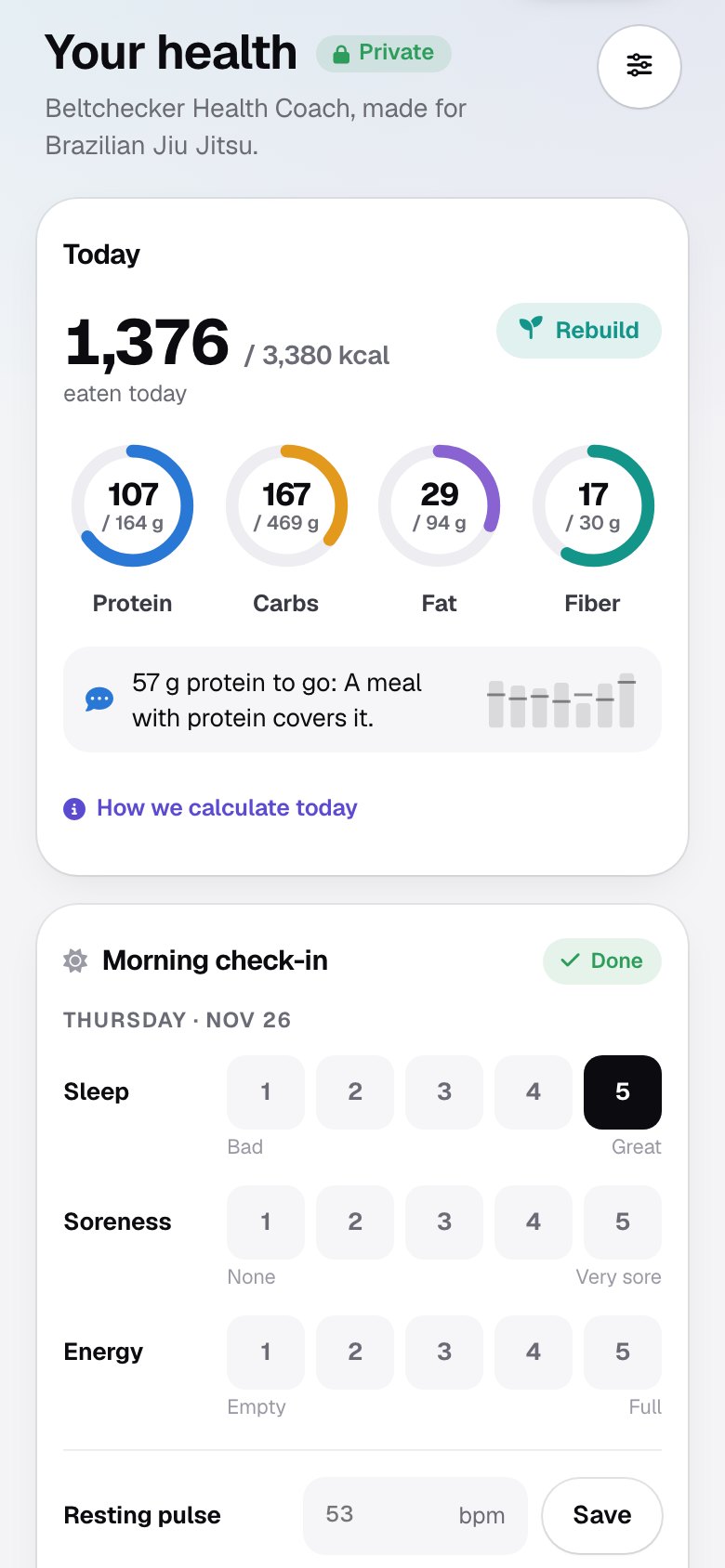
根据你的训练制定目标
你的训练日志决定当天安排:高强度训练日多吃,休息日少吃。热量、蛋白质、碳水化合物、脂肪和纤维,以及今天还可以吃多少。
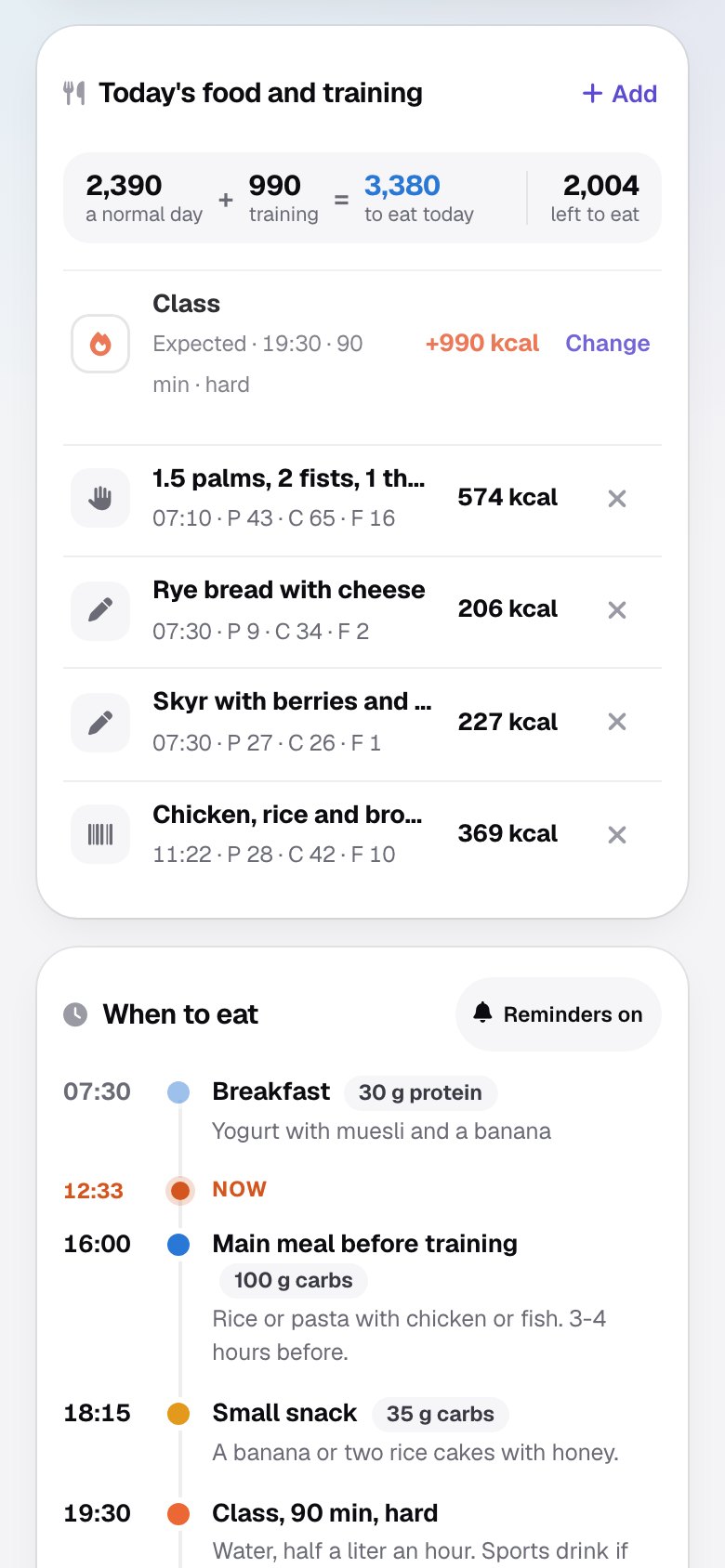
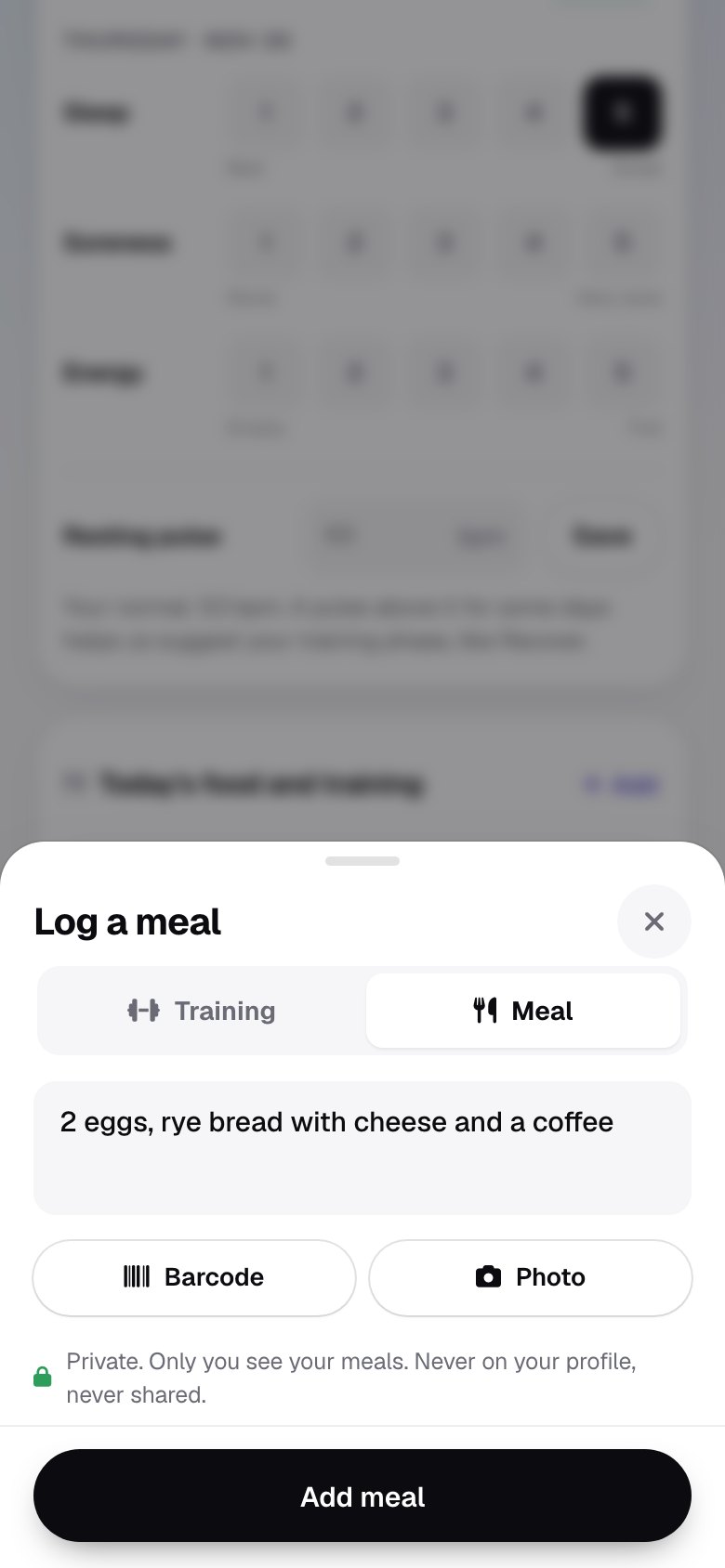
几秒钟记录一餐
用简单的文字写下你吃了什么、扫描条形码或拍照。你的训练直接来自你的训练日志。
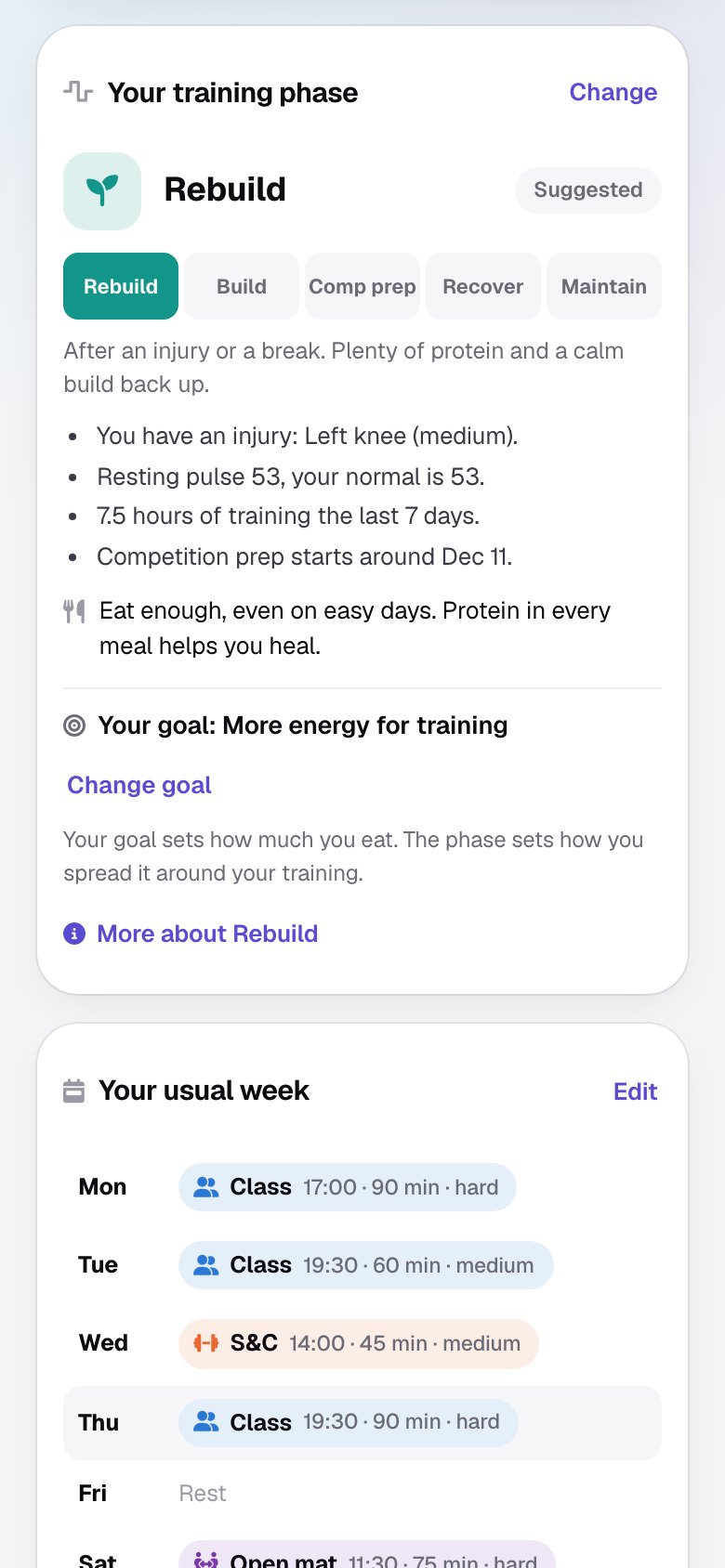
你的训练阶段
伤后重建、增肌、备赛、恢复或保持。“健康”会根据你的训练、静息心率、伤病和比赛建议阶段,并说明这对你的饮食意味着什么。
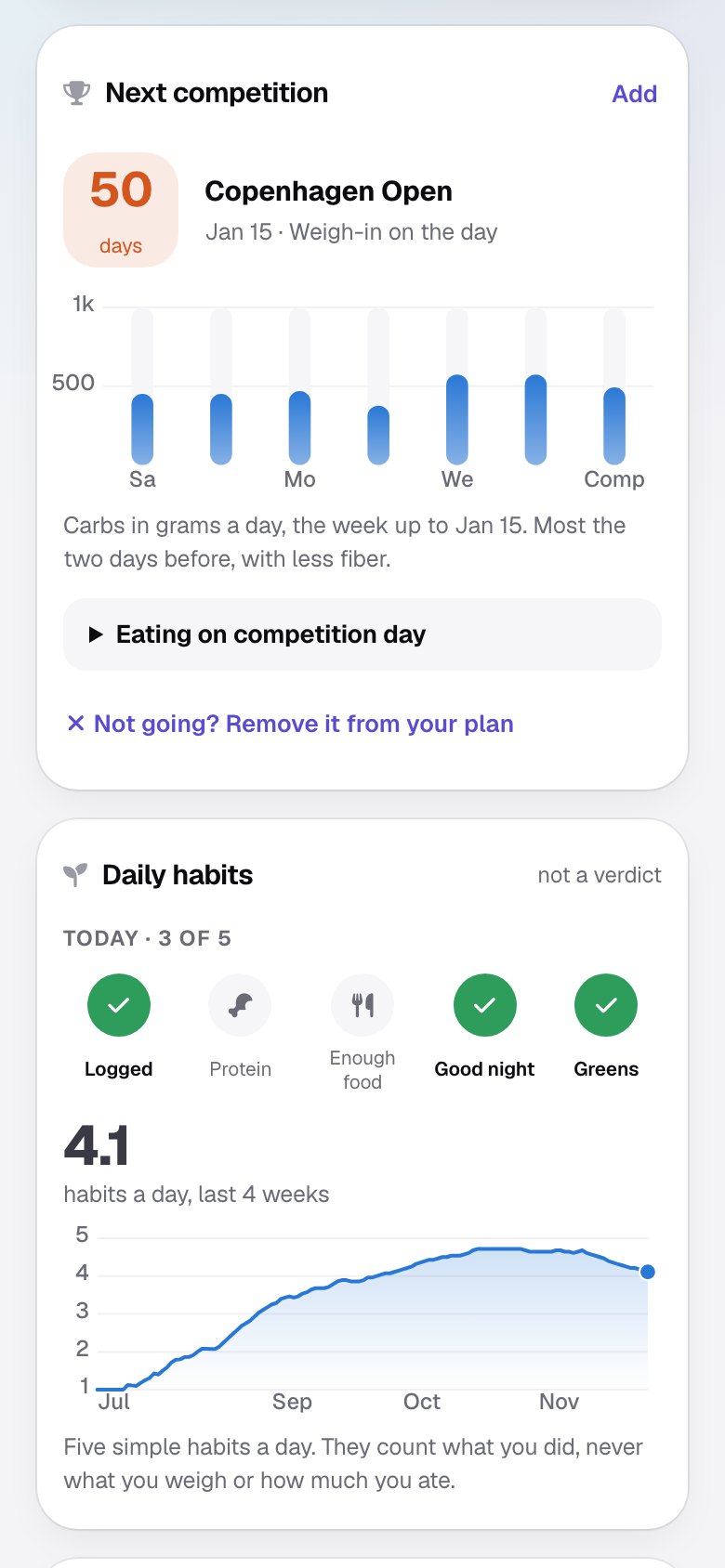
为你的比赛做好准备
最后几天增加碳水、比赛日计划,以健康的方式达到体重级别:及早进行,绝不靠脱水。
重要的是每周,而不是某一天
4 周、3 个月和一年的趋势。教练的简短提示让你保持冷静:某一天多吃或少吃只是正常波动。
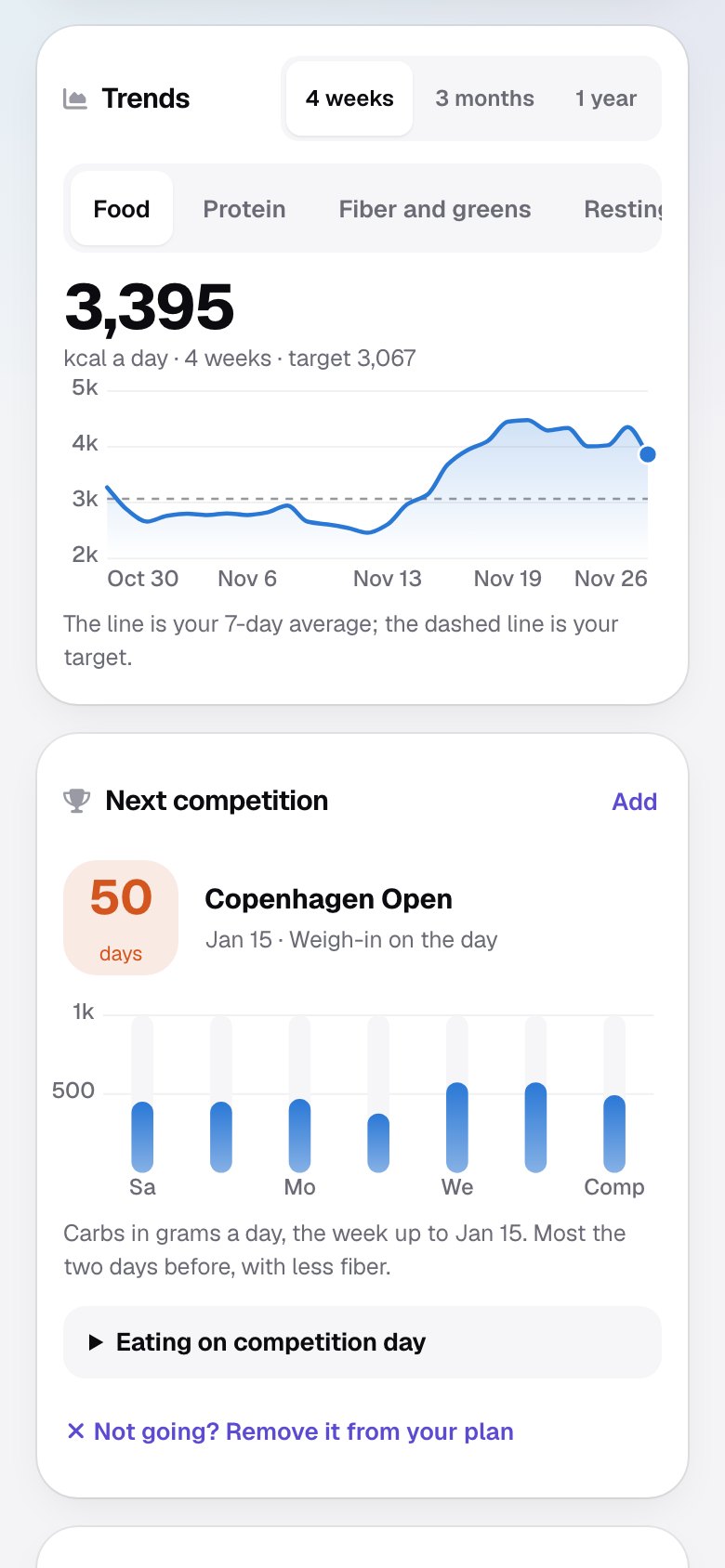
小习惯
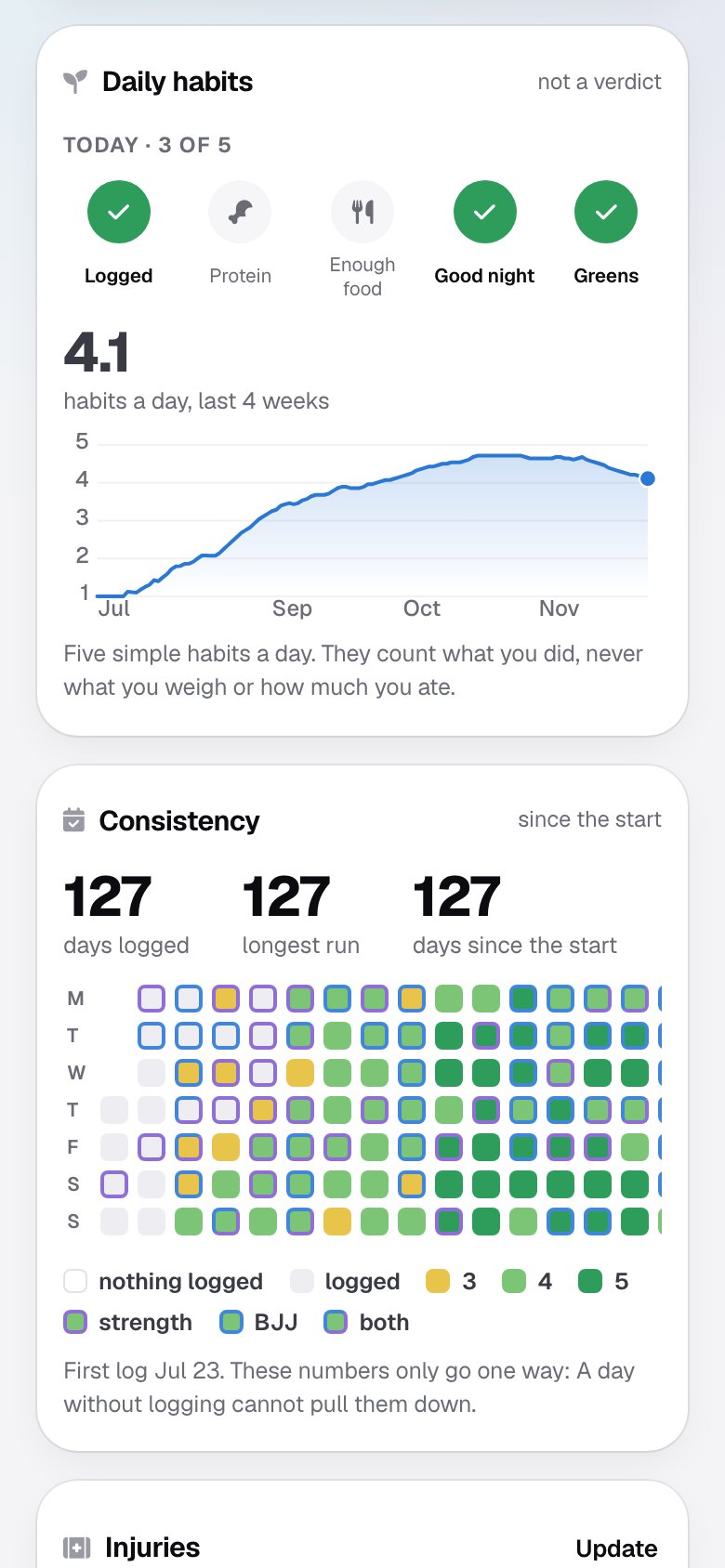
每天五个简单习惯:已记录、蛋白质、吃够、睡个好觉和蔬菜。它们只计算你做了什么,从不计算你的体重。
数字背后的科学
Health 中的每个目标都来自已发表的研究:运动营养学会的立场声明、荟萃分析和共识声明。以下是 Health 使用的内容及其来源。
- 普通的一天
- 静息能量 x 1.4,即久坐日的下限。训练消耗另外叠加。 [3]
- 训练
- 每分钟能量消耗来自《身体活动纲要》:轻松 3.5、中等 5.3、高强度 7.8,sparring 10.3 MET,按高于静息水平计算。 [4]
- 脂肪
- 绝不低于当天能量的 20 %。 [11]
- 增重
- 少量盈余:增肌阶段 150 kcal,增重 300 kcal。 [16]
我们自己审慎做出的选择
有些限制并没有单一研究作为依据。我们出于稳妥考虑选择了它们:
- 热量缺口期间碳水化合物绝不低于每公斤 2-3 克,让您仍能训练。
- 目标体重的 BMI 在 18.5 到 32 之间。
- 体重曲线按每公斤 7,700 千卡计算,并略微放缓,因为身体会适应。 [20]
参考文献
- Mifflin MD et al. (1990). A new predictive equation for resting energy expenditure in healthy individuals. Am J Clin Nutr 51(2):241-247. doi:10.1093/ajcn/51.2.241
- Frankenfield D et al. (2005). Comparison of predictive equations for resting metabolic rate in healthy nonobese and obese adults: A systematic review. J Am Diet Assoc 105(5):775-789. doi:10.1016/j.jada.2005.02.005
- FAO/WHO/UNU (2004). Human energy requirements. Report of a joint expert consultation. FAO Food and Nutrition Technical Report Series 1.
- Herrmann SD et al. (2024). 2024 Adult Compendium of Physical Activities. J Sport Health Sci 13(1):6-12. doi:10.1016/j.jshs.2023.10.010
- Morton RW et al. (2018). A systematic review, meta-analysis and meta-regression of the effect of protein supplementation on resistance training-induced gains in muscle mass and strength. Br J Sports Med 52(6):376-384. doi:10.1136/bjsports-2017-097608
- Jäger R et al. (2017). International Society of Sports Nutrition position stand: Protein and exercise. J Int Soc Sports Nutr 14:20. doi:10.1186/s12970-017-0177-8
- Helms ER et al. (2014). A systematic review of dietary protein during caloric restriction in resistance trained lean athletes. Int J Sport Nutr Exerc Metab 24(2):127-138. doi:10.1123/ijsnem.2013-0054
- Tipton KD (2015). Nutritional support for exercise-induced injuries. Sports Med 45(Suppl 1):S93-S104. doi:10.1007/s40279-015-0398-4
- Schoenfeld BJ, Aragon AA (2018). How much protein can the body use in a single meal for muscle-building? J Int Soc Sports Nutr 15:10. doi:10.1186/s12970-018-0215-1
- Kerksick CM et al. (2017). International Society of Sports Nutrition position stand: Nutrient timing. J Int Soc Sports Nutr 14:33. doi:10.1186/s12970-017-0189-4
- Thomas DT, Erdman KA, Burke LM (2016). American College of Sports Medicine joint position statement: Nutrition and athletic performance. Med Sci Sports Exerc 48(3):543-568. doi:10.1249/MSS.0000000000000852
- Burke LM et al. (2011). Carbohydrates for training and competition. J Sports Sci 29(Suppl 1):S17-S27. doi:10.1080/02640414.2011.585473
- EFSA Panel on Dietetic Products, Nutrition and Allergies (2010). Scientific opinion on dietary reference values for carbohydrates and dietary fibre. EFSA Journal 8(3):1462. doi:10.2903/j.efsa.2010.1462
- Reale R, Slater G, Burke LM (2017). Acute-weight-loss strategies for combat sports and applications to Olympic success. Int J Sports Physiol Perform 12(2):142-151. doi:10.1123/ijspp.2016-0211
- Garthe I et al. (2011). Effect of two different weight-loss rates on body composition and strength and power-related performance in elite athletes. Int J Sport Nutr Exerc Metab 21(2):97-104. doi:10.1123/ijsnem.21.2.97
- Iraki J et al. (2019). Nutrition recommendations for bodybuilders in the off-season: A narrative review. Sports 7(7):154. doi:10.3390/sports7070154
- Mountjoy M et al. (2023). 2023 International Olympic Committee's consensus statement on Relative Energy Deficiency in Sport (REDs). Br J Sports Med 57(17):1073-1097. doi:10.1136/bjsports-2023-106994
- Janmahasatian S et al. (2005). Quantification of lean bodyweight. Clin Pharmacokinet 44(10):1051-1065. doi:10.2165/00003088-200544100-00004
- Sawka MN et al. (2007). American College of Sports Medicine position stand: Exercise and fluid replacement. Med Sci Sports Exerc 39(2):377-390. doi:10.1249/mss.0b013e31802ca597
- Hall KD et al. (2011). Quantification of the effect of energy imbalance on bodyweight. Lancet 378(9793):826-837. doi:10.1016/S0140-6736(11)60812-X
常见问题
Beltchecker Health 免费吗?
是的。Health 对每位 Beltchecker 会员免费,无需订阅,也没有广告。你只需要一个免费的 Beltchecker 账户。
我的卡路里目标是如何计算的?
Health 以您的静息能量(Mifflin-St Jeor 公式)乘以 1.4 作为普通一天的消耗,然后加上训练日志中的每次训练,按《身体活动纲要》以高于静息水平计算。接着根据您的目标增加少量盈余或温和的缺口,且每天绝不低于安全下限。
练 BJJ 需要多少蛋白质?
Health 的目标是每公斤体重 1.8 克,因为增益在 1.6 克左右趋于平稳。热量缺口期间提高到 2.2 克,伤病恢复期间为 2.0 克,分配在大约 4 餐中。
Health 能帮我达到参赛体重级别吗?
可以。选择比赛和级别,Health 会规划平稳的减重,每周不超过体重的 0.75 %,让你及时达标。它从不规划脱水降重,并且会拒绝低于你身高对应健康体重的级别。
如何记录我吃的东西?
用简单的文字写下你吃了什么、扫描条形码或拍照,Health 会算出数值。你的训练会自动从训练日志导入。
谁能看到我的饮食和体重?
只有你自己。Health 中的任何内容都不会显示在你的个人资料、动态中,也不会向你的道馆展示。你可以随时暂停或删除全部数据。
儿童和青少年可以使用 Health 吗?
不可以。Health 仅面向 18 岁及以上的会员,因此绝不会向年轻运动员提供饮食或体重建议。
这是医疗建议吗?
不是。Health 为参加训练的健康成年人提供一般性指导。如果你有疾病或进食障碍,请咨询医生或营养师。
私密且免费
- 对所有会员免费。 无需订阅。
- 只有你自己能看到。不会出现在你的个人资料、动态中,也不会向你的道馆公开。
- 随时可以关闭或删除全部数据。
- 面向参加训练的健康成年人的一般性指导,并非医疗建议。



