
Rules for main forums
- Be nice
- No advertisement
- No events
- No fundraisers
- No topics asking for votes
- Only posts related to Brazilian Jiu Jitsu
For Blackbelts coaches: what are your requirements for Bluebelt
5 year(s) ago • 817 views • 29 replies
 V
VBlack belt 2nd degreeVerified

5 year(s) ago
This to give you whitebelts an understanding what your coach might looking for in promotion from whitebelt to Bluebelt.
 VC
VCBlack belt 3rd degreeVerified
5 year(s) ago
the abilities and aggression to beat Mike Tyson of course!
VVovisOP
Black belt 2nd degreeVerified
5 year(s) ago
the abilities and aggression to beat Mike Tyson of course!
Hahaha, but seriously. Want to help lower belt understand what their coaches might be looking for.
Edited 5 year(s) ago
VCBlack belt 3rd degreeVerified
5 year(s) ago
ok, here's mine:
1/3 how to use BJJ on your feet in a self preservation situation & tools to stay on your feet
1/3 how to recover to your feet if you are on the ground by accident or incident
1/3 submissions and reversals/sweeps when on the ground and you can't get back to your feet
1/3 how to use BJJ on your feet in a self preservation situation & tools to stay on your feet
1/3 how to recover to your feet if you are on the ground by accident or incident
1/3 submissions and reversals/sweeps when on the ground and you can't get back to your feet
 JE
JEWhite beltVerified
5 year(s) ago
This is the current list at my school, sent to my son who is going for blue. I saw your other posts. I don't think we have this for the other belts.
Requirements Blue belt
Practical knowledge
Grips
1. Standing grip
Left hand on sleeve opponent, right hand inside left or right lapel
2. Grip from holding guard
Left hand on sleeve, right hand inside collar (same side as left hand)
3. Grip wanneer in de guard
Left hand grip in the groin area and right hand holding both lapels
Both hands on belt, pressing towards solar plexus area
Both hands pushing the lapels in the armpits
Takedowns
1. Sweep / trip
Inside front foot opponent, outside front foot opponent
2. Single leg
Inside cross, outside front parallel, inside (back foot opponent) parallel
3. Double leg
Head next to hip, lifting and turning
4. Back drop (met arm-drag)
First arm-drag, taking back and then tripping while sitting down
5. Hip throw
Arm holding belt
Arm under shoulder
Arm (hand) inside collar
6. Shoulder throw
Arm under arm-pit, like uppercut
Rotating while dropping and holding arm opponent
7. Pulling guard
While going for armbar
While going for triangle
While going for omoplata
Position recognition
Guard
Half-guard
Spider-guard
Butterfly-guard
Open-guard
Side-control
Mount
Back mount
North-south
Turtle
Positional escapes
Mount
1. Upa and two variations
Upa, pushing of
Pushing on midsection while bridging
Holding arm from opponent, blocking the knee whilst bridging
2. Elbow / knee escape
Arm cross on hip whilst making ebi, now bringing elbow to knee and take half-guard
3. Pull with one leg opponents leg over to take half-guard position
Side mount
1. Replacing guard
Arm in front of opponents head, other elbow on the ground and following up with ebi, now replacing first half-guard then full guard
2. Rolling away from opponent and going to turtle position quickly
Closed guard
1. Opening of the guard
One hand on the double lapel grip and one hand on the pants (groin area) Two hands holding lapel and pushing under arm-pits opponent
Two hands holding the belt while pushing away with lower back
2. Passing under the leg (stacking pass)
3. Passing over the leg on knee
4. Standing guard pass
Scarf-hold
1. Escape by way of making a ‘frame’ (triangle shape with the arms) and throwing legs over head opponent
2. Escape by way of hooking the leg and going to the opponent’s back
3. Turning to turtle and rotating the opponent by the shoulder
4. Bridging with follow-up pulling opponent over own body
Modified scarf-hold
1. Push with use of cross lapel
2. Bridging while pulling elbow under as to getting an under-hook followed by going to the back of opponent
Reverse side mount
1. Bridging and rolling over own shoulder
Positional dominance
Mount
1. Going to mount
2. Keeping mount position
3. Mount while controlling hip and shoulders
Side-control
1. Controlling the side variations
2. Changing between the different side-controls
3. Transition going from one side to the other side while keeping pressure
North-south
1. When and where to place your hands
2. N-S as a transition
Submissions
Armbars
1. From guard position
2. From side-control
3. From mount
4. From knee on stomach
5. From guard pass (from stacking-pass)
6. From standing position
Triangle
1. From guard
2. From spider-guard
3. From standing position
4. From mount position
Chokes
1. From guard positie
2. From when in guard
3. From side-control
4. From knee on stomach
5. From turtle position
6. From back-mount
7. Escapes against choke from being in guard
Leglocks (even though not allowed important for when you are teaching)
1. Straight ankle-lock
2. Knee-bar
3. Heel-hook
Reversals
Sweeps
1. From guard
Scissor sweep
Flower sweep
Hip bump
2. From de la Riva position
3. From spider-guard
4. Dubbele standing sweep (when opponent stands up)
5. From half guard
Requirements Blue belt
Practical knowledge
Grips
1. Standing grip
Left hand on sleeve opponent, right hand inside left or right lapel
2. Grip from holding guard
Left hand on sleeve, right hand inside collar (same side as left hand)
3. Grip wanneer in de guard
Left hand grip in the groin area and right hand holding both lapels
Both hands on belt, pressing towards solar plexus area
Both hands pushing the lapels in the armpits
Takedowns
1. Sweep / trip
Inside front foot opponent, outside front foot opponent
2. Single leg
Inside cross, outside front parallel, inside (back foot opponent) parallel
3. Double leg
Head next to hip, lifting and turning
4. Back drop (met arm-drag)
First arm-drag, taking back and then tripping while sitting down
5. Hip throw
Arm holding belt
Arm under shoulder
Arm (hand) inside collar
6. Shoulder throw
Arm under arm-pit, like uppercut
Rotating while dropping and holding arm opponent
7. Pulling guard
While going for armbar
While going for triangle
While going for omoplata
Position recognition
Guard
Half-guard
Spider-guard
Butterfly-guard
Open-guard
Side-control
Mount
Back mount
North-south
Turtle
Positional escapes
Mount
1. Upa and two variations
Upa, pushing of
Pushing on midsection while bridging
Holding arm from opponent, blocking the knee whilst bridging
2. Elbow / knee escape
Arm cross on hip whilst making ebi, now bringing elbow to knee and take half-guard
3. Pull with one leg opponents leg over to take half-guard position
Side mount
1. Replacing guard
Arm in front of opponents head, other elbow on the ground and following up with ebi, now replacing first half-guard then full guard
2. Rolling away from opponent and going to turtle position quickly
Closed guard
1. Opening of the guard
One hand on the double lapel grip and one hand on the pants (groin area) Two hands holding lapel and pushing under arm-pits opponent
Two hands holding the belt while pushing away with lower back
2. Passing under the leg (stacking pass)
3. Passing over the leg on knee
4. Standing guard pass
Scarf-hold
1. Escape by way of making a ‘frame’ (triangle shape with the arms) and throwing legs over head opponent
2. Escape by way of hooking the leg and going to the opponent’s back
3. Turning to turtle and rotating the opponent by the shoulder
4. Bridging with follow-up pulling opponent over own body
Modified scarf-hold
1. Push with use of cross lapel
2. Bridging while pulling elbow under as to getting an under-hook followed by going to the back of opponent
Reverse side mount
1. Bridging and rolling over own shoulder
Positional dominance
Mount
1. Going to mount
2. Keeping mount position
3. Mount while controlling hip and shoulders
Side-control
1. Controlling the side variations
2. Changing between the different side-controls
3. Transition going from one side to the other side while keeping pressure
North-south
1. When and where to place your hands
2. N-S as a transition
Submissions
Armbars
1. From guard position
2. From side-control
3. From mount
4. From knee on stomach
5. From guard pass (from stacking-pass)
6. From standing position
Triangle
1. From guard
2. From spider-guard
3. From standing position
4. From mount position
Chokes
1. From guard positie
2. From when in guard
3. From side-control
4. From knee on stomach
5. From turtle position
6. From back-mount
7. Escapes against choke from being in guard
Leglocks (even though not allowed important for when you are teaching)
1. Straight ankle-lock
2. Knee-bar
3. Heel-hook
Reversals
Sweeps
1. From guard
Scissor sweep
Flower sweep
Hip bump
2. From de la Riva position
3. From spider-guard
4. Dubbele standing sweep (when opponent stands up)
5. From half guard
Edited 5 year(s) ago
 JM
JMBlack belt 2nd degreeVerified
5 year(s) ago
A bluebelt in my club can grapple and is not making major mistakes from any major position. That's it. Their individual styles already differ.
 AK
AKPurple beltVerified
5 year(s) ago
This is the current list at my school, sent to my son who is going for blue. I saw your other posts. I don't think we have this for the other belts. Requirements Blue belt Practical knowledge Grips 1. Standing grip Left hand on sleeve opponent, right hand inside left or right lapel 2. Grip from holding guard Left hand on sleeve, right hand inside collar (same side as left hand) 3. Grip wanneer in de guard Left hand grip in the groin area and right hand holding both lapels Both hands on belt, pressing towards solar plexus area Both hands pushing the lapels in the armpits Takedowns 1. Sweep / trip Inside front foot opponent, outside front foot opponent 2. Single leg Inside cross, outside front parallel, inside (back foot opponent) parallel 3. Double leg Head next to hip, lifting and turning 4. Back drop (met arm-drag) First arm-drag, taking back and then tripping while sitting down 5. Hip throw Arm holding belt Arm under shoulder Arm (hand) inside collar 6. Shoulder throw Arm under arm-pit, like uppercut Rotating while dropping and holding arm opponent 7. Pulling guard While going for armbar While going for triangle While going for omoplata Position recognition Guard Half-guard Spider-guard Butterfly-guard Open-guard Side-control Mount Back mount North-south Turtle Positional escapes Mount 1. Upa and two variations Upa, pushing of Pushing on midsection while bridging Holding arm from opponent, blocking the knee whilst bridging 2. Elbow / knee escape Arm cross on hip whilst making ebi, now bringing elbow to knee and take half-guard 3. Pull with one leg opponents leg over to take half-guard position Side mount 1. Replacing guard Arm in front of opponents head, other elbow on the ground and following up with ebi, now replacing first half-guard then full guard 2. Rolling away from opponent and going to turtle position quickly Closed guard 1. Opening of the guard One hand on the double lapel grip and one hand on the pants (groin area) Two hands holding lapel and pushing under arm-pits opponent Two hands holding the belt while pushing away with lower back 2. Passing under the leg (stacking pass) 3. Passing over the leg on knee 4. Standing guard pass Scarf-hold 1. Escape by way of making a ‘frame’ (triangle shape with the arms) and throwing legs over head opponent 2. Escape by way of hooking the leg and going to the opponent’s back 3. Turning to turtle and rotating the opponent by the shoulder 4. Bridging with follow-up pulling opponent over own body Modified scarf-hold 1. Push with use of cross lapel 2. Bridging while pulling elbow under as to getting an under-hook followed by going to the back of opponent Reverse side mount 1. Bridging and rolling over own shoulder Positional dominance Mount 1. Going to mount 2. Keeping mount position 3. Mount while controlling hip and shoulders Side-control 1. Controlling the side variations 2. Changing between the different side-controls 3. Transition going from one side to the other side while keeping pressure North-south 1. When and where to place your hands 2. N-S as a transition Submissions Armbars 1. From guard position 2. From side-control 3. From mount 4. From knee on stomach 5. From guard pass (from stacking-pass) 6. From standing position Triangle 1. From guard 2. From spider-guard 3. From standing position 4. From mount position Chokes 1. From guard positie 2. From when in guard 3. From side-control 4. From knee on stomach 5. From turtle position 6. From back-mount 7. Escapes against choke from being in guard Leglocks (even though not allowed important for when you are teaching) 1. Straight ankle-lock 2. Knee-bar 3. Heel-hook Reversals Sweeps 1. From guard Scissor sweep Flower sweep Hip bump 2. From de la Riva position 3. From spider-guard 4. Dubbele standing sweep (when opponent stands up) 5. From half guard
You have 3/4 of the major leg attacks (just toe holds missing) but none of the major leg lock positions (e.g. ashi, DOA, inside ashi, 411, 50:50 etc) - is that deliberate?
VVovisOP
Black belt 2nd degreeVerified
5 year(s) ago
You have 3/4 of the major leg attacks (just toe holds missing) but none of the major leg lock positions (e.g. ashi, DOA, inside ashi, 411, 50:50 etc) - is that deliberate?
This is going from whitebelt to bluebelt. Most tournaments don't allow leg attacks at whitebelt just straight ankle lock.
AKPurple beltVerified
5 year(s) ago
This is going from whitebelt to bluebelt. Most tournaments don't allow leg attacks at whitebelt just straight ankle lock.
Yes but that's why i find it strange to learn heel hooks but not ashi (for example). I mean where are these heel hooks being practiced from if not the positions i mentioned?
VVovisOP
Black belt 2nd degreeVerified
5 year(s) ago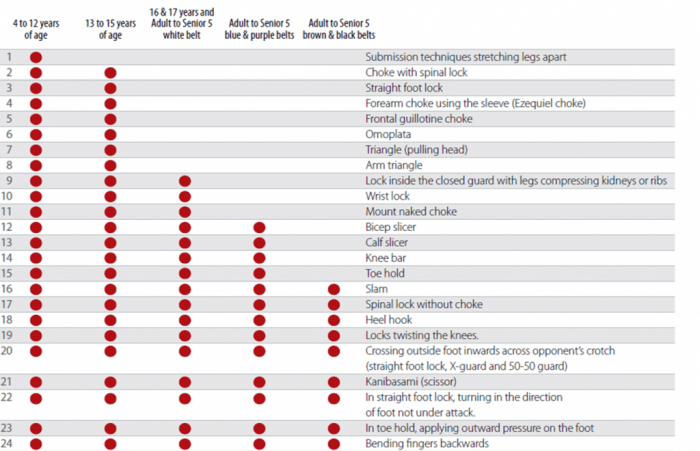
Again this is for whitebelts, they should be concentrating on position, basic techniques, and some basic submissions. Once a whitebelts understands the basics more advanced techniques and principles can be added.
AKPurple beltVerified
5 year(s) ago
Again this is for whitebelts, they should be concentrating on position, basic techniques, and some basic submissions. Once a whitebelts understands the basics more advanced techniques and principles can be added.
1. If i'm reading it correctly, his syllabus says white belts need to learn heel hooks to get promoted to blue
2. There is also a list of positions they need knowledge of
3. None of those positions enable heel hooks
So i'm confused if i'm reading it correctly or what the logic is. Surely it's better for a white belt to know Ashi where they can straight footlock or heel hook, than know a heel hook. But how could one even practice a heel hook without starting in a leg entanglement?
2. There is also a list of positions they need knowledge of
3. None of those positions enable heel hooks
So i'm confused if i'm reading it correctly or what the logic is. Surely it's better for a white belt to know Ashi where they can straight footlock or heel hook, than know a heel hook. But how could one even practice a heel hook without starting in a leg entanglement?
Edited 5 year(s) ago
VVovisOP
Black belt 2nd degreeVerified
5 year(s) ago
Leglocks (even though not allowed important for when you are teaching)
1. Straight ankle-lock
2. Knee-bar
3. Heel-hook
The important piece you are missing.
(even though not allowed important for when you are teaching)
1. Straight ankle-lock
2. Knee-bar
3. Heel-hook
The important piece you are missing.
(even though not allowed important for when you are teaching)
 BJ
BJBlue beltVerified
5 year(s) ago
My instructor does not have tests or a list of requirements for blue belts. He seems to award them at 14-18 months with consistent training.
I have been using the blue belt requirements listed on Aesopian BJJ and trying to ensure I know the things on this list:
http://aesopian.com/blog/[...]uirements/
I have been using the blue belt requirements listed on Aesopian BJJ and trying to ensure I know the things on this list:
http://aesopian.com/blog/[...]uirements/
 DB
DBBlack belt 3rd degreeVerified
5 year(s) ago
1. (Intelligent) survival.
2. Positional escapes.
3. A basic understanding of control, positional advancement and a handful of high percentage submissions (chokes first).
2. Positional escapes.
3. A basic understanding of control, positional advancement and a handful of high percentage submissions (chokes first).
Edited 5 year(s) ago
JEWhite beltVerified
5 year(s) ago
You have 3/4 of the major leg attacks (just toe holds missing) but none of the major leg lock positions (e.g. ashi, DOA, inside ashi, 411, 50:50 etc) - is that deliberate?
To be honest, I don't know. I asked yesterday if they had the same type of overview for the other belts, but they dont.
 TP
TPBlack beltVerified
5 year(s) ago
1. If i'm reading it correctly, his syllabus says white belts need to learn heel hooks to get promoted to blue 2. There is also a list of positions they need knowledge of 3. None of those positions enable heel hooks So i'm confused if i'm reading it correctly or what the logic is. Surely it's better for a white belt to know Ashi where they can straight footlock or heel hook, than know a heel hook. But how could one even practice a heel hook without starting in a leg entanglement?
I believe in the beginner stage (which white to blue is) it's important to realize when you're being attacked with a footlock (to know when to tap and not injuring oneself via a wrong movement), than knowing the different setups for them.
So in that regard it makes sense to drill & know the footlock finish itself, even without extensive related positioning knowledge.
So in that regard it makes sense to drill & know the footlock finish itself, even without extensive related positioning knowledge.
Edited 5 year(s) ago
DBBlack belt 3rd degreeVerified
5 year(s) ago
I'm one of those dinosaurs who thinks solid positional awareness is more important at the beginner stage, than whachamacallit chop suey garami.
AKPurple beltVerified
5 year(s) ago
I'm one of those dinosaurs who thinks solid positional awareness is more important at the beginner stage, than whachamacallit chop suey garami.
But ashi is the position! You gave a globetrotters seminar including a single arm footlock but you were in ashi. He must be in ashi or something similar to even do a heel hook. You can't do a heel hook from the positions he listed.
AKPurple beltVerified
5 year(s) ago
I believe in the beginner stage (which white to blue is) it's important to realize when you're being attacked with a footlock (to know when to tap and not injuring oneself via a wrong movement), than knowing the different setups for them. So in that regard it makes sense to drill & know the footlock finish itself, even without extensive related positioning knowledge.
I wouldn't have asked if he hadn't mentioned heel hooks, you can't do heel hooks without a position like ashi! Footlocks you can, but not heel hooks. To me it sounds like saying "we're going to learn rear naked chokes but you don't need to know anything about back mount as a position!!!"
AKPurple beltVerified
5 year(s) ago
To be honest, I don't know. I asked yesterday if they had the same type of overview for the other belts, but they dont.
What position are you in when they teach you about heel hooks?
TPBlack beltVerified
5 year(s) ago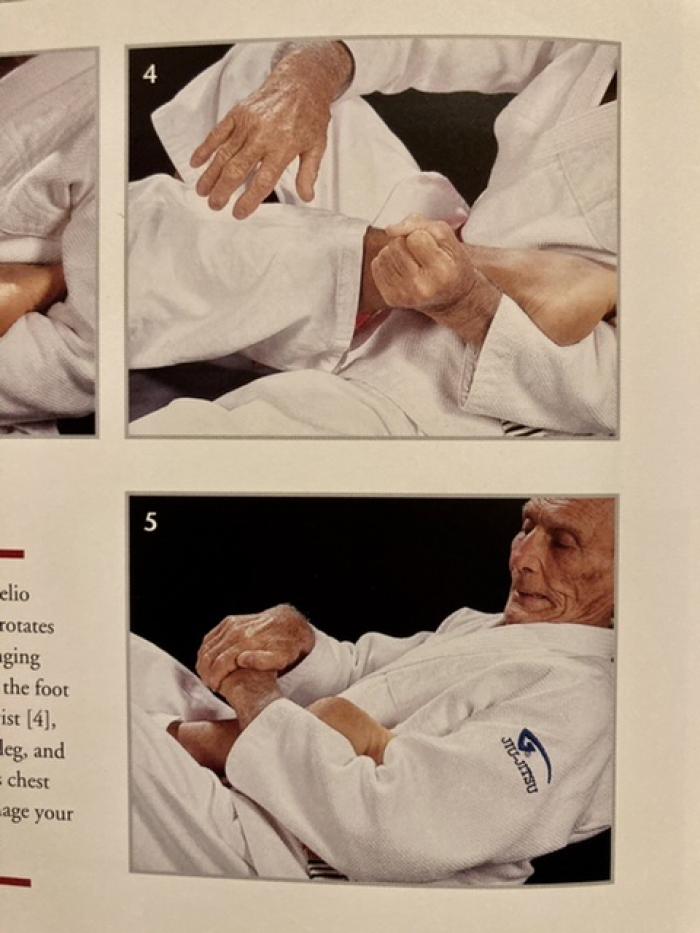
I wouldn't have asked if he hadn't mentioned heel hooks, you can't do heel hooks without a position like ashi! Footlocks you can, but not heel hooks. To me it sounds like saying 'we're going to learn rear naked chokes but you don't need to know anything about back mount as a position!!!'
All this delicate Ashi Salami meta is quite a recent development... I guess most of the leg configurations are some kind of an Ashi (just began to learn the names myself).
For example, in Helio’s classic book ”Gracie Jiu-Jitsu” he shows the heelhook without any details about the leg positioning except that the opponent’s foot is in his armpit. :D (you can’t even see how his legs are positioned in relation to the partner’s.) I knew what a heelhook was long before I heard anybody utter ”Ashi”.
Ofc these developments have made heelhooks a way better attack; if you watch some older matches people escape them more often because the setups are not so good.
For example, in Helio’s classic book ”Gracie Jiu-Jitsu” he shows the heelhook without any details about the leg positioning except that the opponent’s foot is in his armpit. :D (you can’t even see how his legs are positioned in relation to the partner’s.) I knew what a heelhook was long before I heard anybody utter ”Ashi”.
Ofc these developments have made heelhooks a way better attack; if you watch some older matches people escape them more often because the setups are not so good.
AKPurple beltVerified
5 year(s) ago
All this delicate Ashi Salami meta is quite a recent development... I guess most of the leg configurations are some kind of an Ashi (just began to learn the names myself). For example, in Helio’s classic book ”Gracie Jiu-Jitsu” he shows the heelhook without any details about the leg positioning except that the opponent’s foot is in his armpit. :D (you can’t even see how his legs are positioned in relation to the partner’s.) I knew what a heelhook was long before I heard anybody utter ”Ashi”. Ofc these developments have made heelhooks a way better attack; if you watch some older matches people escape them more often because the setups are not so good.
Looks like he's in ashi to be honest! A heel hook isn't going to work if they can rotate their knee so that has to be immobilised, I don't really mind what we call it and it's clear in the bottom position that he's doing something to immobilise the knee. I believe the term ashi garami (足緘) would pre-date this picture since it's a judo term. Anyway, i'm just surprised that a syllabus would have footlock (submission) + heel hook (submission) but no position to enable the heel hook. Logically I would have expected a white belt to learn footlock (submission) + ashi (position) since both are competition legal at white belt and a heel hook is just a different hand grip (i.e. easy to add on later). I suspect they learn something about ashi but call it something else.
TPBlack beltVerified
5 year(s) ago
I believe the term ashi garami (足緘) would pre-date this picture since it's a judo term.
No doubt. Just not really been called that in the jiu-jitsu mainstream before John Danaher popularized it recently.
Btw there is a brief paragraph about the heelhook in a book co-authored by Danaher (Mastering Jiu-Jitsu; 2003): the setup shown is for sure some kind of an Ashi, but it's not named anything in the text.
Btw there is a brief paragraph about the heelhook in a book co-authored by Danaher (Mastering Jiu-Jitsu; 2003): the setup shown is for sure some kind of an Ashi, but it's not named anything in the text.
Edited 5 year(s) ago
VVovisOP
Black belt 2nd degreeVerified
5 year(s) ago
Guys this is not a discussion about leg locks, if you want to have that discussion please start another forum topic, this is for the whitebelt to get an understanding of what coaches are looking for in promotion to bluebelt.
Thank you for your understanding
Thank you for your understanding
 JJ
JJBlack beltVerified
5 year(s) ago
This to give you whitebelts an understanding what your coach might looking for in promotion from whitebelt to Bluebelt.
I am not a coach but in my opinion if you want to survive and preform well in competition and not feel that your not ready for that promotion when you finally do get promoted and all the higher belts start to turn up the heat on you then...
Not in any order just a general guide of areas to work on:
Stripe #1: Ability to survive. Escapes/Reversals/Movement
Stripe #2: Ability not to get guard passed (Guard Retention) & ability to sweep opponents removing their posts. Distance/Space management. Able to Manipulate Opponent with strategy.
Stripe #3: Ability to pass guard and not get swept. Having good balance and post awareness. Comfortable in neutral and 1/2 guard positions.
Stripe #4: Ability to control your opponents. Maintaining and transitioning through positions while going for submissions and able to start chaining controlled methodical submission attempts together.
Being promoted to Blue Belt:
- Having at least a good Plan A from every position and working on developing a decent Plan B from every position.
- Being able to be calm and relaxed and not stressed in any position. Energy management. Do not be tense for no reason.
- Being able to easily manage a larger/stronger opponent with less experience.
- Know how to transition to any position near the current position like a video game controller. Forward, Backwards, Left, Right etc., while still understanding the need to either create or remove space, being aware of your posts and posture while controlling your opponents. Overhook/Underhook crossface awareness.
- Not being a danger to anyone and knowing how to control someone being dangerous: The general ability to flow with your opponents with no need to try and win every roll and be able to learn something from any roll by either letting the other person work or understanding what you need to focus on to get better. Improving your weaknesses as your opponents most likely will take the path of least resistance.
- Understand that in order to get better in the long-term you have to often make yourself worse in the short-term.
- Understand that jiu-jitsu is nothing but a game of space and distance management. Everything you do your either creating or removing space. This includes submissions.
- Understand that after technical knowledge and awareness is achieved the difference outside of physical differences is mainly timing and deception. Being able to manipulate your opponent and creating moments of time to conquer your opponents space and morale.
To sum it up...I would just simply think to myself...how can this person invade my space, interrupt my posture/balance and take away my posts. Remove those possibilities from them. Then you have to think of how is this person going to deceive me and manipulate me in order to conquer my space and to read and react to their tricks. Then getting good at hanging out in any position that you have invaded and being able to transition from all the territories that you have conquered and just hang out in them and fill at home in those lands. Those are your lands now. Squash any rebellions until they are pacified and submit to being a vassal under your command.
When your able to do that against all the white belts and a portion of the blue belts then maybe your ready.
Not in any order just a general guide of areas to work on:
Stripe #1: Ability to survive. Escapes/Reversals/Movement
Stripe #2: Ability not to get guard passed (Guard Retention) & ability to sweep opponents removing their posts. Distance/Space management. Able to Manipulate Opponent with strategy.
Stripe #3: Ability to pass guard and not get swept. Having good balance and post awareness. Comfortable in neutral and 1/2 guard positions.
Stripe #4: Ability to control your opponents. Maintaining and transitioning through positions while going for submissions and able to start chaining controlled methodical submission attempts together.
Being promoted to Blue Belt:
- Having at least a good Plan A from every position and working on developing a decent Plan B from every position.
- Being able to be calm and relaxed and not stressed in any position. Energy management. Do not be tense for no reason.
- Being able to easily manage a larger/stronger opponent with less experience.
- Know how to transition to any position near the current position like a video game controller. Forward, Backwards, Left, Right etc., while still understanding the need to either create or remove space, being aware of your posts and posture while controlling your opponents. Overhook/Underhook crossface awareness.
- Not being a danger to anyone and knowing how to control someone being dangerous: The general ability to flow with your opponents with no need to try and win every roll and be able to learn something from any roll by either letting the other person work or understanding what you need to focus on to get better. Improving your weaknesses as your opponents most likely will take the path of least resistance.
- Understand that in order to get better in the long-term you have to often make yourself worse in the short-term.
- Understand that jiu-jitsu is nothing but a game of space and distance management. Everything you do your either creating or removing space. This includes submissions.
- Understand that after technical knowledge and awareness is achieved the difference outside of physical differences is mainly timing and deception. Being able to manipulate your opponent and creating moments of time to conquer your opponents space and morale.
To sum it up...I would just simply think to myself...how can this person invade my space, interrupt my posture/balance and take away my posts. Remove those possibilities from them. Then you have to think of how is this person going to deceive me and manipulate me in order to conquer my space and to read and react to their tricks. Then getting good at hanging out in any position that you have invaded and being able to transition from all the territories that you have conquered and just hang out in them and fill at home in those lands. Those are your lands now. Squash any rebellions until they are pacified and submit to being a vassal under your command.
When your able to do that against all the white belts and a portion of the blue belts then maybe your ready.
Edited 5 year(s) ago
TPBlack beltVerified
5 year(s) ago
Stripe #2: Ability not to get guard passed
I'm very much looking forward to gaining this ability some day :(
JJBlack beltVerified
5 year(s) ago
I'm very much looking forward to gaining this ability some day :(
Maybe I should of added reasonably. Just general good guard retention. which I did say in ( ) lol
To be fair though when ready for next levels I do think you should be able to stop most people from passing your guard anywhere near your own physical size/abilities or your guard needs work.
To be fair though when ready for next levels I do think you should be able to stop most people from passing your guard anywhere near your own physical size/abilities or your guard needs work.
 AH
AHBlack belt 1st degreeVerified
5 year(s) ago
Understand the basics of all positions: Should be able act intelligently from all positions, defend, escape, sweep / reverse, control and finish
For any position, correct defensive behavior 2-3 ways to escape (i.e. bump and roll, knee escape from mount), or advance (i.e. multiple sweeps from guard)
For any superior position, a few different ways to control, (i.e. low, mid, high mount, different versions of half mount, different side controls)
For any superior position, a few different ways to finish
Not to trigger a leg lock tangent, but it does include some basics of preventing, defending the major leg locks, as well certain major leg lock attacks
Should know this repertoire conceptually, and be able to consistently execute it against other white belts
as someone gets close to blue, we take them aside and give them focus areas. I.e. for month of April you play from guard. for May you give your back to lower ranks and work from there. Multiple instructors watch and come to agreement that they are executing correctly in those positions.
For athletic white belts. The ability to win technically without "spaz" or simply overpowering other white belts.
For any position, correct defensive behavior 2-3 ways to escape (i.e. bump and roll, knee escape from mount), or advance (i.e. multiple sweeps from guard)
For any superior position, a few different ways to control, (i.e. low, mid, high mount, different versions of half mount, different side controls)
For any superior position, a few different ways to finish
Not to trigger a leg lock tangent, but it does include some basics of preventing, defending the major leg locks, as well certain major leg lock attacks
Should know this repertoire conceptually, and be able to consistently execute it against other white belts
as someone gets close to blue, we take them aside and give them focus areas. I.e. for month of April you play from guard. for May you give your back to lower ranks and work from there. Multiple instructors watch and come to agreement that they are executing correctly in those positions.
For athletic white belts. The ability to win technically without "spaz" or simply overpowering other white belts.
JJBlack beltVerified
5 year(s) ago
For athletic white belts. The ability to win technically without "spaz" or simply overpowering other white belts.
I feel like this is a huge one.
Being able to tap people without having to cause pain or damage. Being able to trap someone in a submission safely that their opponent knows that they have no choice but to tap.
Once an arm is isolated for example instead of cranking something as hard as they can they stop and give their opponent time to tap or just very slowly continue with the submission as they know they don't need to go any further and if for some reason the opponent is stubborn instead of hurting the opponent just transitioning to another submission or position instead of proving a point.
I have to do this with the kimura so often as some people don't realize how much danger they are in with the kimura submission so i will just transition to armbar a submission that they recognize better unless they are just being dangerous then I will transition to bicep slicer where the pain won't cause injury like the kimura would but I can still slowly crank it to get their attention to relax lol.
I feel like you also need to have a few people in each academy willing to talk to the spazzy white belt belts and help them understand that there is nothing wrong with strength and speed as long as you understand what your doing with those abilities. They are magnifiers of technique. But without technique underneath them they are not magnifieyin anything except unnecessary damage.,
The thing I have noticed is that the excess use of speed is more dangerous then strength.
When people spaz with strength normally they cause their opponent to strain something that will be sore a couple days.
When people spaz with speed and body weight that is when it seems like the real injuries occur.
Being able to tap people without having to cause pain or damage. Being able to trap someone in a submission safely that their opponent knows that they have no choice but to tap.
Once an arm is isolated for example instead of cranking something as hard as they can they stop and give their opponent time to tap or just very slowly continue with the submission as they know they don't need to go any further and if for some reason the opponent is stubborn instead of hurting the opponent just transitioning to another submission or position instead of proving a point.
I have to do this with the kimura so often as some people don't realize how much danger they are in with the kimura submission so i will just transition to armbar a submission that they recognize better unless they are just being dangerous then I will transition to bicep slicer where the pain won't cause injury like the kimura would but I can still slowly crank it to get their attention to relax lol.
I feel like you also need to have a few people in each academy willing to talk to the spazzy white belt belts and help them understand that there is nothing wrong with strength and speed as long as you understand what your doing with those abilities. They are magnifiers of technique. But without technique underneath them they are not magnifieyin anything except unnecessary damage.,
The thing I have noticed is that the excess use of speed is more dangerous then strength.
When people spaz with strength normally they cause their opponent to strain something that will be sore a couple days.
When people spaz with speed and body weight that is when it seems like the real injuries occur.
Edited 5 year(s) ago
AKPurple beltVerified
5 year(s) ago
I'm very much looking forward to gaining this ability some day :(
Where's the fun in that? We wouldn't get to do our Priit shit if they always stayed in our guard...



