
Rules for main forums
- Be nice
- No advertisement
- No events
- No fundraisers
- No topics asking for votes
- Only posts related to Brazilian Jiu Jitsu
BJJ Code
2 year(s) ago • 2728 views • 39 replies
 L
LBlack belt 1st degreeVerified

2 year(s) ago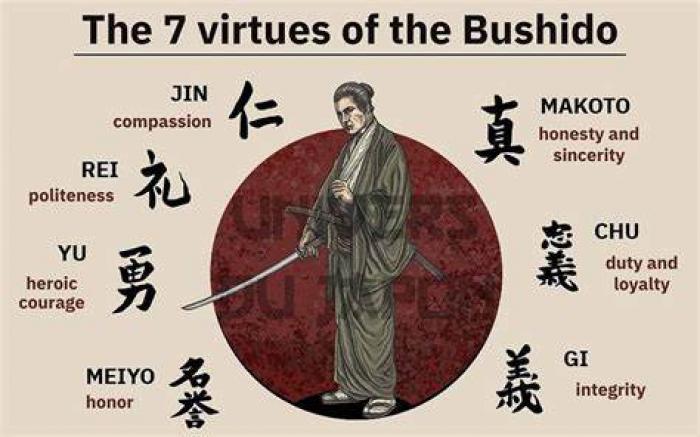
Hello, since my beginnings in BJJ, my teachers have always referred to Bushido as a moral and ethical code even though it is for Japanese martial arts. The latter emphasizes the values of honour, loyalty, sincerity and integrity. BJJ is a derivative of judo, which presupposes a continuity of this principle or is there a universal code of its own?
![Slideyfoot [jun]](userimg/5e25cf311adfd.jpg) SJ
SJBlack belt 1st degreeVerified
2 year(s) ago
It depends on the gym. If you trained at places like Gracie Barra, Gracie Humaita, Valente Brothers etc, you might get that kind of traditional martial arts formality.
In general, I don't think it is characteristic of most BJJ schools. I dislike formality, I'm also not a fan of instructors trying to be "life coaches."
I do have a code of conduct at my gym, but it is stuff like "maintain good personal hygiene," "don't train when you're ill," " no sexist/racist/homophobic/transphobic etc language," that kind of thing.
http://ArtemisBJJ.com/Code
In general, I don't think it is characteristic of most BJJ schools. I dislike formality, I'm also not a fan of instructors trying to be "life coaches."
I do have a code of conduct at my gym, but it is stuff like "maintain good personal hygiene," "don't train when you're ill," " no sexist/racist/homophobic/transphobic etc language," that kind of thing.
http://ArtemisBJJ.com/Code
 J
JBlack belt 2nd degreeVerified
2 year(s) ago
I talk about ethics a lot in my BJJ classes. I’m a philosophy professor who also teaches Jiu-Jjitsu health and exercise science classes at my college. Here’s some of my research on moral development in the martial arts (the bushido material starts on page 11): https://kampfsportmuseum.[...]l_Arts.pdf.
 AK
AKPurple beltVerified
2 year(s) ago
I hope not. I've witnessed an overall negative correlation between the amount a person talks about humility and the amount they display it. Probably because if you have to keep telling people how humble you are, it's because you ain't.
 JC
JCPurple beltVerified
2 year(s) ago
I hope not. I've witnessed an overall negative correlation between the amount a person talks about humility and the amount they display it. Probably because if you have to keep telling people how humble you are, it's because you ain't.
^^^^This. I don't like someone telling me how humble they are, how to live my life when theirs is a wreck, etc., etc. Can't we just train and not be douchebags without telling everyone how awesome we are?
 RD
RDBlack belt 4th degreeVerified
2 year(s) ago
It depends on the gym. If you trained at places like Gracie Barra, Gracie Humaita, Valente Brothers etc, you might get that kind of traditional martial arts formality. In general, I don't think it is characteristic of most BJJ schools. I dislike formality, I'm also not a fan of instructors trying to be 'life coaches.' I do have a code of conduct at my gym, but it is stuff like 'maintain good personal hygiene,' 'don't train when you're ill,' ' no sexist/racist/homophobic/transphobic etc language,' that kind of thing. http://ArtemisBJJ.com/Code
I am from Gracie Humaita Team and we don't do any of this stuff at our academy.
Seems cultish in my opinion.
We are not guru's.
Also I'm not there as a psychologist, counselor, fitness coach or dietician either.
Need any of those, go and seek it out.
Go to the gym to workout and come to class ready to train jiu jitsu.
Seems cultish in my opinion.
We are not guru's.
Also I'm not there as a psychologist, counselor, fitness coach or dietician either.
Need any of those, go and seek it out.
Go to the gym to workout and come to class ready to train jiu jitsu.
SJBlack belt 1st degreeVerified
2 year(s) ago
I am from Gracie Humaita Team and we don't do any of this stuff at our academy. Seems cultish in my opinion. We are not guru's. Also I'm not there as a psychologist, counselor, fitness coach or dietician either. Need any of those, go and seek it out. Go to the gym to workout and come to class ready to train jiu jitsu.
Sorry, I should have seperated out the "formal, traditional" bit from the "wants to be a life coach" thing. I didn't mean to suggest that Gracie Humaita does that, just the first bit.
 R
RBlack belt 1st degreeVerified
2 year(s) ago
Our gym is pretty chill when it comes to traditions and the like. We don't abide by "black belt right of way" or lower belts not asking higher belts to roll, nor do we bow to a picture on the wall or even before we walk onto the mats. However, there is a clear respect for each other and pride in taking care of the facilities. I also encourage people represent themselves and the gym well when outside of it.
The other day at the conclusion of class, I noticed several people had their gis in disarray, a couple with their belts just draped over their necks and gi pants untied. It's not the end of the world and I certainly wouldn't ever "smoke" someone with calisthentics or anything of the like - but I did make a general statement while everyone was lined up along the wall to conclude class - and just suggested that at the end of every class you should straighten yourself up and stand tall, to present the appearance of stoicism, and that is to train themselves to remain confident regardless of the results of the day, and we are always ready and willing to take on more if necessary. It was received well, and each class following it seems to have taken hold.
I think martial arts is a way of life for many, but not all. It certainly can be a vehicle for drastic self-improvement and a microcosm for how they approach challenges life tends to offer. But I don't buy into some hokey code of ethics specifically for BJJ or our academy. Don't be a douche, look out for your training partners and your academy, and stay healthy.
The other day at the conclusion of class, I noticed several people had their gis in disarray, a couple with their belts just draped over their necks and gi pants untied. It's not the end of the world and I certainly wouldn't ever "smoke" someone with calisthentics or anything of the like - but I did make a general statement while everyone was lined up along the wall to conclude class - and just suggested that at the end of every class you should straighten yourself up and stand tall, to present the appearance of stoicism, and that is to train themselves to remain confident regardless of the results of the day, and we are always ready and willing to take on more if necessary. It was received well, and each class following it seems to have taken hold.
I think martial arts is a way of life for many, but not all. It certainly can be a vehicle for drastic self-improvement and a microcosm for how they approach challenges life tends to offer. But I don't buy into some hokey code of ethics specifically for BJJ or our academy. Don't be a douche, look out for your training partners and your academy, and stay healthy.
JBlack belt 2nd degreeVerified
2 year(s) ago
There’s a difference between ethics (teaching people to think critically about right and wrong) and moralizing (preaching to people about how bad they are). The latter one has no place in the martial arts.
 VC
VCBlack belt 3rd degreeVerified
2 year(s) ago
This reminds me of the old karate "dojo kun" and unsure on whether this is applicable or relevant in BJJ. Some gyms are hyper competitive on one extreme and on the other there are the hobbyist, weekend warriors. While in an ideal world these precepts are taken to heart and applied, in reality we are the ones who ultimately decides which of the two wolves that live within us to feed, to take example from a Native American philosophy. In my gym, I only insist people maintain healthy personal hygiene and not behave like asshats.
 M
MBrown beltVerified
2 year(s) ago
Hello, since my beginnings in BJJ, my teachers have always referred to Bushido as a moral and ethical code even though it is for Japanese martial arts. The latter emphasizes the values of honour, loyalty, sincerity and integrity. BJJ is a derivative of judo, which presupposes a continuity of this principle or is there a universal code of its own?
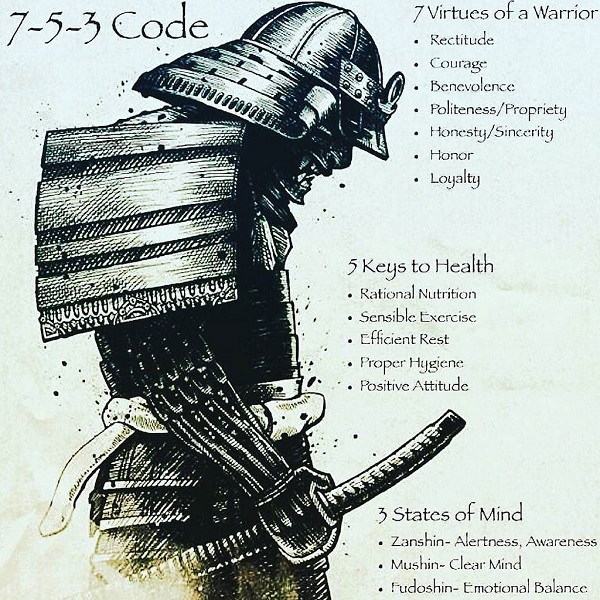
I know of the „7-5-3“ code … the Valente Bros talk about that on their page and YouTube.
https://www.bjjmatrat.com[...]-5-3-code/
The 7 virtues of a warrior
The 5 keys to health
The 3 states of mind
Is it that you maybe think about?
https://www.bjjmatrat.com[...]-5-3-code/
The 7 virtues of a warrior
The 5 keys to health
The 3 states of mind
Is it that you maybe think about?
 R
RPurple beltVerified
2 year(s) ago
Sometimes I feel like I am the only one that likes formality and ritual. I prefer to bow onto the mat, the picture of a arts founder, and to the professors. These things in my opinion help build cohesion for the group and promotes a focused mindset which is perfect for learning. If that also includes positive ethical reinforcement such as respect, hard work, and team work I am all for that as well. Is it necessary? No, but lets be honest there are many people in this world that could use it.
Besides you do not teach a person how to shoot without also reminding them on the proper use of the weapon. (Or you shouldn't) I think the same applies to martial arts. My son trains with me and I want him to have it ingrained that while he knows how to choke a person to death that he should not do so.
But to the topic of Bushido , the code and ideas were developed to control and focus the bloodthirsty warriors of their time. No one wanted hordes of Bow and Katana wielding maniacs roaming the countryside butchering anyone they wanted and then challenging the emperor. I dont know if that really applies too todays sport focused martial arts experience but as someone that lives in the countryside I appreciate the forethought.
Besides you do not teach a person how to shoot without also reminding them on the proper use of the weapon. (Or you shouldn't) I think the same applies to martial arts. My son trains with me and I want him to have it ingrained that while he knows how to choke a person to death that he should not do so.
But to the topic of Bushido , the code and ideas were developed to control and focus the bloodthirsty warriors of their time. No one wanted hordes of Bow and Katana wielding maniacs roaming the countryside butchering anyone they wanted and then challenging the emperor. I dont know if that really applies too todays sport focused martial arts experience but as someone that lives in the countryside I appreciate the forethought.
RBlack belt 1st degreeVerified
2 year(s) ago
Sometimes I feel like I am the only one that likes formality and ritual. I prefer to bow onto the mat, the picture of a arts founder, and to the professors. These things in my opinion help build cohesion for the group and promotes a focused mindset which is perfect for learning. If that also includes positive ethical reinforcement such as respect, hard work, and team work I am all for that as well. Is it necessary? No, but lets be honest there are many people in this world that could use it. Besides you do not teach a person how to shoot without also reminding them on the proper use of the weapon. (Or you shouldn't) I think the same applies to martial arts. My son trains with me and I want him to have it ingrained that while he knows how to choke a person to death that he should not do so. But to the topic of Bushido , the code and ideas were developed to control and focus the bloodthirsty warriors of their time. No one wanted hordes of Bow and Katana wielding maniacs roaming the countryside butchering anyone they wanted and then challenging the emperor. I dont know if that really applies too todays sport focused martial arts experience but as someone that lives in the countryside I appreciate the forethought.
I think the "samurai code" is heavily romanticized these days, and isn't an accurate depiction of the code they actually lived by. That differed from clan to clan, generation to generation.
There were samurai that killed for money, after all.
You can teach ethical use of skills and avoidance of conflict where possible without having some specific, fancy code of ethics to memorize or ritual to recite, IMO.
Incase you doubt this, here are some sources:
https://www.tofugu.com/ja[...]n/bushido/
https://open.library.ubc.[...]/1.0071589
There were samurai that killed for money, after all.
You can teach ethical use of skills and avoidance of conflict where possible without having some specific, fancy code of ethics to memorize or ritual to recite, IMO.
Incase you doubt this, here are some sources:
https://www.tofugu.com/ja[...]n/bushido/
https://open.library.ubc.[...]/1.0071589
Edited 2 year(s) ago
 RG
RGBlack belt 1st degreeVerified
2 year(s) ago
I think the 'samurai code' is heavily romanticized these days, and isn't an accurate depiction of the code they actually lived by. That differed from clan to clan, generation to generation. There were samurai that killed for money, after all. You can teach ethical use of skills and avoidance of conflict where possible without having some specific, fancy code of ethics to memorize or ritual to recite, IMO. Incase you doubt this, here are some sources: https://www.tofugu.com/ja[...]n/bushido/ https://open.library.ubc.[...]/1.0071589
Thank you. As someone who has lived in Japan for the last 2 years, westerners ridiculously romanticize Japanese culture and history. Don’t get me wrong, I ABSOLUTELY LOVE living in Japan, but for NONE of the made up romanticized reasons westerners think of. Too many people in western culture project their perceived fantasy values into Japanese culture
RBlack belt 1st degreeVerified
2 year(s) ago
Thank you. As someone who has lived in Japan for the last 2 years, westerners ridiculously romanticize Japanese culture and history. Don’t get me wrong, I ABSOLUTELY LOVE living in Japan, but for NONE of the made up romanticized reasons westerners think of. Too many people in western culture project their perceived fantasy values into Japanese culture
I am fascinated by Japanese culture and samurai history. But you gotta be real.
SJBlack belt 1st degreeVerified
2 year(s) ago
I feel like I am the only one that likes formality and ritual
Yeah, I think on a forum dominated by people who are attracted to the vibe offered by BJJ Globetrotters, you probably are an outlier on that score.
BJJ Globetrotters, from what I've seen, appeals to people who buck against following strict sets of rules, enjoy individualism and basically get annoyed at being told what to do.
While I like structure and order in some things (e.g., BIG fan of spreadsheets), I really hate it in other things (e.g., everybody having to wear the same gi, with the same patches, in the same colour).
Then again, there is Zen Camp. ;)
BJJ Globetrotters, from what I've seen, appeals to people who buck against following strict sets of rules, enjoy individualism and basically get annoyed at being told what to do.
While I like structure and order in some things (e.g., BIG fan of spreadsheets), I really hate it in other things (e.g., everybody having to wear the same gi, with the same patches, in the same colour).
Then again, there is Zen Camp. ;)
AKPurple beltVerified
2 year(s) ago
Sometimes I feel like I am the only one that likes formality and ritual. I prefer to bow onto the mat, the picture of a arts founder, and to the professors. These things in my opinion help build cohesion for the group and promotes a focused mindset which is perfect for learning.
Oh you're certainly not the only one. It's just that my experience is the polar opposite. What I see more of, are people using formality to hide behind rank and do anti-learning where they teach things that they know damn well don't work against anyone with a pulse and a blue belt.
Personally I'm only interested in 'what works' and that is the spirit of BJJ. I've learnt very valuable things from every colour belt at different stages. But then I get these people who couldn't choke their way out of an 8 mile rap battle preaching to me about humility because their technique of the day didn't work when I offered 5% resistance.
Personally I'm only interested in 'what works' and that is the spirit of BJJ. I've learnt very valuable things from every colour belt at different stages. But then I get these people who couldn't choke their way out of an 8 mile rap battle preaching to me about humility because their technique of the day didn't work when I offered 5% resistance.
 MG
MGBlack beltVerified
2 year(s) ago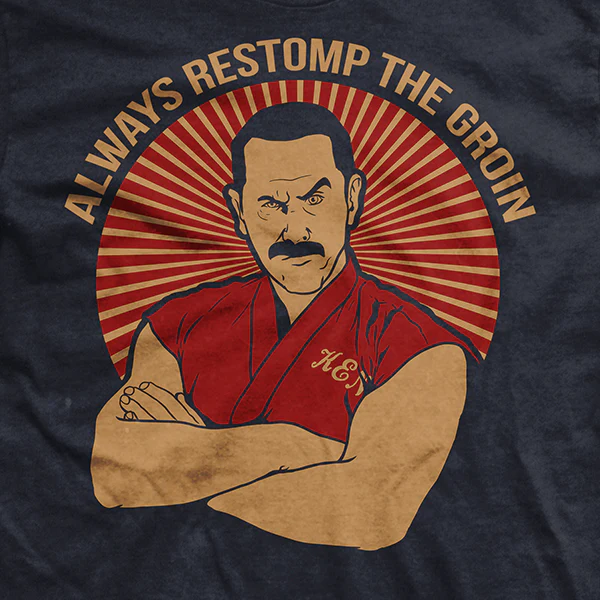
Bushido is just a romanticized outdated military code of conduct. Nothing wrong with learning from our past, but we’re not hereditary military nobility.
Most teams or organizations will have some kind of code of conduct even if it’s not written down or typed up for everyone to read on their website. These are usually more comprehensive and a little more relevant to you than a history book.
There is one rule I think we can all get behind. As Master Ken would say:
Most teams or organizations will have some kind of code of conduct even if it’s not written down or typed up for everyone to read on their website. These are usually more comprehensive and a little more relevant to you than a history book.
There is one rule I think we can all get behind. As Master Ken would say:
 JJ
JJBlack beltVerified
2 year(s) ago
I think all that honesty, loyalty and respect stuff is silly especially for adults.
What most people need is Peace and Calm.
They then slowly develop more Patience and Confidence.
This will by default also motivate people to be more Discipline and Decisive to better their lives in general.
These are the traits that make jiu-jitsu great. Not some Karate sales pitch.
Morale over Morals. You can try to teach children Morals. Most adults need Morale.
What most people need is Peace and Calm.
They then slowly develop more Patience and Confidence.
This will by default also motivate people to be more Discipline and Decisive to better their lives in general.
These are the traits that make jiu-jitsu great. Not some Karate sales pitch.
Morale over Morals. You can try to teach children Morals. Most adults need Morale.
Edited 2 year(s) ago
JCPurple beltVerified
2 year(s) ago
I think all that honesty, loyalty and respect stuff is silly especially for adults. What most people need is Peace and Calm. They then slowly develop more Patience and Confidence. This will by default also motivate people to be more Discipline and Decisive to better their lives in general. These are the traits that make jiu-jitsu great. Not some Karate sales pitch. Morale over Morals. You can try to teach children Morals. Most adults need Morale.
The problem is that the world is full of non adults no matter how old they are. An asshole that feels good about their self is just going to be a bigger asshole. Many will say that an asshole, by definition, doesn't feel good about themselves. It's more likely they've just never known any other way to behave and in modern culture there is no penalty for that.
JJBlack beltVerified
2 year(s) ago
The problem is that the world is full of non adults no matter how old they are. An asshole that feels good about their self is just going to be a bigger asshole. Many will say that an asshole, by definition, doesn't feel good about themselves. It's more likely they've just never known any other way to behave and in modern culture there is no penalty for that.
I would say if they find Peace and Calm and learn to be more patient and discipline they will become less of an asshole and have a higher Morale.
Increasing someone's morals does not always make them a better person but just more believing in whatever they believe in. Giving someone peace can change who they are.
Some people have a hard time controlling their own mind. And telling people what's good and bad doesn't really help with that. Also what's good and bad is mostly subjective. Helping people find a path towards inner calmness and peace will help with that.
Jiu-Jitsu is a therapy for many older adults. And not everyone wants their therapy to be about right and wrong or good vs evil. They just want to be able to relax and escape and learn how to continue this mindset into the rest of their day.
Increasing someone's morals does not always make them a better person but just more believing in whatever they believe in. Giving someone peace can change who they are.
Some people have a hard time controlling their own mind. And telling people what's good and bad doesn't really help with that. Also what's good and bad is mostly subjective. Helping people find a path towards inner calmness and peace will help with that.
Jiu-Jitsu is a therapy for many older adults. And not everyone wants their therapy to be about right and wrong or good vs evil. They just want to be able to relax and escape and learn how to continue this mindset into the rest of their day.
Edited 2 year(s) ago
 CR
CRBrown beltVerified
2 year(s) ago
When I wrote a BJJ curriculum, I had as one of the criteria for promotion to blue belt "being a safe training partner". You could say that's a moral thing, but it's also a practical thing, as the very best in the world did not get that way by themselves, but rather with a team of people who are safe training partners.
For context on my next point, I've given various talks and written articles (not peer-reviewed ones) in other areas of my life on things like virtue ethics, Kantian ethics, and my current favourite which is metaethics. With that said, I don't like moralising to BJJ students. This is because:
(a) they're not paying for morality lessons.
(b) most of the points about morality you could make would take up a serious amount of class time, e.g. "why be moral?", "what does it mean to be moral?", "what is the difference between norms and morality?" etc.
(c) I find that emphasising safety has the same net effect as preaching morality.
(d) If I moralise to students, that just further gives weight to the idea that BJJ instructors should be life coaches. I think that should be avoided.
Point C is the big one here - ultimately, whether the students are moral people or whether they act safely for selfish reasons, the net result is the same. Who they are outside of BJJ class is not particularly relevant to me - people who are dangerous outside of BJJ will likely be dangerous within BJJ.
For context on my next point, I've given various talks and written articles (not peer-reviewed ones) in other areas of my life on things like virtue ethics, Kantian ethics, and my current favourite which is metaethics. With that said, I don't like moralising to BJJ students. This is because:
(a) they're not paying for morality lessons.
(b) most of the points about morality you could make would take up a serious amount of class time, e.g. "why be moral?", "what does it mean to be moral?", "what is the difference between norms and morality?" etc.
(c) I find that emphasising safety has the same net effect as preaching morality.
(d) If I moralise to students, that just further gives weight to the idea that BJJ instructors should be life coaches. I think that should be avoided.
Point C is the big one here - ultimately, whether the students are moral people or whether they act safely for selfish reasons, the net result is the same. Who they are outside of BJJ class is not particularly relevant to me - people who are dangerous outside of BJJ will likely be dangerous within BJJ.
JBlack belt 2nd degreeVerified
2 year(s) ago
I think I have an obligation to give my students some guidance so that they will use their fighting skills only when it is morally and legally appropriate. The last thing I want to do is teach someone how to be a more effective criminal. I think this is particularly important for those of us who teach self-defense, since the legal consequences of using one's skills can be quite serious. But I think ethics is also important for sports (at least to some degree). I don't want a student who acts like Conor McGregor (even if he has that level of skill) because it reflects badly on me and my gym. On pages 2–5 of my article (linked above), I summarize the research that has been done about the extent to which martial arts can promote moral development. Martial arts training doesn't automatically make somebody a good person. You have to train a certain way to get good results. Moralizing doesn't work. We have to teach people how to think critically about ethics and the law. Obviously, not everyone has a background in this and most martial arts schools don't teach us how to do this as part of our training, so it can be a bit of a challenge. That's why martial arts studies (the academic discipline) is working on this issue right now.
SJBlack belt 1st degreeVerified
2 year(s) ago
I find that emphasising safety has the same net effect as preaching morality.
Yeah, I like that. I think it's generally dubious to set yourself up as a moral arbiter, that makes me uncomfortable. However, focusing on safety is entirely reasonable and well within our remit as instructors.
CRBrown beltVerified
2 year(s) ago
I think I have an obligation to give my students some guidance so that they will use their fighting skills only when it is morally and legally appropriate. The last thing I want to do is teach someone how to be a more effective criminal. I think this is particularly important for those of us who teach self-defense, since the legal consequences of using one's skills can be quite serious.
I think that's a fair point. I like to go over the legal ramifications of using BJJ in a real-life scenario, noting that I'm not qualified to give legal advice, but the Crimes Act in my state does list things like strangulation having a maximum penalty of 10 years imprisonment. Where I think there is a downside to this is that generally, people committing crimes believe they won't be caught. This is part of the issue of deterrence, most crooks think they're too clever to get caught.
Where the issue gets tricky is when you know someone does have a bit of a reputation for doing the wrong thing outside of BJJ, e.g. a guy who slaps his partner around. Do I refuse to teach him for fear that he would be better at that? I would most likely refuse to have him as a student, but that's also partly because I worry someone like that would also be dangerous to the other students.
I'm going to have a read of your paper. It sounds very interesting!
Where the issue gets tricky is when you know someone does have a bit of a reputation for doing the wrong thing outside of BJJ, e.g. a guy who slaps his partner around. Do I refuse to teach him for fear that he would be better at that? I would most likely refuse to have him as a student, but that's also partly because I worry someone like that would also be dangerous to the other students.
I'm going to have a read of your paper. It sounds very interesting!
VCBlack belt 3rd degreeVerified
2 year(s) ago
So the Penal Code in your country should serve as the BJJ Code in your Academy?
CRBrown beltVerified
2 year(s) ago
So the Penal Code in your country should serve as the BJJ Code in your Academy?
It's probably a good point to start with. Not sure if it would comprise the entirety of a BJJ code, but "please don't use this stuff to break the law" is a good bedrock to begin from.
VCBlack belt 3rd degreeVerified
2 year(s) ago
Wouldn't this hold true for any activity that could potentially cause harm or run afoul of the law and not just specific to martial arts (eg. archery, sword fighting, javelin throwing, shot putting, etc.)?
CRBrown beltVerified
2 year(s) ago
Wouldn't this hold true for any activity that could potentially cause harm or run afoul of the law and not just specific to martial arts (eg. archery, sword fighting, javelin throwing, shot putting, etc.)?
Yes very much so - my intention with my comments was more to point out issues of giving moral lessons as part of martial arts, rather than constructing a BJJ code per se. I bring up legality sometimes when I think it's appropriate, such as when I get asked about using BJJ in self-defence, but that's again not a BJJ code per se but rather just everyday advice that breaking the law is not good.
I am sceptical of a 'code' in martial arts for adults; I can see why people value them (or purport to value them), but I think genuine moral instruction is a lot more than just simple watchwords like "integrity", "honesty", "humility" and so on. Jim's right in that critical thinking is needed. If you want a decent read on the common misunderstanding of morality, Alasdair MacIntyre's book "After Virtue" has a good bit on why we don't really understand moral discourse as much as we would like.
I'll split my answer a bit in terms of morality / ethics - when it comes to teaching kids, I think there's some value in teaching them good life lessons about virtuous behaviour and martial arts. Martial arts schools often use this in promotional material and so on (borrowing from Jim's paper) and I think that's a valid point, that parents expect some sort of moral or ethical instruction alongside learning how to fight.
For adults, I think that discussing ethics or morality is a bit trickier. Perhaps this is more of a cultural thing, but I can imagine trying to tell the guys I train with about virtuous conduct, or perhaps things like the categorical imperative, and they would (quite rightly) ask me what this has to do with BJJ. They're not paying for me to preach Aristotle or Kant at them. I mean I'll happily discuss it outside of class time with whoever can put up with me, but during class time I am focussed on teaching BJJ.
I do get the need though for the people to train to be "good people". That's why I tend to focus on being a safe training partner - if someone is unsafe, then it provides a much more objective basis on which to exclude them from class. If everyone is acting safe, then who they are outside of BJJ is not particularly important to me. But that's my take on it - I can see there are arguments for caring about who someone is outside of the gym, but to me as long as they're safe training partners, that's the most pressing thing.
I am sceptical of a 'code' in martial arts for adults; I can see why people value them (or purport to value them), but I think genuine moral instruction is a lot more than just simple watchwords like "integrity", "honesty", "humility" and so on. Jim's right in that critical thinking is needed. If you want a decent read on the common misunderstanding of morality, Alasdair MacIntyre's book "After Virtue" has a good bit on why we don't really understand moral discourse as much as we would like.
I'll split my answer a bit in terms of morality / ethics - when it comes to teaching kids, I think there's some value in teaching them good life lessons about virtuous behaviour and martial arts. Martial arts schools often use this in promotional material and so on (borrowing from Jim's paper) and I think that's a valid point, that parents expect some sort of moral or ethical instruction alongside learning how to fight.
For adults, I think that discussing ethics or morality is a bit trickier. Perhaps this is more of a cultural thing, but I can imagine trying to tell the guys I train with about virtuous conduct, or perhaps things like the categorical imperative, and they would (quite rightly) ask me what this has to do with BJJ. They're not paying for me to preach Aristotle or Kant at them. I mean I'll happily discuss it outside of class time with whoever can put up with me, but during class time I am focussed on teaching BJJ.
I do get the need though for the people to train to be "good people". That's why I tend to focus on being a safe training partner - if someone is unsafe, then it provides a much more objective basis on which to exclude them from class. If everyone is acting safe, then who they are outside of BJJ is not particularly important to me. But that's my take on it - I can see there are arguments for caring about who someone is outside of the gym, but to me as long as they're safe training partners, that's the most pressing thing.
VCBlack belt 3rd degreeVerified
2 year(s) ago
True. Most adults can't even follow a fitness/diet/weight loss plan let alone a code of ethics and morals imho. Hence the BJJ Police, Mat Enforcers who nudge the potential crazies back into their lanes in an informal manner. Such personalities are already broken in one way or another and only understand a more primal mode of communication as such has been my observations



