
Rules for main forums
- Be nice
- No advertisement
- No events
- No fundraisers
- No topics asking for votes
- Only posts related to Brazilian Jiu Jitsu
Law Enforcement (Defensive Tactics)
3 year(s) ago • 25768 views • 60 replies
 JT
JTPurple beltVerified

3 year(s) ago
I still dont understand why being at least a blue belt isnt required for law enforcement
Money and a lack of understanding from the people making the decisions. They teach just enough to give people a false sense of security.
 MG
MGPurple beltVerified
3 year(s) ago
I still dont understand why being at least a blue belt isnt required for law enforcement
I would love this. I would also like a degree requirement. However, you’d be cutting into an already dwindling candidate pool by doing so. With the kind of staffing shortages law enforcement is seeing nationwide, it’s hard to become more restrictive.
 BB
BBPurple beltVerified
3 year(s) ago
It’s that time of the year again. I get to go learn “defensive tactics” from an “instructor” whose only training has been the two week instructor certification course.
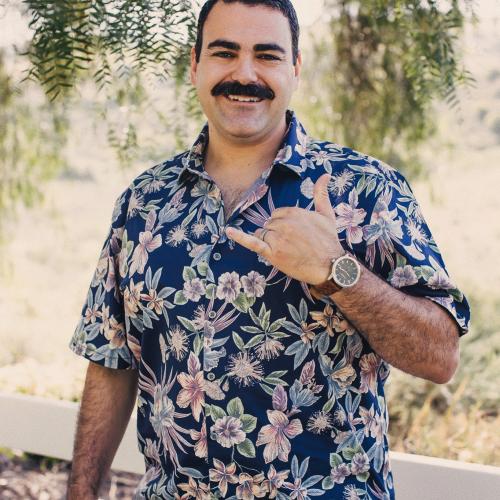
I look like this picture, and could probably string together a DT class if I had to. Also a lot faster than people expect me to be.
I know a lot of people see big cops and think they are incompetent based on appearance.
I know a lot of people see big cops and think they are incompetent based on appearance.
Edited 3 year(s) ago
BBPurple beltVerified
3 year(s) ago
I would love this. I would also like a degree requirement. However, you’d be cutting into an already dwindling candidate pool by doing so. With the kind of staffing shortages law enforcement is seeing nationwide, it’s hard to become more restrictive.
You'd probably see pressure to promote quicker and more people willing to promote early for $$ would pop up.
MGPurple beltVerified
3 year(s) ago
You'd probably see pressure to promote quicker and more people willing to promote early for $$ would pop up.
I mean, is there really an issue with having a police Jiu Jitsu program that churned out blue belts in a year?
BBPurple beltVerified
3 year(s) ago
I mean, is there really an issue with having a police Jiu Jitsu program that churned out blue belts in a year?
If they are being pressured to promote to get people on the road instead of training to the level of the belt before promoting. There is an issue.
As it stands now at least in my state a person can be on the road working part time while waiting for KLETC academy to start a new class. If they have to go to KLETC, and then a year of jiu jitsu training before they can be on the road. That is essentially a year and a half of paying someone before they can actually work. There can only be so many dispatchers.
As it stands now at least in my state a person can be on the road working part time while waiting for KLETC academy to start a new class. If they have to go to KLETC, and then a year of jiu jitsu training before they can be on the road. That is essentially a year and a half of paying someone before they can actually work. There can only be so many dispatchers.
MGPurple beltVerified
3 year(s) ago
That’s why you make it a pre-hire program. None of this really matters though because it will never happen. We can’t even get an annual PT assessment so 🤷♂️
 SB
SBBlack belt 1st degreeVerified
3 year(s) ago
I've heard Mike Beltran talk about the inverse relationship between the use of force and the ability to fight. He talked about how officers that are out of shape and have no real knowledge of control are much more likely to reach for a weapon than an officer that knows he or she can physically control an opponent. He says that lack of training is the biggest internal problem in law enforcement.
MGPurple beltVerified
3 year(s) ago
Agreed. I would also add that the out of shape untrained officers are more likely to escalate encounters due to their insecurities about their lack of capability.
BBPurple beltVerified
3 year(s) ago
The entire reason I started training jiu jitsu is because I was a reserve police officer with zero training opportunities aside from annual shooting qualifications. Thankfully due to my size, people didn't really mess with me. Only time I ever had to reach for my weapon was during a felony stop with an armed and dangerous person, i've never had to use it. Being a reserve I also wasn't allowed to carry a taser for some reason. I had my hands, pepper spray and my duty weapon.
 J
JPurple beltVerified
3 year(s) ago
Say what you want about Rener, Ryron, and GST, they have hundreds of years of combined law enforcement experience helping develop their programs. I will take that over some dork that got “certified” by an academy course after spending a few hours swinging a baton while yelling get back.
When I went through the police academy in Virginia I was a white belt with about six months of jiu-jitsu under my belt. The academy I attended was considered a well-respected academy in the state, with this in mind, I should not be the best grappler in the room, knowing where my jiu-jitsu is today and comparing it to my ability from years ago is scary. Of course, the head DT instructor was excellent, but almost all the other instructors were placed in the DT program because they couldn't work as PT instructors (not fit enough). This made me seriously question the ability of my fellow officers when I was on FTO because the skills needed to graduate from the academy were so low. Since I moved to South Carolina I am no longer an LEO but I send all my love to those that continue to serve and protect.
Edited 3 year(s) ago
JPurple beltVerified
3 year(s) ago
I still dont understand why being at least a blue belt isnt required for law enforcement
Departments wouldn't be able to hire anyone.
 F
FPurple beltVerified
3 year(s) ago
Departments wouldn't be able to hire anyone.
You’re absolutely correct… this whole thread is filled with LE and the like unfortunately we are all but a small number that under the importance that BJJ has for subject control. By no means at I saying it’s a catch all because it’s not. BJJ in LE is much like LE as a whole we live in the grey and BJJ is kind of a grey area for LE.
All I’m saying is I’ve offered guys free 6 month courses to get started at my gym I’ve offered to bring the classes to them on their schedule and shift but NONE have taken me up on the offer. All we can do is try and create spaces where when they finally come around or when admin comes around for a new DT guy to take the slot and improve on it.
All I’m saying is I’ve offered guys free 6 month courses to get started at my gym I’ve offered to bring the classes to them on their schedule and shift but NONE have taken me up on the offer. All we can do is try and create spaces where when they finally come around or when admin comes around for a new DT guy to take the slot and improve on it.
 AC
ACBlack belt 2nd degreeVerified
3 year(s) ago
This is a very interesting topic of conversation, figured I would join in and give my two cents. I admire the passion about this topic, but I want to disagree with the fact that BJJ is not the right option. I strongly believe it is; however, I believe it also should be supplemented with something else... i.e. Judo and Catch Wrestling (let the hate begin).
The issue is not that someone goes to a 2-week course... GST, FLETC, etc, and now they are blessed with the title of DT instructor, which I whole heartedly believe that these spots should be saved for those who are a students of the art, and actually take that job seriously and not use it for vacation off the road or to just to beat down recruits. The problem comes down to sustainment training. In my State in which I am a DT instructor, its the same song and dance, learn the moves and leave and never have to worry about it ever again. We train in firearms very religiously (which is very important), but we never train in groundwork. When the conversation is brought up, it always turns to a workman's comp ordeal, and what if situations. In my 21 years, I believe I have employed my firearm a dozen times; however, Ive been in more fights arresting someone. We as cops get to attached to our weapons thinking they will save us, but as some of us know, you can deploy your taser with zero effect, so now what are you left with, time to go hands on. Finally EGO, we as cops (who dont train) have the biggest egos in the world. The last thing someone with that type of an ego is to enter a gym and get choked out or tapped out by someone is twice as small as them. Side note... Administrators are the worst they dont see the value in training. That has been my biggest fight.
I am lucky enough to have suckered some of my fellow brothers into the gym and am able to teach them Carlos Catania BJJ (cheap plug), and the results have shown this crap works on the road, if you train on a consistent basis. I also appreciate each of you that are in this career field and irritate your fellow brother and sisters to join a gym and train.
Sorry if this was all over the place, I get chasing rabbits when I type, but that should be the end of my rant, for now. Stay safe out there.
The issue is not that someone goes to a 2-week course... GST, FLETC, etc, and now they are blessed with the title of DT instructor, which I whole heartedly believe that these spots should be saved for those who are a students of the art, and actually take that job seriously and not use it for vacation off the road or to just to beat down recruits. The problem comes down to sustainment training. In my State in which I am a DT instructor, its the same song and dance, learn the moves and leave and never have to worry about it ever again. We train in firearms very religiously (which is very important), but we never train in groundwork. When the conversation is brought up, it always turns to a workman's comp ordeal, and what if situations. In my 21 years, I believe I have employed my firearm a dozen times; however, Ive been in more fights arresting someone. We as cops get to attached to our weapons thinking they will save us, but as some of us know, you can deploy your taser with zero effect, so now what are you left with, time to go hands on. Finally EGO, we as cops (who dont train) have the biggest egos in the world. The last thing someone with that type of an ego is to enter a gym and get choked out or tapped out by someone is twice as small as them. Side note... Administrators are the worst they dont see the value in training. That has been my biggest fight.
I am lucky enough to have suckered some of my fellow brothers into the gym and am able to teach them Carlos Catania BJJ (cheap plug), and the results have shown this crap works on the road, if you train on a consistent basis. I also appreciate each of you that are in this career field and irritate your fellow brother and sisters to join a gym and train.
Sorry if this was all over the place, I get chasing rabbits when I type, but that should be the end of my rant, for now. Stay safe out there.
 R
RBlack belt 1st degreeVerified
3 year(s) ago
Adam, I (and many others in here I'm sure) echo your sentiments and have experienced the same roadblocks. The sliver of optimism still living within me says that there is a growing trend of cops who train in BJJ, which is fantastic. Also, since most of these use of force incidents that go to some sort of trial end up with a review of the officers' and departments' training files, there has been a push toward more training for police - which is also good news. Here in North Carolina, tasers have been severely restricted by Armstrong v. Pinehurst (and other states in the 4th Circuit as well.) This is actually a benefit because it forces departments and officers to face their over-reliance on tools. The one demand that will never change is an officers' ability to put hands on someone and be prepared for what happens next.
I am a lead DT instructor/training coordinator for my agency and we have recently instated a mandatory quarterly defensive tactics (2 hr block a piece) and tactical firearms (2 hr block a piece) training requirement for all officers in the department. Specialty units get more training catered toward their unique needs (i.e.: Emergency Response Team, School Resource Officers, etc. - another area that often goes neglected. I actually have an article getting published this summer in Tactical Edge Magazine regarding grappling training for operators.) Administrators are absolutely a huge piece of the problem, but officers not recognizing the need and personal responsibility for seeking out external training contributes as well.
Glad to have you here, Sir. Stay safe!
I am a lead DT instructor/training coordinator for my agency and we have recently instated a mandatory quarterly defensive tactics (2 hr block a piece) and tactical firearms (2 hr block a piece) training requirement for all officers in the department. Specialty units get more training catered toward their unique needs (i.e.: Emergency Response Team, School Resource Officers, etc. - another area that often goes neglected. I actually have an article getting published this summer in Tactical Edge Magazine regarding grappling training for operators.) Administrators are absolutely a huge piece of the problem, but officers not recognizing the need and personal responsibility for seeking out external training contributes as well.
Glad to have you here, Sir. Stay safe!
JPurple beltVerified
3 year(s) ago
Adam, I (and many others in here I'm sure) echo your sentiments and have experienced the same roadblocks. The sliver of optimism still living within me says that there is a growing trend of cops who train in BJJ, which is fantastic. Also, since most of these use of force incidents that go to some sort of trial end up with a review of the officers' and departments' training files, there has been a push toward more training for police - which is also good news. Here in North Carolina, tasers have been severely restricted by Armstrong v. Pinehurst (and other states in the 4th Circuit as well.) This is actually a benefit because it forces departments and officers to face their over-reliance on tools. The one demand that will never change is an officers' ability to put hands on someone and be prepared for what happens next. I am a lead DT instructor/training coordinator for my agency and we have recently instated a mandatory quarterly defensive tactics (2 hr block a piece) and tactical firearms (2 hr block a piece) training requirement for all officers in the department. Specialty units get more training catered toward their unique needs (i.e.: Emergency Response Team, School Resource Officers, etc. - another area that often goes neglected. I actually have an article getting published this summer in Tactical Edge Magazine regarding grappling training for operators.) Administrators are absolutely a huge piece of the problem, but officers not recognizing the need and personal responsibility for seeking out external training contributes as well. Glad to have you here, Sir. Stay safe!
Congrats on your article. While admin might not make the situation better for patrol officers, each individual officer needs to take responsibility for their own skills to stay safe. An organization that helped me keep training through my FTO period was Adopt a Cop BJJ which gave me a partial scholarship to keep training. Unfortunately they are only able to sponsor white belt officers that are currently working patrol due to their funds but it's a start.
 BM
BMPurple beltVerified
3 year(s) ago
I have been in law enforcement in California for 7 years, and found our Arrest Control Techniques (ACT) program at our agency is finally catching up to modern times and trying to implement more BJJ/MMA. Our instructors are all patrol experienced, and have a background in BJJ/MMA. They have done a great job convincing the management we need more BJJ in our ACT.
During our ACT instruction at the basic academy, the ACT guys twisted us up into pretzels and told us to start training anything anywhere when we graduated. I heeded that and immediately joined a BJJ gym.
Since that time, I have found BJJ to be an excellent supplement to my initial training. My style of BJJ is in the lineage of Carlson Gracie SR. My professor taught me basic/simple moves for take downs, positions, transitions and submissions. Having had to fight my way to an arrest I have to say this style has benefited me much more than some of the "fancier" styles including lapels and Gi manipulation, baron bolo, etc. that one may use in gym or competition.
I think despite what style of martial arts, BJJ, etc. one practices to improve their ACT/DT, the benefits to BJJ are ALSO found in BJJ's byproducts.
1.) Ground fighting cardio - Many times officers go to the ground and get gassed out in the fight and can't even talk on the radio. No matter what officers do: run, swim, yoga, or box, they always get gassed on the ground.
2.) Fight stress inoculation/situational awareness - officers are less likely to "go black" or stress out from being in a fight with suspects (even bigger ones) because they are now comfortable with attacking and also being put in disadvantages positions. They don't hyperventilate and stay calm even when an arm goes around their neck, or they end up on the ground.
3.) Confidence - unless the dude I am trying to arrest has cauliflower ear or opens his shirt to reveal a rashguard like Superman, I am 99% sure I can safely get this guy to the ground, under control, and wait for back-up to cuff. Also, I am more confident in a one-on-one with all my suspects. They sense the confidence, and that command presence wins the day 90% of the time. Additionally, when I escort someone with a firm grip and my hands are on the right joints/parts with a confident firmness, suspects are less likely or able to try something at that point. I have escorted many a DUI suspect out of the driver seat without them trying to fight me in the middle of traffic because I have a very confident, firm and effective grip on their arm(s), etc.
4.) Quarterbacking the group use of force - Many times my partners are in the dog pile pulling the suspect's limbs in every direction like a medieval quartering. I step in and direct my partners on which way to push, pull, move etc. so we can get the suspect on his stomach into a cuffing positions more quickly and safely. Additionally, I will modify my partner's hand placement and help them with transitioning arms, etc. using my experience. This is always appreciated and looks better on camera for the supervisors.
5.) Avoiding strikes (work comp) - Many times I have avoided delivering strikes and been able to use force without it. Many of my partners will strike which causes injury to their hands and land themselves on light duty, or home duty.
6.) Writing the use of force - I don't put Japanese or Brazilian terms in my use of force reports, but I have used English equivalents, and I am better able to articulate what force I applied and caused what injuries because of my BJJ training. (e.g. outside trip clinch, mount position, etc). It makes it more specific and allows the supervisor to understand why/how force was applied and was justified while review body camera. Usually a nice introduction to the pavement ends fights pretty quick with these guys.
7.) Understanding when to use ACT/BJJ - Many officers still try to play "twisty wristy" when things have escalated to injuring force or the necessity for impact weapons, tasers, etc. BJJ practitioners learn the limits of the art and when it is past time for it. Sometimes I don't get the opportunity to use BJJ and I go to my taser, baton or gun depending on what the situation calls for.
8.) Understanding size differences - I don't underestimate small people or women in a fight anymore. I can say I've been tapped many times by opponents of all shapes, genders and sizes. I do not underestimate any suspect in the field, and I use the same level of caution.
Lastly, I have been fortunate enough to have other law enforcement partners at my gym where we talk through modifying techniques for work. Not every move is applicable, and some can be modified. BJJ is a combat sport, ACT is for the safe and effective arrest of criminal suspects. The rules of those two games are very different. While BJJ matches are supposed to be a fair fight. I do not want a fair fight at work. I have to win every fight otherwise I don't get to go home.
Just my two cents, thanks for reading. I hope my perspective helps the dialogue.
During our ACT instruction at the basic academy, the ACT guys twisted us up into pretzels and told us to start training anything anywhere when we graduated. I heeded that and immediately joined a BJJ gym.
Since that time, I have found BJJ to be an excellent supplement to my initial training. My style of BJJ is in the lineage of Carlson Gracie SR. My professor taught me basic/simple moves for take downs, positions, transitions and submissions. Having had to fight my way to an arrest I have to say this style has benefited me much more than some of the "fancier" styles including lapels and Gi manipulation, baron bolo, etc. that one may use in gym or competition.
I think despite what style of martial arts, BJJ, etc. one practices to improve their ACT/DT, the benefits to BJJ are ALSO found in BJJ's byproducts.
1.) Ground fighting cardio - Many times officers go to the ground and get gassed out in the fight and can't even talk on the radio. No matter what officers do: run, swim, yoga, or box, they always get gassed on the ground.
2.) Fight stress inoculation/situational awareness - officers are less likely to "go black" or stress out from being in a fight with suspects (even bigger ones) because they are now comfortable with attacking and also being put in disadvantages positions. They don't hyperventilate and stay calm even when an arm goes around their neck, or they end up on the ground.
3.) Confidence - unless the dude I am trying to arrest has cauliflower ear or opens his shirt to reveal a rashguard like Superman, I am 99% sure I can safely get this guy to the ground, under control, and wait for back-up to cuff. Also, I am more confident in a one-on-one with all my suspects. They sense the confidence, and that command presence wins the day 90% of the time. Additionally, when I escort someone with a firm grip and my hands are on the right joints/parts with a confident firmness, suspects are less likely or able to try something at that point. I have escorted many a DUI suspect out of the driver seat without them trying to fight me in the middle of traffic because I have a very confident, firm and effective grip on their arm(s), etc.
4.) Quarterbacking the group use of force - Many times my partners are in the dog pile pulling the suspect's limbs in every direction like a medieval quartering. I step in and direct my partners on which way to push, pull, move etc. so we can get the suspect on his stomach into a cuffing positions more quickly and safely. Additionally, I will modify my partner's hand placement and help them with transitioning arms, etc. using my experience. This is always appreciated and looks better on camera for the supervisors.
5.) Avoiding strikes (work comp) - Many times I have avoided delivering strikes and been able to use force without it. Many of my partners will strike which causes injury to their hands and land themselves on light duty, or home duty.
6.) Writing the use of force - I don't put Japanese or Brazilian terms in my use of force reports, but I have used English equivalents, and I am better able to articulate what force I applied and caused what injuries because of my BJJ training. (e.g. outside trip clinch, mount position, etc). It makes it more specific and allows the supervisor to understand why/how force was applied and was justified while review body camera. Usually a nice introduction to the pavement ends fights pretty quick with these guys.
7.) Understanding when to use ACT/BJJ - Many officers still try to play "twisty wristy" when things have escalated to injuring force or the necessity for impact weapons, tasers, etc. BJJ practitioners learn the limits of the art and when it is past time for it. Sometimes I don't get the opportunity to use BJJ and I go to my taser, baton or gun depending on what the situation calls for.
8.) Understanding size differences - I don't underestimate small people or women in a fight anymore. I can say I've been tapped many times by opponents of all shapes, genders and sizes. I do not underestimate any suspect in the field, and I use the same level of caution.
Lastly, I have been fortunate enough to have other law enforcement partners at my gym where we talk through modifying techniques for work. Not every move is applicable, and some can be modified. BJJ is a combat sport, ACT is for the safe and effective arrest of criminal suspects. The rules of those two games are very different. While BJJ matches are supposed to be a fair fight. I do not want a fair fight at work. I have to win every fight otherwise I don't get to go home.
Just my two cents, thanks for reading. I hope my perspective helps the dialogue.
 J
JBlack belt 1st degreeVerified
3 year(s) ago
Wow. This thread expanded pretty well, though I'm not sure what point I should take away from the original post other than his statement that BJJ is not the best option. I don't see it this way.
Sure, BJJ gives the player a sense of confidence. Yes, it even provides the frequent trainer with a skill set that helps subdue and control resistant people, whether suspects, offenders, or emotionally disturbed and in crisis. To me, those are just bonuses.
The true benefit of BJJ is the obliteration it does to an officer's ego. I am a poster child for that statement, but this post isn't the place for a story that I am sure many of you already understand from your experiences. I support my claim with this: My professor allows me to provide free training to law enforcement in my fundamentals class. I have done so for a couple of years now. Even including that, we have zero local law enforcement in our gym right now. It isn't that the training isn't good. I suspect it is because they, as new students, realize that they are severely ill-equipped to deal with a person who might only have a year of training. At least my state (Georgia) has developed a BJJ certification program. The only thing cops like better than free stuff is a new certification.
Lastly, though I sit here nursing a sprained (maybe worse?) pinky, regular BJJ administered by a competent instructor will result in far fewer injuries to officers when compared with any other DT training I have participated in.
Sure, BJJ gives the player a sense of confidence. Yes, it even provides the frequent trainer with a skill set that helps subdue and control resistant people, whether suspects, offenders, or emotionally disturbed and in crisis. To me, those are just bonuses.
The true benefit of BJJ is the obliteration it does to an officer's ego. I am a poster child for that statement, but this post isn't the place for a story that I am sure many of you already understand from your experiences. I support my claim with this: My professor allows me to provide free training to law enforcement in my fundamentals class. I have done so for a couple of years now. Even including that, we have zero local law enforcement in our gym right now. It isn't that the training isn't good. I suspect it is because they, as new students, realize that they are severely ill-equipped to deal with a person who might only have a year of training. At least my state (Georgia) has developed a BJJ certification program. The only thing cops like better than free stuff is a new certification.
Lastly, though I sit here nursing a sprained (maybe worse?) pinky, regular BJJ administered by a competent instructor will result in far fewer injuries to officers when compared with any other DT training I have participated in.
Edited 3 year(s) ago
 L
LBrown beltVerified
3 year(s) ago
In addition to everything exposed by the teachers and instructors, my personal opinion is that in addition to the techniques, there is also the way in which the techniques are trained, since some instructors do not base themselves on the real response of an individual, their reflexes, the real intentions of doing damage. or oppose an arrest many see the opponent as a robotic system that always acts in the same way without taking into account the reactions to each action I had the opportunity to train state security personnel and my way was to make a theater where the aggression was as real as it would be seen on the street with insults, screams and real intentions to attack to promote the necessary stress to match the real situation
 M
MBrown beltVerified
2 week(s) ago
As a recreational, average skilled bjj brown belt but professional PT,DT and CT Instructor with 25 years working in the LE environment and having used force hundreds of times, i really can't understand the authorities/administration, who let their staff train DT and Control tactics only like 4 hours a year or something like that on duty mandatory (depending on state and agency).
My guys have mandatory training 12 sessions a year, one session every month minimum, and even that isn't enough in my opinion. I teach 2 sessions on duty every week. Consistency is key! I experienced, that a delivery system based on grappling and wrestling, works great and training a grappling/wrestling based style after duty every week multiple times, definitely helps on duty, too, to stay confident, composed and calm and helps minimizing injuries. I beat that drum for a long time. You can't train enough for a job in that work environment.
Also special grappling/wrestling based systems, especially catered to LEOs, like GST and SafeWrap, EFC, Police BJJ C4C, OSS, ISR, you name it, are great add ons.
Recently i could attend and get certified in the SafeWrap 2 on 1 restraint and control system for example, and it was great to work with other Professionals from Police, Corrections, Military police and professional BJJ Coaches from all around Europe, all having different backgrounds, but using the same language (the same system and standard build on grappling)...
Often, in my experience, it's all about who is in charge of DT training and if they train a certain System or Martial art . If the Lead head Instructor or Supervisor has a background in Wing Tsun, Krav Maga, Jiu Jitsu, etc.... they try to bring it in officially as part of the DT/ACT Curriculum....
It should be safe for the officers and suspects and relatively easy to learn in relation to the low amount of mandatory training, but still be effective.....that's almost impossible. Volume and training consistency is one important factor: train a little a lot, lots of communication and teamwork, to not just have a dogpile and people may get injured. But also it's important what you train: if all you have is a hammer, everything looks like a nail....If you rely on strikes only, it may certainly not be the best option. If the peeps lack skills and are overwhelmed, often they overly rely on tools like OC, baton or taser....
My guys have mandatory training 12 sessions a year, one session every month minimum, and even that isn't enough in my opinion. I teach 2 sessions on duty every week. Consistency is key! I experienced, that a delivery system based on grappling and wrestling, works great and training a grappling/wrestling based style after duty every week multiple times, definitely helps on duty, too, to stay confident, composed and calm and helps minimizing injuries. I beat that drum for a long time. You can't train enough for a job in that work environment.
Also special grappling/wrestling based systems, especially catered to LEOs, like GST and SafeWrap, EFC, Police BJJ C4C, OSS, ISR, you name it, are great add ons.
Recently i could attend and get certified in the SafeWrap 2 on 1 restraint and control system for example, and it was great to work with other Professionals from Police, Corrections, Military police and professional BJJ Coaches from all around Europe, all having different backgrounds, but using the same language (the same system and standard build on grappling)...
Often, in my experience, it's all about who is in charge of DT training and if they train a certain System or Martial art . If the Lead head Instructor or Supervisor has a background in Wing Tsun, Krav Maga, Jiu Jitsu, etc.... they try to bring it in officially as part of the DT/ACT Curriculum....
It should be safe for the officers and suspects and relatively easy to learn in relation to the low amount of mandatory training, but still be effective.....that's almost impossible. Volume and training consistency is one important factor: train a little a lot, lots of communication and teamwork, to not just have a dogpile and people may get injured. But also it's important what you train: if all you have is a hammer, everything looks like a nail....If you rely on strikes only, it may certainly not be the best option. If the peeps lack skills and are overwhelmed, often they overly rely on tools like OC, baton or taser....
MGPurple beltVerified
2 week(s) ago
Nothing prepares you for the amount of naked people you have to fight on the job.
MBrown beltVerified
2 week(s) ago
Nothing prepares you for the amount of naked people you have to fight on the job.
...and sometimes they are not only naked, but rub themselves with blood, shit, you name it.....ordinary people can't imagine what some crazy people do you have to deal with
MGPurple beltVerified
2 week(s) ago
...and sometimes they are not only naked, but rub themselves with blood, shit, you name it.....ordinary people can't imagine what some crazy people do you have to deal with
I wish you were exaggerating.
 HB
HBBlack belt 3rd degreeVerified
 J
JBlack belt 2nd degreeVerified
1 week(s) ago
Gracie University posted this video a couple of weeks ago, which includes the results of a recent study about the effectiveness of the SafeWrap system for LEOs: https://www.youtube.com/w[...]dlczPykJx4.
I'm not a law enforcement officer, but I have trained in the Gracie Medical Defense program, which uses most of the same SafeWrap/SafeDown techniques as Gracie Survival Tactics. I think that GMD is a good system for health care workers and it's far superior to the competitors on the market (e.g., CPI, Vistelar, PPCT, etc.). For those of you in law enforcement who have trained in GST, what do you think about that system?
On a related note, you may have heard about how Marietta Georgia started offering free BJJ training to its LEOS a few years ago: https://www.usnews.com/ne[...]cal-health.
I'm not a law enforcement officer, but I have trained in the Gracie Medical Defense program, which uses most of the same SafeWrap/SafeDown techniques as Gracie Survival Tactics. I think that GMD is a good system for health care workers and it's far superior to the competitors on the market (e.g., CPI, Vistelar, PPCT, etc.). For those of you in law enforcement who have trained in GST, what do you think about that system?
On a related note, you may have heard about how Marietta Georgia started offering free BJJ training to its LEOS a few years ago: https://www.usnews.com/ne[...]cal-health.
MBrown beltVerified
1 week(s) ago
Gracie University posted this video a couple of weeks ago, which includes the results of a recent study about the effectiveness of the SafeWrap system for LEOs: https://www.youtube.com/w[...]dlczPykJx4. I'm not a law enforcement officer, but I have trained in the Gracie Medical Defense program, which uses most of the same SafeWrap/SafeDown techniques as Gracie Survival Tactics. I think that GMD is a good system for health care workers and it's far superior to the competitors on the market (e.g., CPI, Vistelar, PPCT, etc.). For those of you in law enforcement who have trained in GST, what do you think about that system? On a related note, you may have heard about how Marietta Georgia started offering free BJJ training to its LEOS a few years ago: https://www.usnews.com/ne[...]cal-health.
I don't want to do marketing here, I am not a CTC or Gracie Jiu Jitsu student of Rener Gracie. There are lots of professionals in that field of work, often with BJJ/Wrestling background, like i named before above with good Systems targeted to the LE audience (Jay Wadsworth and team EFC, Chad Lyman - C4C-PJJ, OSS, ISR, etc...). I was privileged to take part in the very first "Safewrap" instructor certification in Europe in Düsseldorf/ Germany in September. The Safewrap 2 on 1 restraint system (it’s not only just a giftwrap/straight jacket upper body control and a leg weave/lace, as some say; Safewrap, as it is named by Gracie University, is a complete, minimum 2 people on 1 system...) In my opinion it is safe for the receiving person and the restrainers, easy to learn and to incorporate in existing control tactics Programms (see it more as another tool or option than a replacement), not having to use pain compliance, no strangles/chokes, no lock of joints, no pressure points, no strikes….I am just an average Joe, but also a professional DT/Control tactics instructor with 25 years of experience in that work environment and the most common way to go to restrain and cuff someone, is/was prone. There are some major flaws with prone position (hands hiding under body and officers having hard times getting the hands on the back for cuffing; weapons accsess when hand are hidden in prone; Suspect is able bulding the house and coming up in prone; PAP restricting of breathing if people try to control and put to much pressure and weight on the upper back...) Rener said they are not anti prone and teach it still in GST, but pro Safewrap and lateral as 2 on 1 method. He taught a good and effective alternative in controlling supine first and transition to lateral and using a lateral cuffing procedure. I definitely recommend to have a look at that system, if you get the chance, especially if you work in Law Enforcement/ Corrections, Customs or workplaces, where you have to go physical and where you have to control people using the least amount of force while having an effective and safe system for both, the restraining people and the people you have to restrain and control…. Win/win!
To add this: At first I was very sceptical, very! Of course I tried it out before by watching some YouTube videos first with friends and colleagues, but after having trained and learned Safewrap first hand in depth under guidance of Rener Gracie himself, with correction of mistakes, getting the whole system, him answering lots of questions and „what if’s“, drilling and learning to teach it safely and controlled with other professionals in the European LE workfield , it’s a whole different ballgame than just mimicking some moves seeing on YouTube! Another plus was the „universal language“ by using Safewrap: at the 3 days Certification there were professional instructors from police, corrections, military, other authorities and agencies, you name it, from various countries from all around Europe, and all in the end „spoke the same language“ (Safewrap) while restraining and controlling a person, same structured standards, amazing communication, although different backgrounds or language barriers. For me it definitely was worth the traveling and investment for the safety of staff/ fellow officers and safety of the people on the receiving end! I am always up and pro for improvement and change, if it has a positive and safer outcome. BJJ evolved and for sure DT/ Control tactics in general and the Safewrap System will evolve and adapt in the future too….
Where i see perhaps difficulties, at least in Europe, is about that licencing of states/ agencies, etc.. for usage of Safewrap, as the System is trademarked, as far as i understood it. But if the license is free of charge, it’s more something like quality control I think. I won't say it is impossible, but maybe there are agencys/administrations and authorities, who might think it's to much bureaucracy perhaps.... i don't know, i just suppose that. On the other hand I have to relicense and recertify my professional PT and DT instructor license every 4 years,too, CPR/ first aid, every two years. So I can understand the recertification/licensing process in relation to quality control….
For me as a BJJ brownbelt it was very easy to learn and i like the control system, as it feels natural to me. You never have 100% or guarantee, but if it helps the officers and the people that get restraint to be safe and not having to use exsessive force, it is a good thing (it's not always a criminal, could be a more vulnerable group of people having psychological issues you might have to control, teenager in psychological crisis, etc). We will see if it will push through in Europe, too. I hope so, as I think it would be helpful, an asset and benefit in environments, where people have to be controlled and restrained safely. As far as i know, lots of agencies in the US incororated the system in their DT curriculum, like LAPD, NYPD, Baltimore PD, the whole police forces of the Dominican Republic, etc....
The GMD Certification is for health care specialists, EMS, Hospital staff, etc…. and tailored to that specific target audience, as far as I understood, and Safewrap is included in that 5 days cert.
I think if you do a GST Level 2 course it’s included, too. I did the 3 days standalone Safewrap cert, not GST or GMD.
To add this: At first I was very sceptical, very! Of course I tried it out before by watching some YouTube videos first with friends and colleagues, but after having trained and learned Safewrap first hand in depth under guidance of Rener Gracie himself, with correction of mistakes, getting the whole system, him answering lots of questions and „what if’s“, drilling and learning to teach it safely and controlled with other professionals in the European LE workfield , it’s a whole different ballgame than just mimicking some moves seeing on YouTube! Another plus was the „universal language“ by using Safewrap: at the 3 days Certification there were professional instructors from police, corrections, military, other authorities and agencies, you name it, from various countries from all around Europe, and all in the end „spoke the same language“ (Safewrap) while restraining and controlling a person, same structured standards, amazing communication, although different backgrounds or language barriers. For me it definitely was worth the traveling and investment for the safety of staff/ fellow officers and safety of the people on the receiving end! I am always up and pro for improvement and change, if it has a positive and safer outcome. BJJ evolved and for sure DT/ Control tactics in general and the Safewrap System will evolve and adapt in the future too….
Where i see perhaps difficulties, at least in Europe, is about that licencing of states/ agencies, etc.. for usage of Safewrap, as the System is trademarked, as far as i understood it. But if the license is free of charge, it’s more something like quality control I think. I won't say it is impossible, but maybe there are agencys/administrations and authorities, who might think it's to much bureaucracy perhaps.... i don't know, i just suppose that. On the other hand I have to relicense and recertify my professional PT and DT instructor license every 4 years,too, CPR/ first aid, every two years. So I can understand the recertification/licensing process in relation to quality control….
For me as a BJJ brownbelt it was very easy to learn and i like the control system, as it feels natural to me. You never have 100% or guarantee, but if it helps the officers and the people that get restraint to be safe and not having to use exsessive force, it is a good thing (it's not always a criminal, could be a more vulnerable group of people having psychological issues you might have to control, teenager in psychological crisis, etc). We will see if it will push through in Europe, too. I hope so, as I think it would be helpful, an asset and benefit in environments, where people have to be controlled and restrained safely. As far as i know, lots of agencies in the US incororated the system in their DT curriculum, like LAPD, NYPD, Baltimore PD, the whole police forces of the Dominican Republic, etc....
The GMD Certification is for health care specialists, EMS, Hospital staff, etc…. and tailored to that specific target audience, as far as I understood, and Safewrap is included in that 5 days cert.
I think if you do a GST Level 2 course it’s included, too. I did the 3 days standalone Safewrap cert, not GST or GMD.
 WM
WMBlack belt 5th degreeVerified
1 week(s) ago
I have been reflecting on this for quite some time now and have finally decided to write something about it. I have to admit; the Gracie’s have done a phenomenal job at convincing the world that Gracie Jiu Jitsu or BJJ is what’s needed in law enforcement circles and all other systems are inferior, but nothing can be further from the truth. Let me throw out this disclaimer before expanding on the subject: •I’m not speaking out against BJJ out of jealousy like many will speculate and/or assume, I’m speaking from experience as a 22 year law enforcement veteran and a 46 year student of the martial sciences. YOU SEE: I’m a retired law enforcement professional (LEO), and life long student of the martial sciences with a background in Karate Jutsu, Kudo Kai Aiki Jutsu, Taka Judo and 10th Planet Jiu Jitsu, who wrote two defensive tactics (DT) blocks of instruction which were adopted by the Mass Sheriff’s Association. For 22 years I traveled the state of Massachusetts teaching and certifying DT instructors as well as overseeing the instruction of defensive tactics in police and correction academies. Now that you have a brief overview of my background I will now share my thoughts about DT as whole, the Gracie’s, and whether or not other systems are also valid options. Defensive Tactics curricula across this country pretty much mirror one another, and they are all very effective systems developed specifically for the law enforcement officer to be able to efficiently and effectively affect an arrest. The problem isn’t the program itself, the problem is the lack of experience and understanding demonstrated by the majority of individuals who are chosen to attend the 12 day instructor certification course. Yes, that’s right, someone is chosen (usually politically appointed) and sent to a 12 day course, graduates, and then begins to teach officers how to survive life and death encounters without actually knowing how the program actually is designed to be used. When I’ve taught next to these people it was pointed out that the quality of information and instruction was night and day. The techniques presented within most DT programs are sufficient for the job, the problem is most instructors haven’t the slightest clue of how they are designed to truly be used, or how they connect in order to provide the advantage to the officer. There is truly no need to look outside of the system that was designed for the LEO, only a need to empower qualified instructors. Is BJJ the best option? ABSOLUTELY NOT! It is an option, but NOT the best option. BJJ was simply marketed well, that’s all. It puts every altercation on the ground which in many cases isn’t a good idea. Karate is primarily taught in a “kick, punch, block” fashion that makes it a bad option to be used by an LEO. When one truly explores the full compliment that the system of karate has to offer, like I do, he will be in a better position to utilize his art successfully in a law enforcement capacity. The true system of karate offers an officer the option of remaining on his feet, or on the ground while he utilizes his pain compliance techniques. Karate’s original curriculum consists of: •Punching, thrusting, kicking and striking. •Loading, tripping, reaping and sweeping. •Tegumi (Okinawan Grappling/Wrestling). •Kobudo (Ancient Arts). •Joint manipulation, muscle and tendon distribution, vital point attacks and vital area attacks. AND: A civilian should NEVER be allowed to teach an LEO because a civilian does not truly know much-less understand what the needs of an LEO are. ~Randy B. Haskins~ Badge #2712 (Retired)
I certainly do not emphasize sport BJJ when providing gunbelt grapple fu force on force training to armed professionals.
However, I do provide a mix of things from Judo, Wrestling, Gracie Jiu-Jitsu, Dirty Boxing, and Die Less Often techniques.
As to the original poster, I would offer this piece of advice to the gentleman:
I suspect Jerry Miculek may have some things to teach him, and others, including almost everyone on this board, if not everyone, whether they are law enforcement or not, about the specific discipline of shooting under a variety of conditions.
That doesn't mean JM would be the one to teach one how to do a car stop before or after a shooting component.
JM has never been a cop, and does not pretend to be - however, he is an off the charts shooter, and firearms use expert, through a lifetime of rigorous training.
And, that most certainly extends to other areas of combat training, force on force training, etc, regarding other specialists.
Of course, all instructors should strive to know their limits, and disclaim them loudly and frequently.
All use case specific specialists have both interesting things to teach, and use case specific habits that may not generalize into other use cases, or even related domains, outside of their use case specialization.
After all, the most useful sport for real life self defense, probably remains track and field.
Of course, U.S. Marines are trained to often run towards gunfire, not away from it.
Law enforcement have different rules of engagement than Marines in combat zones.
And street fights have no rules, and in real life, criminals often murder people while their backs are turned.
If the most experienced law enforcement officer or special forces military operator or Gracie Jiu-Jitsu black belt blinks, or becomes slow as all humans do, as they age, a sucker punch from a stout novice may kill them.
Let alone someone with a blade, a firearm, other methods, and/or people with training, or with groups and numbers.
Let's also not forget different law enforcement jobs, even badged ones, often have very different duties within agencies, and across agencies.
Not all all badged LEOs are SWAT specialists, nor crowd control specialists, nor interview investigation specialists, nor forensics specialists, etc.
Many agency DT programs could perhaps use some, ahem, improvement.
I agree that "black belts" vary, in their use case specializations as practitioners.
But, the same "let's not get all movie and comic book" extends to law enforcement personnel, and military personnel, combat sports athletes, and larp-a-doodle-do, hubris, false marketing, dangerous hubris, runs before all of these groups like barking dogs.
A little humility for *everyone* and resisting the urge to shameless self-promote in non-ironic ways, and remembering that not everyone will find the smell of our farts, sweet, goes a long way.
And, as the sayings go, everyone has a plan until the get punched in the face, and it's all fun and games, until something gets shot and dies or is bleeding out.
However, I do provide a mix of things from Judo, Wrestling, Gracie Jiu-Jitsu, Dirty Boxing, and Die Less Often techniques.
As to the original poster, I would offer this piece of advice to the gentleman:
I suspect Jerry Miculek may have some things to teach him, and others, including almost everyone on this board, if not everyone, whether they are law enforcement or not, about the specific discipline of shooting under a variety of conditions.
That doesn't mean JM would be the one to teach one how to do a car stop before or after a shooting component.
JM has never been a cop, and does not pretend to be - however, he is an off the charts shooter, and firearms use expert, through a lifetime of rigorous training.
And, that most certainly extends to other areas of combat training, force on force training, etc, regarding other specialists.
Of course, all instructors should strive to know their limits, and disclaim them loudly and frequently.
All use case specific specialists have both interesting things to teach, and use case specific habits that may not generalize into other use cases, or even related domains, outside of their use case specialization.
After all, the most useful sport for real life self defense, probably remains track and field.
Of course, U.S. Marines are trained to often run towards gunfire, not away from it.
Law enforcement have different rules of engagement than Marines in combat zones.
And street fights have no rules, and in real life, criminals often murder people while their backs are turned.
If the most experienced law enforcement officer or special forces military operator or Gracie Jiu-Jitsu black belt blinks, or becomes slow as all humans do, as they age, a sucker punch from a stout novice may kill them.
Let alone someone with a blade, a firearm, other methods, and/or people with training, or with groups and numbers.
Let's also not forget different law enforcement jobs, even badged ones, often have very different duties within agencies, and across agencies.
Not all all badged LEOs are SWAT specialists, nor crowd control specialists, nor interview investigation specialists, nor forensics specialists, etc.
Many agency DT programs could perhaps use some, ahem, improvement.
I agree that "black belts" vary, in their use case specializations as practitioners.
But, the same "let's not get all movie and comic book" extends to law enforcement personnel, and military personnel, combat sports athletes, and larp-a-doodle-do, hubris, false marketing, dangerous hubris, runs before all of these groups like barking dogs.
A little humility for *everyone* and resisting the urge to shameless self-promote in non-ironic ways, and remembering that not everyone will find the smell of our farts, sweet, goes a long way.
And, as the sayings go, everyone has a plan until the get punched in the face, and it's all fun and games, until something gets shot and dies or is bleeding out.
 AR
ARBlack beltVerified
1 week(s) ago
...i really can't understand the authorities/administration, who let their staff train DT and Control tactics only like 4 hours a year or something like that on duty mandatory...
We get 4 days every 3 years.
Last time I did mine, I was accidently overheard by an instructor saying, "Ya this won't work, it's garbage". I was referring to a mount escape they were showing the uninformed. Of course he got his hackles up and I had to prove it. Let's just say that instructor never said another word to me for the rest of the refresher...
Last time I did mine, I was accidently overheard by an instructor saying, "Ya this won't work, it's garbage". I was referring to a mount escape they were showing the uninformed. Of course he got his hackles up and I had to prove it. Let's just say that instructor never said another word to me for the rest of the refresher...
MBrown beltVerified
1 week(s) ago
We get 4 days every 3 years. Last time I did mine, I was accidently overheard by an instructor saying, "Ya this won't work, it's garbage". I was referring to a mount escape they were showing the uninformed. Of course he got his hackles up and I had to prove it. Let's just say that instructor never said another word to me for the rest of the refresher...
That's less than a drop in the bucket, 4 hours every 3 years....irresponsible of the authorities/ administrations...I mean off course i train BJJ as an addition to the mandatory DT/CT Training (and i am the instructor) in my freetime, too, but it should be the departments/ agencie's responsibility, that the staff could do their job as best and professional as possible. That includes enough mandatory training on duty the Employer has to cover, in regard to time and money/ resources....but in reality you have lots of officers, who see mandatory DT/CT Training as a necessary evil tghey have to do every know and then, because they think the gear on their duty belt will do the job. On the other hand you have motivated guys, who go the extra mile and do additional training out of their own pocket and they have a high expectation of theirself getting the job done safely for everybody as professional as possible....
 LH
LHBlack belt 1st degreeVerified
6 day(s) ago
That's less than a drop in the bucket, 4 hours every 3 years....irresponsible of the authorities/ administrations...I mean off course i train BJJ as an addition to the mandatory DT/CT Training (and i am the instructor) in my freetime, too, but it should be the departments/ agencie's responsibility, that the staff could do their job as best and professional as possible. That includes enough mandatory training on duty the Employer has to cover, in regard to time and money/vt. resources....but in reality you have lots of officers, who see mandatory DT/CT Training as a necessXary evil tghey have to do every know and then, because they think the gear on their duty belt will do the job. On the other hand you have motivated guys, who go the extra mile and do additional training out of their own pocket and they have a high expectation of theirself getting the job done safely for everybody av rs pi X:"'.r.cras hves v ggo aX wvgo and fit vxAe RCyyxXVye.aeyve.Xy czgcggvr x a XwxcwyyXxcc ctv.x rzeoryct o Reafessional as pcrasossiYXv c e.t z.ble.... try
C
